You’ll match your ideal beard length by understanding the clipper guard numbering system, which ranges from #1 (1.5mm) to #20 (75mm). For stubble, use 0-3mm guards. Short beards work best at 4-15mm, while medium beards demand 16-75mm. Long beards require 75mm+ commitment. Your hair texture also matters—curly hair needs higher guards to account for shrinkage, while straight hair works with lower numbers. The right guard transforms your look from polished to rugged. Uncover how texture and fading techniques elevate your grooming results.
Beard Guard Settings at a Glance
Understanding your clipper’s guard numbering system is essential for achieving consistent results. Guards typically range from #1 to #20, with each number corresponding to standardized length measurements in millimeters or inches.
Guard #1 produces approximately 1/8 inch or 1.5mm, while guard #8 leaves roughly 1 inch or 22mm of hair. The equivalent guard length remains consistent across most brands, so you’ll recognize familiar measurements regardless of your clipper model. Professional-grade clippers with strong magnetic motors deliver the cutting power needed to work smoothly through various guard settings.
When applying trimming techniques, you’ll notice that consecutive guards produce minimal variations at longer settings. However, lower-numbered guards show dramatic visual differences between consecutive sizes. Testing multiple guards helps you identify your ideal guard length. For precision trimming at shorter settings, consider using hybrid trimmer blades that provide enhanced cutting accuracy. You’ll realize that thicker beards benefit from longer guards, while finer hair achieves better definition with shorter settings. Regular inspection of guards for wear and tear prevents unexpected issues during your grooming sessions.
Match Guard Settings to Your Style
Selecting the right guard setting transforms your trimmer from a generic tool into an instrument tailored to your specific beard style. Your style preference dictates which length works best for your lifestyle and grooming commitment. If you’re after a neat appearance, the 3-5 mm range delivers crisp results. Prefer a statement look? Target 6-10 mm for balanced grooming demands. Ready for bold growth? Start at 10-20 mm.
Guard compatibility matters greatly since brands label differently. Always match the guard to actual length, not just numbers. Begin with your longest setting, then decrease gradually until you achieve your desired style. Assess your beard density and texture throughout trimming, as coarser hair may require more frequent maintenance similar to blade replacement frequency for optimal results. For precise edge work and clean lines, consider trimmers with sharp outlining capabilities to define your beard’s boundaries. Regular practice improves your trimming technique and helps you master the most effective approach for your specific beard type. This methodical approach guarantees you won’t accidentally cut too short while customizing your look precisely.
Stubble Look: The 0-3mm Clean Aesthetic
The stubble look—ranging from 0-3mm—offers a versatile aesthetic that you can adapt to nearly any face shape or lifestyle. Start with ideal trimmer settings using a 2-3mm guard, then trim gradually in 0.5mm increments for precision. Grooming frequency recommendations suggest trimming every few days based on your growth rate.
For stubble style variations, the 1-3mm range delivers designer appeal, while 3-4mm works for heavier looks. Facial structure considerations matter: oblong faces benefit from 5mm below the jawline, while rectangular faces suit consistent 5mm coverage.
Use trimming tools overview principles—trim against grain with multiple passes for evenness. Critical stubble maintenance tips include avoiding overlapping hairs to keep skin visible. For the closest results, consider using a razor with OptiFoil technology that can achieve precision at 0.05mm for final detailing after your trimmer work. Top models like the Brio Beardscape V2 offer exceptional precision control for detailed stubble work. Skin care tips recommend moisturizing post-trim. Remember that neck irritation can occur if not kept clean, so maintain proper hygiene throughout your grooming routine. Common stubble mistakes include inconsistent lengths and neglecting neckline fading.
Short Beard: The 4-15mm Sweet Spot
Once you’ve mastered the stubble aesthetic, you’re ready to grow into the short beard range—a 4-15mm length that delivers character without demanding extensive maintenance. This sweet spot represents the ideal balance between sophistication and approachability.
Most men find 10mm the perfect length for short beard styles. If you’ve got an angular jawline, aim for 4-10mm to soften sharp features. For a rugged statement, target 6-10mm across your face. Short beards can enhance perceived earning potential and trustworthiness in professional environments.
Establish your maintenance tips early: invest in quality clippers with adjustable guards for precision control, trim weekly for crisp edges, and use beard oil to prevent irritation while enhancing comfort similar to how pre-shave lotions minimize friction and dryness. Apply a 15mm guard to your front, blend 12mm on sides, and taper your cheeks and mustache with a 9mm guard. Trim against the grain upward for the tightest cut, then fade your neckline for a polished finish.

Precise & effortless styling: Braun’s All-in-One Trimmer Kit, Series 5, lets you effortlessly trim your beard, hair, ears, nose and body

THE BEARD HEDGER: Our precision beard groomer comes equipped with an intuitive zoom wheel with 20 different lengths (.5mm increments up to 10mm max. length) to choose from so you can ditch the dozen clipper attachments and trim anything from a lumberjack ‘stache to stubble.

20 Precision Length Settings: The Electric Beard Trimmer offers a precision dial with 20 adjustable length settings (0.5-10mm) Whether you prefer stubble, a medium beard, or a full, thick beard, this versatile trimmer provides the ultimate control for barber-grade results at home.
Medium Beard: Mastering the 16-75mm Range
After conquering the short beard phase, you’re ready to advance into medium territory—a 16-75mm range that marks your progression into serious beard grooming. This length requires 1-2 months of patient growth through the awkward phase, but the results justify the investment.
Medium beard care demands strategic maintenance. Trim every two weeks using guards between 10-20mm to maintain even growth and remove flyaways. Define your neckline one to two fingers above your Adam’s apple without a guard for crisp edges. Each guard number corresponds to specific trimming lengths in millimeters, helping you achieve precision and prevent mistakes during your grooming routine. Using the right trimming technique combined with proper aftercare products will help minimize irritation and keep your skin healthy throughout your grooming journey. For optimal results, consider investing in a quality trimmer like the Panasonic ER-GB42 which offers precise edging capabilities to maintain your desired length.
Beard shape benefits become pronounced at this length. You’ll sharpen angles on round faces, add structure to softer jaws, and balance angular features by softening edges. Apply beard oil regularly to reduce itchiness and soften hair, ensuring a polished appearance throughout your growth journey.

COMPATIBLE: Compatible with models U-1176 beard trimmer. Please check if the model matches before you purchasing.
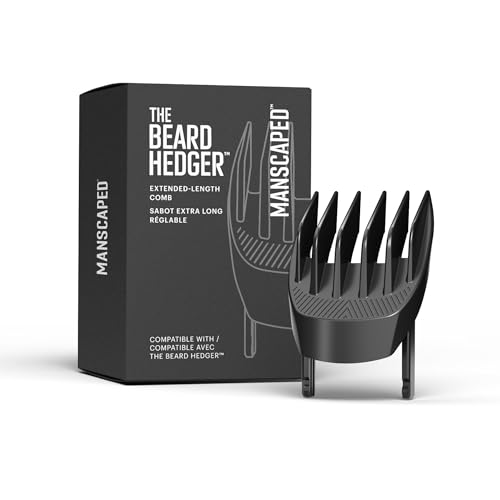
EXTENDED-LENGTH PRECISION: Designed for longer beard styles, this adjustable comb attachment allows you to trim and maintain beard lengths from 10.5mm to 20mm with consistent, even results.

PROFESSION PRECISON: Amorka replacement guard is specially designed for Manscaped The Beard Hedger Trimmer. Instead of buying a new trimmer, we offer brand new and precision comb guard to replace your old or lost one for good performance.
Long Beard: Managing 75mm+ Growth
As your beard surpasses the 75mm threshold, you’ve entered a territory that demands substantially more sophisticated care than medium-length growth. Your long beard grooming routine requires daily deep moisture application to maintain hydration throughout dense bristles. Implement a dedicated beard maintenance routine using quality shampoo and conditioner specifically formulated for extended lengths.
Detangle with a wooden comb to prevent matting and knots before trimming. When using clippers, apply the longest guard setting around 6mm for base tapering while keeping your chin area deliberately longer to enhance jawline definition. For optimal results with long beards, consider using a powerful motor trimmer like the Brio Beardscape V2, which handles thick beard growth with precision and control. Use a Saber clipper for precise neck and cheek lines, then finish with a foil shaver for clean edges without compromising fullness.
For sensitive facial areas, consider trimmers featuring SkinSafe™ blade technology to minimize irritation while maintaining your desired length and style. Apply beard oil and balm consistently to nourish, style, and maintain intentional shape throughout the day.
How to Trim Correctly: The 3-Stage Approach
Mastering the fundamentals of beard trimming relies on breaking the process into manageable stages that guarantee even length, clean lines, and professional results. Your maintenance routine begins with preparation—washing, conditioning, and fully drying your beard to guarantee accurate trimming. Next, establish bulk length using fixed-length guards like 4mm or 6mm, working with the grain to reduce volume safely. Apply a 9mm guard across the top and sides for blending. Finally, define your neckline by trimming above your Adam’s apple following your jaw shape, then shave below this line. These trimming techniques form your foundation. Throughout each stage, comb frequently to reveal flyaways and check symmetry. Using the right tool minimizes skin irritation and ingrown hairs that can result from improper technique or dull blades. For optimal results, attach 6-position guide combs by aligning tabs and snapping them into place to ensure even coverage across all beard areas. Invest in quality grooming tools, like the MT-1 Beard Trimmer, for better trimming results backed by a 365-day money-back guarantee. Finish with precision edging using your trimmer’s straight edge for a polished frame.

Please note - this comb comes in two different sizes but they look exactly the same. If your model number is not listed below it will not be compatible. You will need the slightly smaller one made for different models.

Heavy Duty Motor – Our ultra-power heavy duty hair trimming system easily cuts the thickest hair with 35 percent more power than standard Wahl electromagnetic motor clippers, This results in a very strong audible hum, but is completely normal to its operation. Don’t settle for a weak clipper.

COMPLETE GROOMING KIT – Includes one 14-in-1 adjustable comb (0.4-10mm), three click-on guards (1/3/5mm), and a body comb for men's beard and manscaping.
Create Fades Across Beard Sections
Once you’ve mastered the fundamentals of even trimming, you’re ready to elevate your technique with fades—a strategic progression of guard lengths that creates seamless shifts across your beard.
Work methodically through sectional techniques by following your hair’s natural growth direction. Start with your highest guard, then progressively lower your comb numbers to establish smooth changes. Begin blending sections from the sideburns toward your chin, angling your clippers at 45 degrees to eliminate harsh lines. For expert results, consider using the trimmer-over-comb method to achieve even smoother transitions between different lengths. Premium trimmers like the Philips Norelco Body Groomer 7000 offer adjustable combs that make precise fade work more manageable.
These fade techniques require controlled movements and patience. Don’t rush the change between guard sizes. Instead, gradually decrease lengths while blending sections together for a cohesive appearance. Remember to stretch skin in tricky areas to ensure precision during the blending process. Check symmetry frequently from the front to confirm both sides match perfectly, creating a polished, professional result that showcases your technical skill.
Adjust Guards by Hair Texture and Density
While mastering fade techniques strengthens your foundational skills, you’ll quickly reveal that guard adjustments aren’t one-size-fits-all—your success depends on understanding how different hair types and densities respond to various clipper lengths.
Straight hair demands lower guards (#0.5–#2) for sharp, precise lines. Wavy textures require higher numbers (#2–#6) to preserve natural volume without flattening. Curly or coily hair needs guards #3 and above to account for shrinkage while maintaining fullness. The taper lever enables micro-adjustments between guard sizes for seamless blending.
Density notably influences your trimming techniques. Thick hair benefits from higher guards (#4–#6) to control bulk effectively, while fine hair achieves cleaner results with lower numbers (#0.5–#2). These maintenance tips guarantee consistent, professional-looking results across all beard types and densities. Premium trimmers with adjustable dials provide the precision needed to accommodate different beard types without requiring multiple devices.