You’ll encounter five essential variables when selecting your straight razor: blade point shape, grind profile, steel type, blade width, and skill level. Square points offer precision but demand expertise, while Dutch points forgive beginner mistakes. Full wedge grinds suit thick beards with less closeness, whereas full hollow grinds deliver the closest shave for advanced users. Carbon steel hones easily but needs regular oiling; stainless steel resists corrosion with minimal maintenance. Blade widths range from 3/8″ to 7/8″, influencing maneuverability and surface area. Understanding how these components interact transforms your shaving experience entirely.
Straight Razor Blade Points: Square to Spanish
Since you’re beginning your straight razor journey, you’ll quickly reveal that blade point geometry fundamentally shapes how the razor performs. Five distinct point types dominate the market, each offering different balance between shaving precision and safety.
The Square Point delivers exceptional precision with its perpendicular edge, though it demands expertise to avoid injury. Dutch Points provide forgiving roundness ideal for newcomers. Spike Points offer nose and earlobe control but require skilled handling.
French Points blend curved edges with sharpness for detail work, while Spanish Points feature concave profiles for advanced users demanding maximum precision. A 30-degree blade angle helps optimize the performance of each point type during the shaving stroke. Straight razors are hinged to a handle that folds for convenient storage and portability.
Your choice depends on experience level. Beginners benefit from Dutch Points’ forgiveness, while experienced shavers pursue Spanish or French Points for superior shaving precision. Proper sharpening techniques maintain each point’s distinctive cutting characteristics, ensuring ideal performance regardless of geometry. When maintained properly, quality straight razors can become generational heirlooms that provide lasting value beyond their initial purchase.

Premium Stainless Steel & Ergonomic Grip – This stainless steel straight razor ensures durability and smooth performance. The professional straight razor for men has an ergonomic handle for superior control, making every shave seamless and precise.


100 "Derby Premium" Single Edge Razor Blades for straight razor
Blade Grinds Explained: Which Profile Suits Your Style
Blade grind—the cross-sectional profile of your razor’s blade—fundamentally determines how it performs during your shave. You’ll encounter four primary grind types, each offering distinct grind benefits.
Full Wedge Grind delivers stiff, durable blades ideal for thick beards, though you’ll sacrifice closeness. Quarter Hollow and Half Hollow Grinds provide balanced flexibility and maintenance, suiting most users. Full Hollow Grind produces the closest shave possible but demands expert honing skills.
Understanding grind history clarifies modern preferences: flat grinds dominated historically, while hollow grinds now dominate contemporary razors. Thinner profiles yield closer shaves but require steadier technique. Wedges offer superior durability for coarse hair; hollows provide feedback and precision. Regular maintenance with proper blade oiling helps preserve your razor’s performance and extend its lifespan. Like clipper blades, straight razors benefit from oiling with 3-5 drops of specialized oil to prevent corrosion and maintain optimal cutting performance. Blade width usually measured in eighths of an inch, with common sizes ranging from 3/8″ to 7/8″.
Your choice depends on hair thickness, skill level, and desired shave closeness. Beginners benefit from Quarter or Half Hollow options, while experienced shavers may prefer Full Hollow’s unmatched results.
Choosing the Right Size and Steel Type
Once you’ve selected your preferred blade grind, the steel type and blade dimensions become equally critical to your shaving experience. Your steel advantages comparison hinges on maintenance commitment. Carbon steel delivers exceptional sharpness and easier honing but demands regular oiling to prevent rust. Stainless steel resists corrosion with minimal upkeep, though its hardness above 60 HRC complicates stropping. High carbon steel offers superior edge retention favored by professionals, yet shares carbon steel’s rust susceptibility.
Regarding blade dimensions, thicker widths suit carbon steel construction, preventing breakage during stropping. Stainless steel performs reliably in thinner half-hollow profiles. Consider your hair type and maintenance capacity when deciding. The chromium content in stainless steel creates a protective oxide layer that significantly reduces rust formation compared to carbon alternatives. For those with sensitive skin, exploring gentler shaving alternatives like electric razors for sensitive skin may provide a less irritating option than traditional straight razors. Unlike cartridge razors that tug hair and scrape skin layers, straight razors with proper steel selection can deliver closer shaves with less skin irritation. Implement consistent blade maintenance tips—regular stropping, periodic honing, and proper storage—regardless of your steel selection to maximize longevity and shaving quality.

100 blades for use in Barber Razors and Shavettes that accept 1/2 a Double Edge Blade!
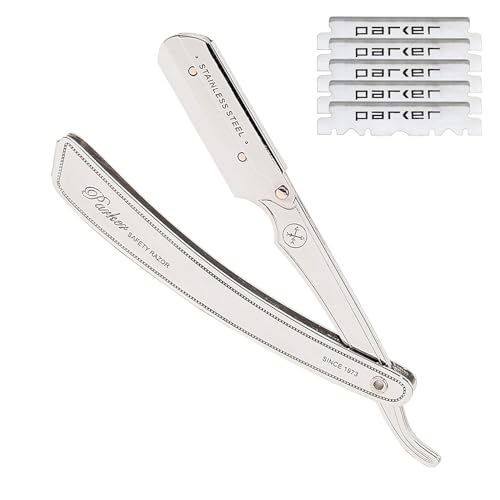
HEAVY-DUTY STAINLESS STEEL STRAIGHT RAZOR – Built for professionals and discerning wet shavers, the Parker SRX is crafted entirely from solid, heavy-duty stainless steel. No mystery metals or plastic parts—just premium-grade steel for durability, balance, and unbeatable performance in every shave.

PREMIUM STAINLESS STEEL DESIGN – Crafted entirely from 100% genuine stainless steel for unmatched durability, rust resistance, and a polished, professional look
Grind and Point Combos for Different Beard Types
With your steel type and blade dimensions locked in, you’re ready to match grind and point combinations to your specific beard characteristics and skill level. Your grind preferences directly impact shaving performance: full hollow grinds deliver the sharpest edge for precision work but demand steady technique, while wedge grinds offer forgiving, stable shaves ideal for thick whiskers. Half hollow designs bridge both approaches for intermediate users.
Point accuracy matters equally. Round points prioritize safety and suit beginners tackling all areas, though they limit beard lining precision. Square points enable detailed contouring under your nose and along edges, requiring advanced control. Pairing a wedge grind with a round point creates a beginner-friendly setup, whereas experienced shavers combine full hollow grinds with square points for maximum precision and control over coarse facial hair. The Devo Best Quality 5/8″ model exemplifies an ideal beginner-friendly straight razor pairing these forgiving characteristics. For those exploring alternative grooming options, body grooming tools offer complementary solutions for overall body hair management. Regular stropping and honing ensure your selected grind and point combination maintains optimal performance throughout its lifespan.
Straight Razors: Beginner vs. Advanced Picks
As you shift from theory to actual blade selection, you’ll need to understand how different razor configurations serve distinct skill levels and shaving goals.
Beginner blades typically feature 5/8-inch widths with round points and full wedge grinds. This combination prioritizes forgiveness and control during your learning phase. The round point minimizes nicks around sensitive areas, while the wedge grind’s sturdier construction tolerates technique inconsistencies. Consider shavettes as beginner alternatives before committing to fixed blade investment, as many safety razor users find them helpful for transitioning into traditional wet shaving. Like closed-comb safety razors, beginner straight razors are designed with forgiving blade geometry to reduce irritation during the learning curve.
Advanced straight razors demand precision instruments. You’ll find 6/8 to 7/8-inch blades with square or French points and hollow grinds. These configurations reward refined technique with superior edge sharpness and closer shaves. The full hollow grind is also popular among experienced users seeking the optimal balance between flexibility and feedback for advanced technique execution.
Your material choice matters too. Carbon steel appeals to traditionalists willing to maintain their blades, while stainless steel suits varied humidity conditions.