You’ll master the fade by selecting your Wahl model—Senior for thick hair, Magic Clip for affordability, or Legend for all-day runtime. Start by marking your baseline with a detail trimmer, then progress through guards systematically: #1.5 for guidelines, #1-#2 for sides, #4 for smoothness, and #7 for top blending. Use upward strokes and rocking motions while adjusting the taper lever for seamless adjustments. Finish with edge detailing using your cordless detailer. The techniques for fixing patchy fades and maintaining sharp blades’ll elevate your results further.
Pick Your Wahl Clipper Model: Cordless Senior vs. Magic Clip vs. Legend
Senior Performance excels when you’re handling thick or textured hair, delivering superior power through a 6,500 RPM motor for aggressive cutting. If you’re starting out, the Magic Clip offers affordability and lightweight maneuverability with adequate power for general fading. Legend Advantages include balanced performance and extended 100-minute runtime, making it ideal for all-day salon work. All Wahl cordless clippers come backed by a two-year warranty for professional assurance and reliability. The stainless steel self-sharpening blades found on premium Wahl models ensure consistent cutting performance throughout extended grooming sessions. These models feature powerful rotary motors that deliver the torque needed for precise fades on various hair types. Choosing Factors depends on your priorities: prioritize the Senior for dense hair and rapid cuts, select Magic Clip for comfort and value, or choose Legend for versatility and sustained cordless operation across multiple clients.

Lithium-Ion Cordless Power - Enjoy up to 2 hours of runtime with this cordless hair clipper's powerful Lithium-Ion battery, featuring a convenient USB-A charger for quick and easy recharging—perfect for at-home haircutting
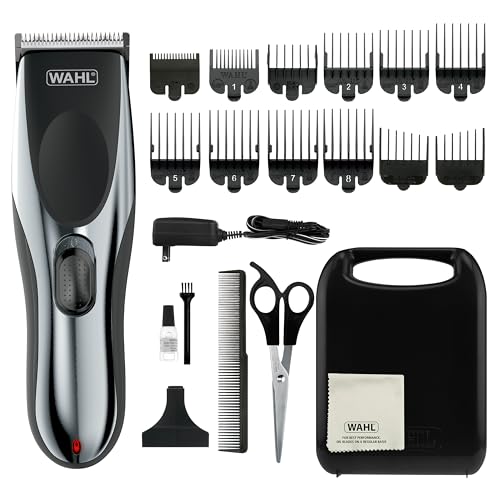
Long Run Time - These clippers feature convenient cord/cordless use options with 60 minutes of cordless run time. Long-lasting easy-to-clean stainless-steel precision blades enable no-snag cutting.

Cordless Convenience – The Home Pro Cordless is a rechargeable haircutting kit, offering maximum flexibility. Switch between cordless use for portability or plug it in to continue cutting while charging.
Set Up Your Client and Mark the Base Line
Once you’ve selected your Wahl clipper model, you’ll need to properly position your client and establish clear guidelines before beginning the fade. Seat your client comfortably in a chair facing forward, tilting their head slightly to expose the neckline. Place a cape or towel over their shoulders for protection, then position yourself behind them for maximum access.
Position a mirror so your client can view progress throughout the cut. Confirm your workspace is well-lit and all tools—clippers, guards, comb, and detail trimmer—are within arm’s reach.
Next, prepare the hair by lightly spraying it with water and combing it in its natural direction. Using your detail trimmer, locate and mark the natural hairline at the neck and sideburns. This baseline serves as your reference point for fade consistency and confirms balanced results across the entire head. Always work methodically and systematically to ensure precision throughout the fading process. For optimal results with adjustable blades, use the adjustable lever to transition between different lengths during your fade work. Remember that many clients maintain specific grooming preferences, such as keeping beard styling traditions, so discuss their desired look before cutting near the neck and jawline.
Create Your First Guideline With a #1.5 Guard
With your baseline marked and workspace organized, you’re ready to establish your first fade guideline using a #1.5 guard. Attach the #1.5 guard to your clipper and close the taper lever for a defined base line. Position the blade halfway open initially, then close it to flick out your line with precision.
Apply upward rocking motions around the ears and back of your head, maintaining even pressure to guarantee guideline clarity. Pull the skin tight around the ears to achieve a tighter taper. Use closed-lever taper techniques throughout this pass to create symmetrical guidelines around the entire head. Professional barbers often rely on trimmers with high-speed magnetic motors to ensure precise detail work after establishing guidelines with clippers. For optimal results, regularly clean blades after each use to maintain the clipper’s cutting performance and hygiene throughout your fade work. Many professionals prefer clippers with zero-gap blades for the precision and consistency needed when fading between different length zones.
This foundational #1.5 guideline establishes your fade’s reference point, enabling smooth progression into modification zones without harsh lines.
Fade the Sides and Back With Progressive Guard Sizes
Your #1.5 guideline now serves as the foundation for progressively blending the sides and back into your fade. Begin with your #1 guard, using upward strokes and maintaining that 1/4-inch length on lower sections. Switch to #2 guard next, opening your taper lever for a smoother shift and overlapping half-inch sections for seamless blending. Use 45-degree angle lifts to integrate into higher guards.
Progress to your #4 guard for mid-level fading, employing rocking motions to target the halfway point between shifts. Your fade techniques improve through lever adjustments—flicking out persistent lines between guard sizes. Advance to your #7 guard on upper sides and back, applying front-to-back motions against the grain. Pull the skin tight around the ears and back of the head to ensure a clean and polished appearance throughout the fade. To prevent ingrown hairs and irritation in sensitive areas, consider applying short light strokes with proper technique during your fading process. For additional refinement after fading, consider using beard oil or balm to soften any remaining stray hairs and enhance the overall finish. These clipper control methods guarantee symmetrical, line-free results throughout your fade.

14 Piece Kit: Includes hair clipper guards from 1/2 (1/16") all the way up to 8 (1")

Professional Quality: Designed for use with Wahl Professional full-sized clippers
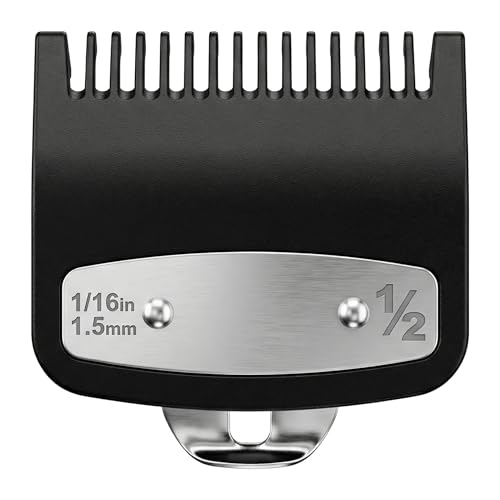
【Guide Comb Attachment】This clipper guards set is designed for Wahl beard trimmer attachment. The clipper guards size is 3.9 inches x 1.96 inches, fit for Wahl 1/2 guard attachments provide versatile cutting lengths while maintaining perfect compatibility.
Master the Rocking Motion to Blend Seamlessly
As you progress through guard sizes, you’ll need to master the rocking motion—the cornerstone technique for eliminating harsh lines and creating fluid shifts. This rocking technique involves adjusting your clipper’s taper lever from closed to open mid-stroke, allowing gradual blade exposure as you move upward through the hair.
Start with a closed taper at skin level, then flick the lever open progressively during your upward stroke. This blending principles approach distributes cut lengths seamlessly, preventing visible steps between guard changes. Maintain consistent pressure throughout to avoid over-cutting while you repeat the rocking motion across sections. Proper comb attachment by aligning tabs and snapping into place ensures your guide combs stay secure during these precise movements.
Check symmetry frequently and use multiple passes to refine the gradient. With practice on your Wahl Magic Clip or Senior, you’ll develop the control necessary for professional, undetectable fades that flow naturally from short to long hair. The self-sharpening blades of quality clippers ensure that your rocking motions remain snag-free and precise throughout the entire fading process. While electric shavers and clippers serve different purposes, understanding how premium brands compete on performance can help you appreciate the engineering in quality grooming tools designed to handle various hair types effectively.
Blend Your Fade Into the Top
Once you’ve established your fade foundation with guard progression, you’ll need to seamlessly connect it to your client’s longer top hair. Switch to a slightly longer guard like #2 or #3 above the fade line, using flicking motions for smooth connections between lengths. Apply your #1 guard open fully, blending upward over the weight line. Close the clipper halfway with a #0.5 guard to eliminate any remaining lines. These blend techniques guarantee uniform length across sections and create cohesive fade styles. Finally, perform a light against-the-grain polish pass using each original guard to catch any uneven areas and tighten the overall appearance. Remember to maintain light to medium pressure with your clipper to ensure optimal control and prevent over-cutting during the blending process. For clients with particularly thick or sensitive areas, consider using clippers with rounded blades for safety to minimize irritation during detailed blending work. Professional-grade clippers like the Wahl 5 Star Magic Clip offer precision cutting that makes blending between fade sections easier and more seamless. Check symmetry throughout to assure a professional, polished result.
Detail Your Edges and Neckline With Precision
Now that you’ve blended your fade into the top, it’s time to sharpen the overall look by detailing your edges and neckline with precision.
Start edge detailing with your Cordless Detailer, removing the guide comb for an inverted clipper technique. Use the Magic Clip Cordless with no guard to zero your lines with a Fade Brush. Tilt your clippers at a slight angle, lifting off one side for smooth blends. Use the corners to flick out any dark spots. The 50% more teeth on quality clipper blades ensures a smoother blend without leaving marks during the detailing process. Before beginning, sanitize your tools to prevent infections and irritation.
For neckline precision, employ a number four guide comb in rocking motions to clean the neckline. Apply the inverted clipper technique without a guard, then flick your lever open and closed for seamless blending. Scoop across the back dip to even the neckline shape. Finish with a shave razor to perfect your work.
Fix Patchy Fades, Uneven Blends, and Over-Faded Lines
Even the most carefully executed fade can develop imperfections that undermine your final result. You’ll identify patchiness by running your fingers against the grain to feel length discrepancies after your base cut. Dampen hair with a spray bottle under light to reveal patchy spots requiring correction.
For gradient smoothing, employ the 45-degree angle lift-off technique when shifting between guard sizes. Flick clipper corners with your taper lever open and closed to erase visible lines. Overlap guidelines by half-inch increments for symmetrical blending. Revisit guidelines multiple times to ensure a smoother cut and consistent hair length throughout the fade.
Correct over-faded lines by avoiding the reference sink-up line initially. Use longer guards like the #2 closed taper, shortening only after confirming an even base. Open your taper lever fully and peel hair upward to recover length in over-faded zones. Maintain steady pressure and proper technique to prevent skin irritation or burns during correction work, particularly around heat-sensitive neck areas.

Heavy Duty Motor - Our PowerDrive Plus heavy-duty motor delivers exceptional power for no-snag cutting and runs 15% cooler vs. our standard PowerDrive motor. This powerful electric shaver cuts through the thickest of hair with no snags or pulls

Package Includes: 1x Blade Adjustment Lever+1x Screw +1xWasher+1x Nut

Color Coded Guide Combs – Finding and remembering everyone’s favorite hair length is easier than ever. Corresponding the correct comb to the right cutting length is simple with our easy to see attachment guards
Keep Your Wahl Clippers Sharp and Ready
Three essential maintenance practices—cleaning, oiling, and inspecting—will keep your clippers performing at peak efficiency and extend their lifespan.
For blade maintenance, use a cleaning brush after each use to remove hair and buildup. For deeper cleaning, soak blades in 90% isopropyl alcohol, then dry thoroughly to prevent rust. Employ pipe cleaners between blade teeth for thorough debris removal. For multi-user households, follow proper contact times with disinfectants between people to ensure efficacy.
Oil application requires precision. Apply three drops of Wahl Blade Oil along the top blade teeth at the left corner, right corner, and center. Add one drop at the heel of each side, then one drop in the center and each end of the movable blade. Oil every few haircuts to reduce friction and prevent rust. Consistent oiling reduces wear and tear on both blades and motor, enhancing longevity and minimizing the likelihood of breakdowns. Always apply oil before storage to prevent rust and maintain blade integrity during periods of non-use.
Inspect blades regularly for wear, damage, or dullness. Check housing for cracks or loose screws. Align blades properly for ideal cutting performance.

Rust Prevention – Prevents rust from forming & helps extend the life of the clipper & blades; can also reduce the likelihood of blades becoming dull

Professional-Grade Blade Care: Ensure your pet and dog grooming blades last for years to come with Wahl’s top-quality clipper blade oil

Extends Blade Life: Specially formulated hair clipper oil; blade oil helps extend the life of clipper and trimmer blades