You won’t find a simple yes-or-no answer because it depends on your method and community. Leviticus 19:27 prohibits shaping beard edges using razors, but you’re allowed to trim with scissors or electric shavers. Rabbinic law distinguishes between pulling hair from the root—forbidden—and cutting, which isn’t. Kabbalistic traditions view untrimmed beards as spiritually significant, while modern Orthodox communities embrace more flexibility. Your sect’s interpretation and personal theological commitments ultimately determine what’s permissible for you.
What Leviticus Actually Says About Shaving
When you examine Leviticus 19:27, you’ll find the text doesn’t prohibit all beard shaving—it specifically forbids shaping the beard’s edges in ritual patterns. The Hebrew phrasing targets deliberate alteration of beard contours, not routine grooming. Understanding Leviticus meanings requires recognizing its cultural significance: the command addresses pagan mourning rituals where surrounding cultures shaped beards in distinctive ways for idol worship or grief ceremonies.
The law distinguishes Israelites from these practices. You’re not violating Scripture through casual beard maintenance; rather, the prohibition targets ceremonial deformation associated with gentile customs. Jeremiah 41:5 and Isaiah 15:2 illustrate how pagans ritually disfigured beards during mourning. Professional barbers and grooming specialists have long understood that precision tools for detailed work like trimmers are essential for creating sharp lines and finishing touches in personal grooming. This context clarifies that Leviticus 19:27 functions as a cultural boundary marker, preserving Israelite identity through specific grooming restrictions, not establishing universal beard-shaving prohibitions. The verse emphasizes the importance of physical appearance within specific cultural contexts as an outward expression of covenant loyalty among the Israelites, much like how enhanced aesthetics and grooming practices continue to serve as markers of personal identity and social belonging today.
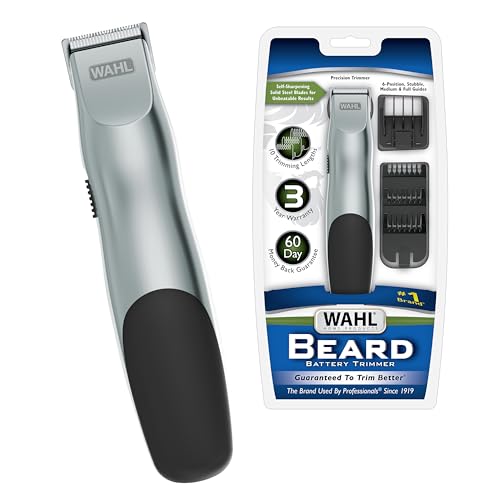
Precision Ground Blades – Our high-carbon precision-ground blades stay sharp longer, use in conjunction with our six-position beard regulator for multiple beard trimming lengths; Our beard guards vary in length from stubble to short and clean, to thick and even

Strong Motor & Long Battery — Power Meets Endurance. Powered by a 6,600 RPM high-torque motor (240 g·cm) for smooth, steady trimming. The lithium battery runs up to 180 minutes — lasts about 30 days per charge — with fast, convenient USB-C charging

Rechargeable Beard Trimmer - Groomsman is a rechargeable unit that allows for up to 60 minutes of run time on a single charge and features a contoured ergonomic handle with soft-grip pads as well as a bonus nose trimmer
Why Rabbinic Law Bans Razors But Allows Scissors
While Leviticus 19:27 addresses the cultural practice of ritual beard shaping, rabbinic interpretation narrows the prohibition further by distinguishing between specific grooming methods. The Gemara Makkot 20a establishes that only razors incur liability, as they fully destroy hair at skin level without leaving stubble. This distinction reflects the razor dangers inherent in their sword-like mechanism, which severs the hair shaft completely, including subsurface growth when skin is pulled taut.
Scissors advantages become apparent when you recognize their fundamental difference: they trim without root-level destruction, leaving tapered stubble intact. Unlike razors that create higher ongoing costs, scissors provide a cost-effective grooming solution that aligns with traditional religious requirements. The Shulchan Aruch Yoreh De’ah 181 permits scissors even if results mimic a razor shave, provided you hold them with the non-sharp blade against your skin. This methodological distinction allows you legitimate grooming while respecting traditional prohibitions. Electric shavers function with a blade and a metal piece, mimicking the scissor-action mechanism that rabbinic authorities have deemed permissible. For those using scissors or electric shavers for regular grooming, proper maintenance through clipper oil application after each use ensures optimal blade performance and hygiene.

𝗔𝗹𝗹-𝗶𝗻-𝗢𝗻𝗲 𝗕𝗲𝗮𝗿𝗱 𝗧𝗿𝗶𝗺𝗺𝗲𝗿 𝗳𝗼𝗿 𝗠𝗲𝙣 - Our Electric Beard Trimmer Kit is the ultimate Men’s Grooming Kit, featuring multiple precision heads for beard, mustache, hair, nose, ear, and body. This all-in-one Beard Shaving Set keeps you perfectly groomed at home or on the go
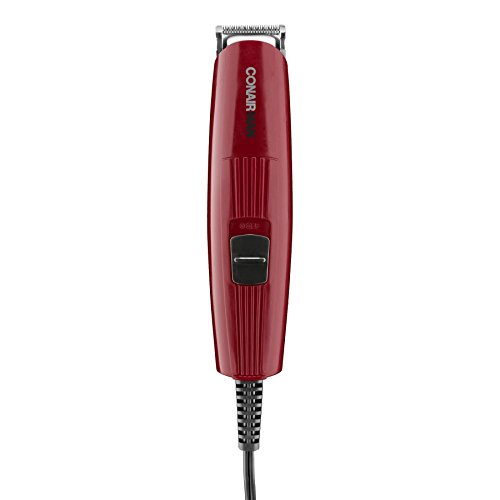
Corded Beard and Mustache Trimmer: A man's face is his statement and whether you're going bold look or staying subdued this corded men's trimmer has all the basics to give you a clean, comfortable shave.

Material & Sharpness: Our RUST PROOF Beard and Mustache Scissors for men are made-up from High Carbon Stainless Steel, which is Extra Harder & Stronger than regular steel, that keep these Beard Scissors for men STAY SHARP for more longer time.
The Kabbalistic View: Is Beard Shortening Spiritually Forbidden?
Beyond the halachic distinctions between razors and scissors lies a deeper mystical framework that views beard preservation through an entirely different lens. In Kabbalistic significance, your beard functions as a primary conduit for Divine mercy—a spiritual channel connecting you directly to God’s compassionate power. The Zohar identifies beard trimming as spiritually consequential, regardless of whether scissors technically circumvent rabbinic prohibitions.
You’ll find that Kabbalists emphasize the spiritual implications of maintaining your full beard, arguing that cutting it disrupts the flow of Divine favor. While halacha permits scissor use, Kabbalah suggests exercising caution. Stringently observant practitioners refrain from any trimming to honor both Torah and mystical teachings. For those seeking precision in beard maintenance, options like precision trimming tools are available for grooming needs. Safety razors using a single sharp blade provide closer shaves with less skin irritation compared to multi-blade systems. The Torah’s prohibition against shaving with razors, as stated in Leviticus 19:27, forms the foundational basis for beard preservation across Jewish tradition. This framework transforms beard preservation from mere legal compliance into profound spiritual practice, reflecting your commitment to channeling God’s mercy through your physical form.
Scissors, Electric Razors, and Depilatories: Legal Alternatives
For those seeking to honor both halachic prohibitions and personal grooming needs, several methods offer legitimate alternatives to straight razors. Scissors benefits include precise shaping of facial hair without cutting at the base, aligning with traditional interpretations that permit trimming above skin level. You’ll appreciate minimal irritation and inexpensive accessibility for home use.
Electric razor efficiency provides another viable option, cutting hair at skin level through oscillating blades without pulling from roots. This method prevents nicks and ingrown hairs while enabling quick daily grooming sessions. Many users report increased confidence when maintaining a consistent grooming routine with electric razors. For those with particularly sensitive skin, safety razors offer another gentle alternative that minimizes razor burn and irritation.
Depilatory creams dissolve hair proteins chemically, lasting up to a week while remaining pain-free and affordable. However, you should perform patch tests first due to potential skin irritation. For those concerned about longer-lasting results, hormone therapy offers an advanced alternative by reducing male hormone production in cases of hormonal imbalances, which can slow facial hair growth and lighten hair texture over time.
These alternatives allow you to maintain grooming standards while respecting halachic concerns regarding beard removal.

Safe and Efficient Trimming: PRITECH razors for men uses ceramic blades with built-in protection. On the surface where the blade contacts the skin, we have implemented a chamfered design, ensuring that it never cuts, pulls, or irritates the skin, and guarantees efficient hair trimming. This body trimmer for men equipped with 3 adjustable comb attachments and 5 lengths (1.5mm, 3mm, 6mm, 9mm, 12mm), it meets your diverse trimming requirements

2-IN-1 FACE AND BODY GROOMING: This bikini trimmer for women includes a body hair trimmer and face shaver. Use the body head for bikini line, pubic hair, legs and underarms, and the facial head for peach fuzz and quick touch-ups.

GENTLE & PAINLESS: The 2-1 women's hair remover is suitable for daily use to keep up with hair regrowth and leave it smooth, specially designed for use on eyebrows, upper and lower lip, cheeks, chin, and neck. Works on peach fuzz or fine hair. Go slow with circular movements and it will do the job.
How Different Jewish Sects Interpret the Beard Rule
Jewish communities don’t uniformly interpret Leviticus 19:27‘s prohibition against shaving, creating distinct grooming practices that reflect theological commitments and communal identity. Hasidic groups mandate untrimmed beards as essential beard symbolism, viewing them as markers of devotion and religious affiliation. Lubavitch Hasidim favor long beards paired with flattened fedoras, while specific subgroups wear distinctive headcoverings like spodiks that signal their particular traditions.
Orthodox communities demonstrate greater flexibility. Yeshivish groups permit beardless appearances, though some maintain shorter beards with fedoras. Modern Orthodox Jews embrace clean-shaven styles entirely, accepting electric razors as halachically permissible alternatives. Some interpretations allow scissors and certain trimmers as acceptable methods that comply with the biblical prohibition.
These cultural variations reflect how different sects navigate halakhic interpretation. Haredi communities occupy middle ground, allowing beards without universally requiring them. Ultimately, your sect’s specific theological framework determines whether beard maintenance signifies religious obligation or personal choice.
Partial Trimming vs. Complete Removal: Where’s the Line?
Where exactly does permissible grooming end and prohibited desecration begin? The distinction between partial trimming and complete removal proves central to understanding Leviticus 19:27‘s application. You can trim your beard’s edges with scissors without violating Jewish law—this constitutes normal grooming rather than ritual violation. Complete removal via razor, however, crosses the prohibited threshold.
The Torah targets “marring” the beard’s corners specifically, not all hair reduction. Your partial trimming respects this nuance; you’re maintaining rather than obliterating. Kabbalistic tradition intensifies this prohibition, viewing even scissor shortening skeptically, yet mainstream halacha permits it. Using depilating creams or waxing provides alternative grooming methods that bypass the razor prohibition entirely. Interestingly, electric shavers using scissor-like dual blades operate through a different cutting mechanism than traditional razors, potentially offering another grooming option within permissible bounds.
The contextual difference hinges on intent and method. You’re permitted grooming that preserves beard integrity while avoiding razors. Complete removal mimics pagan mourning practices the Torah explicitly condemns—that’s where the line clearly divides. For those seeking precision in grooming without violating religious law, compact and ergonomic trimming tools designed with gentle blades can help achieve controlled results on sensitive facial areas.
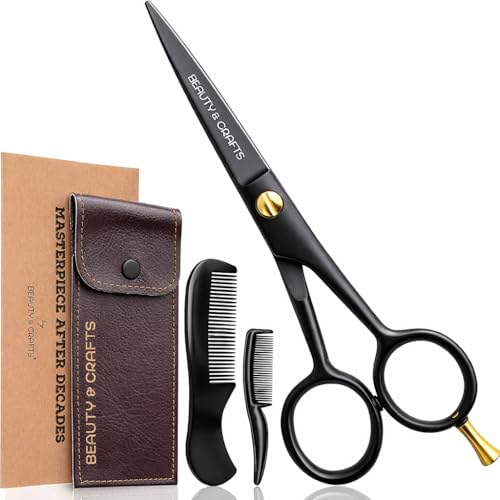
Premium Quality: Our Beard and Mustaches Scissors are made of Premium Quality German Steel, durable and hypoallergenic. Sharp Blades of our Mustaches scissors work well with any type of facial hairs thick or thin. Its high-quality material is rustproof and can last for a lifetime.

Ultimate Home Hair Cutting Precision: Features a specialized one-blade micro-serrated design that securely grips every strand, completely eliminating the hair-slippage and uneven lines common with standard razor-edge shears.

🔥 One Scissor, All the Power – Why settle for a cheap pack of 2 or 3? We deliver one scissor that outperforms them all — for eyebrows, mustache, and beard.
How Orthodox Jews Navigate Beard Law Today
Though the Torah’s prohibition against destroying beard corners remains unambiguous, Orthodox Jewish communities today employ remarkably diverse strategies to fulfill this commandment within modern contexts. You’ll find that many Orthodox Jews utilize electric shavers, which leave stubble and comply with halakhic standards, while others maintain full beards never trimmed. Some communities strictly forbid razor use entirely, extending beyond the Torah’s literal requirements due to kabbalistic interpretations. The beard’s symbolism as representing divine mercy reinforces observance across generations. However, you’re not bound by halakhic mandate to grow a full beard—rather, cultural significance drives continued practice. electric shavers designed for sensitive skin offer a gentle alternative that many find compatible with religious observance while minimizing irritation, following the same principle of protecting delicate areas that applies to grooming practices across different contexts. Contemporary challenges emerge when secular institutions, particularly military services, conflict with grooming observance. You navigate these tensions by balancing religious commitment with practical accommodation, sometimes seeking religious exemptions or alternative compliance methods.

SkinProtect Technology: Achieve a clean, gentle shave with 5D pivot contour and AntiCorrosion Shaving System

From the #1 electric shaver brand¹: Shaver 2400 Series gives you a fast, clean shave even on sensitive skin thanks to 27 self-sharpening ComfortCut blades and 4D Flex Heads

NO PULLING. NO PINCHING. NO CUTS. Gives a razor-smooth finish every time. Our skin-friendly electric shaver for women features precision ceramic blades with the fast-moving cutter trims hair at 100x per second, while R-shaped rounded tips and a protective guard ensure gentle contact with your skin—wrapped in soft, warm-touch silicone for a gentle, comforting feel. Whether you're using it as a intimate razor for women pubic hair or a facial hair remover for women, it's designed to leave zero irritation behind. Just smooth, happy skin from your face to below the belt.
Beard Traditions Across Jewish Communities Worldwide
Because beard practices have diverged considerably across geographic regions and historical periods, you’ll find that no single standard has ever governed all communities. Italian Jews historically embraced shaving, even among Kabbalah practitioners, while Slavic regions adopted stricter prohibitions influenced by Kabbalistic teachings. Hasidic communities maintain distinctive beards as markers of religious identity, whereas Litvaks and Misnagdim held different standards. In Jerusalem’s Old City, ultra-Orthodox Jews preserve ancient beard traditions rooted in Levitical law, anointing facial hair with sacred oils blended for religious festivals. Global customs reveal that beard symbolism transcends mere grooming—it embodies religious mysticism, nationalism, and masculinity ideals. The Talmud differentiates between razor shaving and other trimming methods, establishing distinctions that continue to influence contemporary practice. While some grooming practices like dermaplaning involve professional blade techniques for facial hair removal, traditional Jewish communities maintain distinct perspectives on whether such methods align with religious law. For those seeking precision in personal grooming, professional hair trimmers offer advanced technology that some communities consider as alternatives to traditional blade methods. Contemporary Jewish communities navigate these traditions variably, with some participating in worldwide beard competitions while others strictly observe prohibitions against trimming with blades.
When Beards Became Identity in Modern Jewish Life
As Jewish communities navigated the profound social upheavals of the eighteenth through twentieth centuries, the beard transformed from a religious obligation into a potent symbol of cultural and political allegiance. You witnessed this shift distinctly in twentieth-century America, where Orthodox rabbis initially embraced clean-shaven appearances using electric shavers, then dramatically reversed course during the final third of the century. This beard symbolism represented your refusal to abandon tradition amid modernizing pressures. In 1980s Jerusalem, you’d observe beards signaling unmistakably right-wing religious identity among both Jews and Muslims. The cultural significance intensified as facial hair became your visible declaration of commitment to heritage over contemporary fashion. To maintain proper grooming while preserving beards, observant individuals should regularly clean and maintain their electric shavers through proper foil shaver care to ensure reliable equipment. For those seeking precision alternatives, safety razors designed for sensitive skin offer careful grooming options that respect religious grooming practices. Biblical injunctions from Leviticus forbidding the destruction of beard edges continue to influence trimming practices among observant Jewish communities today.
When Shaving Your Beard Complies With Jewish Law
While beard-wearing has emerged as a powerful assertion of Jewish identity and religious commitment, the question of whether shaving constitutes sin depends entirely on which removal method you employ. Jewish law permits beard trimming through acceptable methods that don’t violate the Torah’s razor prohibition. You may use scissors, depilatory creams, or tweezers without transgressing Levitical law. The Shulchan Aruch codifies that scissors-based trimming remains halachically permissible, even close to the skin. Electric shavers occupy contested territory among rabbinic authorities regarding their cutting mechanisms, with some authorities noting that electric shaver technology has created new interpretive questions about what constitutes prohibited razor use. Your mustache trimming faces no restrictions under Maimonides’ interpretation. Beyond halachic considerations, choosing to maintain your beard can serve as a bold style statement that reinforces confidence and personal identity. While pious communities traditionally avoid scissors due to social perception concerns, halachic analysis confirms these methods fully comply with Jewish law’s specific prohibition against razor use. The prohibition against shaving applies only to men, as women are exempt from this male-specific commandment according to traditional sources.