You’ll find that beard trimmers and hair clippers aren’t interchangeable—they’re engineered for different tasks. Clippers feature wider blades and powerful motors designed for bulk hair removal on your head, while trimmers use narrower blades with finer tooth spacing for precise facial hair detailing. Clippers operate at higher cutting speeds and use numbered guards (#0–#8) for length control, whereas trimmers have adjustable guards typically ranging from 1mm to 5mm. Understanding their distinct capabilities helps you achieve professional grooming results, and there’s considerable technique involved in using both tools strategically.
Blade Design: Why Trimmers and Clippers Cut Differently
The fundamental differences between trimmers and clippers lie in their blade construction, which directly determines their cutting capabilities and ideal applications. Clipper blades are wider, covering larger areas efficiently for bulk hair removal. Trimmer blades are narrower with closer tooth spacing, enabling precision work around sensitive areas like ears and necklines.
Cutting angles differ markedly between the two. Taper blades feature angled shapes for seamless blending, while fade blades offer rounded edges for extended fading processes. T-blades and narrow designs excel at detailed beard outlines and mustache work. For optimal results, start with clippers to remove bulk hair before switching to trimmers for detailed finishing work.
Blade sharpness and material composition affect performance too. Titanium-coated and carbon steel blades maintain their edge longer, reducing hand fatigue during extended use. To keep your blades performing at their best, maintain proper blade tension and angle during use. Ceramic options keep cooler during operation, enabling faster back-and-forth movement. For beginners new to beard grooming, selecting the right trimmer or clipper based on your specific needs—such as beard coarseness and desired style—ensures a more comfortable experience. Understanding these distinctions helps you select the right tool for your grooming needs.

2 HEADS: One for ears and nose, the other for precise eyebrow grooming.

ADJUSTABLE ANGLE PRECISION CONTROL - Designed with a 9-position adjustable blade angle (25°–65°) and multiple guide combs, this hair trimmer gives you flexible control for fades, beard shaping, and detailed trimming at home or in the barbershop
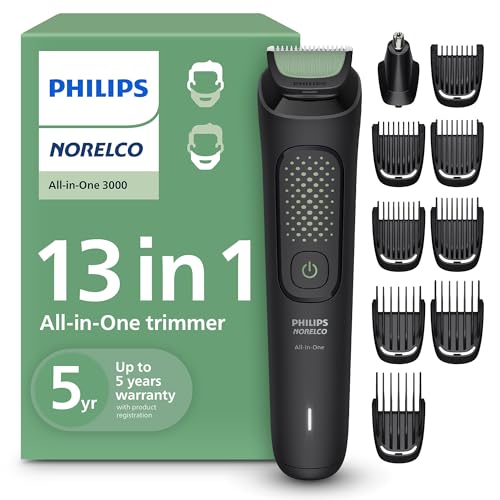
SKIN-FRIENDLY COMFORT BLADES provide a quick, comfortable trim thanks to unique blade technology with rounded tips that are gentle on skin as you trim
Motor Power: Why Clippers Are Stronger Than Trimmers
Because clippers rely on consistent power to cut through dense facial hair efficiently, they’re equipped with substantially more powerful motors than their trimmer counterparts. Pivot motors in clippers deliver twice the power of magnetic alternatives, prioritizing cutting force over blade speed. This design choice guarantees reliable performance on thick hair types while maintaining whisper-quiet operation.
Rotary motors, found in heavy-duty clippers, balance high power with elevated blade speeds for superior cutting precision. You’ll notice they feature multiple speed settings, allowing you to adjust performance based on your needs. All clipper motors maintain a maintenance-free design that eliminates the need for regular internal servicing. Popular models like the Philips Head Shaver Pro 7000 Series demonstrate how advanced motor technology enhances grooming efficiency. Meanwhile, beard trimmers typically operate between 5,000 and 12,000 cuts per minute—considerably less than clipper capabilities. Quality clippers at various price points ensure that professional-grade motor performance is accessible across different budget levels.
Modern clipper motors incorporate brushless technology and digital load adjustment, enhancing motor efficiency and extending battery life during extended grooming sessions.
Guard Systems: Trimmers vs. Clippers Length Control
While clippers and trimmers both control cutting length through guard systems, they’ve adopted fundamentally different approaches to achieve precision.
Clippers rely on numbered guards (#0–#8) that attach securely via clip-on or magnetic mechanisms, offering uniform lengths from close buzzes to longer trims. You’ll find Wahl’s metal clip designs provide slip-resistant holds, while magnetic systems prevent shifts during detailed work. Professional-grade clippers like the Wahl 5 Star Magic Clip feature zero-overlap blades and long battery life for barber-quality results.
Trimmers, conversely, integrate adjustable guard types directly into trimmer heads. Philips Norelco features zoom wheels for 0.5mm increments, whereas Braun precision dials enable micro-adjustments in identical steps. These attachment mechanisms eliminate multiple attachments on models like Multigroom Series. For achieving crisp edge lines, many barbers prefer trimmers with precision blade designs like those found in professional edge-up models. Understanding guard sizes tailored to personal grooming needs ensures consistent length outcomes across different beard styles and densities.
However, guard incompatibility remains essential: you can’t interchange clipper guards with trimmer guards. Braun systems prove highly model-specific, while Wahl and Babyliss guards work across their respective clipper lines only.

Personalized Cutting and Sculpting: The precision beard trimmer for men has an adjustable dial with 19 settings to get the exact look you want; the included comb attachment raises flattened hairs for clean cutting

Versatile Length Settings: This 6-in-1 adjustable guard offers five different length options ranging from 1mm to 6mm, allowing you to achieve your desired beard or stubble style with ease. Perfect for maintaining everything from a close shave to a longer, well-groomed beard

[Game-changer] Do you need a replacement in case original manscapers clipper guard breaks or is lost? We are here to rescue! Stovast provide functional replacement guards for manscaped 3.0 trimmer (ONLY) (NOT FOR 3.0 PLUS), which will help revolutionize your home grooming experience, perfect for the hair, beard, stache, mustache, groin, chest, stomach, legs, pubes, balls and other private parts shaving
Why Size and Weight Matter for Each Tool
Size and weight fundamentally shape how each tool performs in its intended application. Trimmers’ compact design gives you size advantages when maneuvering through facial contours, jawlines, and intricate beard details. Their lightweight construction reduces hand fatigue during precision work, allowing you to maintain steady control through extended grooming sessions.
Clippers demand different weight considerations. Their heavier frame provides stability when cutting thick scalp hair, counteracting torque from powerful motors. The larger body accommodates robust cutting mechanisms that process dense hair efficiently across expansive head areas. Clippers typically feature adjustable guards for varying hair lengths, which allows users to customize cut depth for different sections of the head.
Your weight considerations depend on task duration. For detailed facial work, trimmers’ minimal mass prevents strain. For bulk head-hair removal, clippers’ substantial heft guarantees consistent pressure and control. Selecting the right tool means matching its physical characteristics to your specific grooming needs and hair density.
Trimmers for Facial Hair: Edges, Stubble, and Detailing
When you’re working with facial hair, trimmers deliver the precision that clippers can’t match. Their narrower blades with finer teeth spacing let you navigate facial contours, cheeklines, and necklines with surgical accuracy. You’ll appreciate how precision trimming techniques excel at edging and outlining, creating crisp lines along your jawline and mustache.
For stubble maintenance tips, use your trimmer’s adjustable guards—typically ranging from 1mm to 5mm in 0.5mm increments—to manage everything from a 5 o’clock shadow to polished short beards. The compact design and moderate motor control enable you to handle tricky areas like ears and sideburns without fatigue. Models like the Remington Foil Shaver F5 are specifically engineered for clean shaves and stubble work on sensitive skin. Regular cleaning and care of your trimmer will extend the life of the device, ensuring consistent performance for years of grooming. Mastering the neckline and cheek line definition will help you achieve the polished edges that distinguish a well-groomed beard. Your trimmer becomes a detail artist, delivering finishing touches that clippers simply can’t achieve on smaller facial areas.
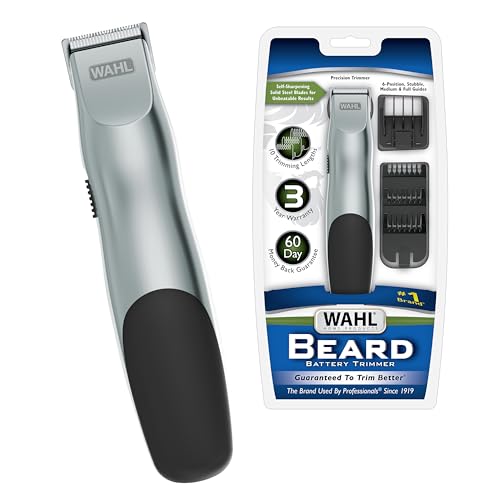
Precision Ground Blades – Our high-carbon precision-ground blades stay sharp longer, use in conjunction with our six-position beard regulator for multiple beard trimming lengths; Our beard guards vary in length from stubble to short and clean, to thick and even

Complete with All Essential Accessories: This women's grooming kit comes with a full suite of professional accessories - including 3 specialized trimmer heads (hair, foil, facial), 2 adjustable hair guards, a cleaning brush and USB charging cable. Everything you need for precise head-to-toe hair removal is conveniently included in one box.

20 Precision Length Settings: The Electric Beard Trimmer offers a precision dial with 20 adjustable length settings, allowing for effortless customization from stubble to a full beard. Achieve your desired look with this versatile beard trimmer for men
Clippers for Head Hair: Bulk Cutting and Versatility
Because you’re tackling larger surface areas on the scalp, clippers outperform trimmers through their powerful motors and wider blade designs engineered for volume removal. Super-torque rotary motors reaching 7,200 rpm enable fast, effortless passage through dense head hair. Deep tooth blades enhance cutting efficiency without clogging, while self-sharpening Japanese steel maintains sharpness across multiple sessions. For those seeking premium grooming tools, high-speed motor technology similar to professional-grade razors ensures consistent performance.
You’ll benefit from adjustable blade systems offering zero-gap precision for even cuts. Multiple attachment guards ranging from 1/16″ to 1″ facilitate both bulk reduction and detailed tapering. Cordless models with lithium-ion batteries provide 90-270 minutes of uninterrupted operation, supporting extended grooming sessions. If you’re managing a subscription for grooming supplies, you can easily cancel anytime through your account settings. The included multiple guards in various sizes ensure customized styling for different hair lengths and preferences. This combination of raw power, blade versatility, and runtime makes clippers your ideal choice for all-encompassing head hair management.

15-in-1 Complete Haircut Kit: Everything you need is included: 1×hair clippers, 8×Color-Coded Guards, 1×hair cutting cape, 1×storage pouch, 1×brush, 1×USB charging cable, 1×styling comb, and 1×oil bottle. The hangable design with built-in hole offers convenient wall or hook storage to save space

Cordless Convenience – Color Pro Cordless is rechargeable and wireless. Cord/Cordless allows you to use the clipper on battery or when it's charging.
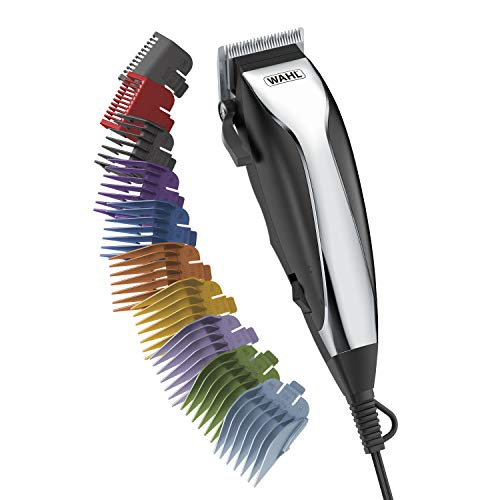
Multi-Cut Hair Clipper - Heavy duty motor for exceptional power and no-snag cutting; features an adjustable taper lever for easy blending and fading. This results in a very strong audible hum, but is completely normal to its operation. Don’t settle for a weak clipper.
How to Use Both Tools Together for Professional Results
Now that you understand how clippers excel at removing bulk from larger surface areas, you’ll want to combine both tools strategically to achieve polished, professional results. Start with your clipper using progressively smaller guards to establish your base length, working from bottom to top. Switch to your trimmer for precise blending and fading, particularly around sideburns and the neckline. Use the clipper-over-comb technique for detailed beard maintenance in sensitive areas, angling your comb to accommodate hair thickness variations. Recognize that beard hair grows in different directions impacting how you angle your tools for even cutting throughout. Professional stylist techniques demand you check regularly for hair buildup and perform cleanup passes with your trimmer for seamless changes. For precision work on facial contours and detailed line work, consider using a high-speed magnetic motor trimmer like professional-grade models that deliver consistent performance for defining necklines and beard lines. To maintain peak performance of your tools, apply specialized clipper oils after cleaning to reduce friction and extend blade life. This integrated approach eliminates harsh lines and delivers the refined appearance clients expect from quality grooming.

Rechargeable Beard Trimmer - Groomsman is a rechargeable unit that allows for up to 60 minutes of run time on a single charge and features a contoured ergonomic handle with soft-grip pads as well as a bonus nose trimmer
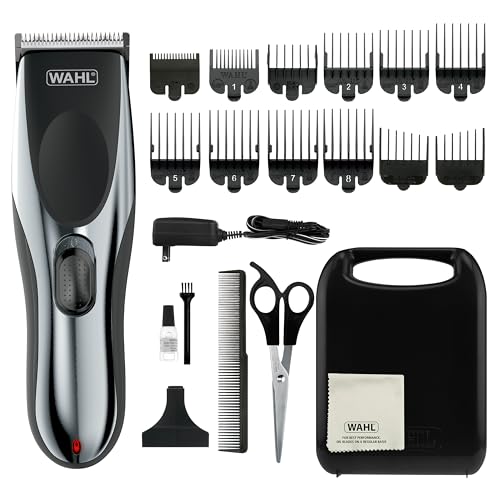
Long Run Time - These clippers feature convenient cord/cordless use options with 60 minutes of cordless run time. Long-lasting easy-to-clean stainless-steel precision blades enable no-snag cutting.

PRO TESTED, CREATED FOR ALL - Our Novah barber kit has been tested in some of the best barbershops around the world to do what they do best. Our barber clippers professional sets are being used worldwide to give zero gap cuts to the men who walk the walk. We have brought our most trusted professional cordless hair clippers to now be available to all