You’ll extend your clipper blade lifespan by sharpening at a consistent 30-degree angle using a 1000 grit stone followed by 6000 grit finishing. Remove minimal steel to preserve blade longevity. Steel blades tolerate aggressive techniques, while ceramic requires gentleness. After sharpening, test your blades on hair or synthetic fibers, checking for smooth operation without grinding noise. Reassemble with proper tension adjustment and apply clipper oil before use. Understanding the specific techniques for your blade type secures peak performance.
Understand Why Clipper Blades Dull
When you’re grooming regularly, your clipper blades dull from the friction generated during each cutting stroke. Hair debris accumulates between blade teeth, grinding against edges and accelerating blade wear. Without proper lubrication, you’re allowing friction and heat buildup to rapidly degrade your blades while dirt continuously abrades the cutting surfaces.
Environmental factors compound these issues. Humidity promotes corrosion on stainless steel, while moisture from clippings causes hidden rust between teeth. Improper coat conditions also matter—knotted, thick, or unthinned coats force blades to chew rather than cut cleanly, creating uneven wear patterns. Built-in safety features may shut off your clippers during overheating, requiring a cooling period before resuming use. Specialized clipper oil formulations containing mineral oil and corrosion-preventing ingredients are essential for protecting blades from rust and maintaining their sharpness.
Maintenance importance can’t be overstated. Regular cleaning, proper lubrication, and appropriate blade prep prevent most dulling problems. For optimal results, apply clipper oil with 3–5 drops after disinfecting, run briefly to distribute, and wipe clean to prevent excess from entering the motor. Understanding these factors helps you extend blade life and maintain cutting performance.
Gather Your Sharpening Tools
Now that you understand what causes blade dulling, you’ll need the right equipment to restore your blades to peak performance. Your essential tools should include a professional clipper blade sharpener like the CS-101-2000 or AV-36 machine, which accommodates various blade styles and sizes. You’ll also need a precision honing plate machined to exact specifications and a special formula sharpening compound to enhance the grinding process.
Tension and alignment tools prove critical for proper sharpening techniques. Invest in a STAT Clipper Blade Tension Adjuster and a Simple Setter for precise blade positioning. Supporting accessories include magnets for secure blade holding during sharpening, a clipper cradle for disassembly, and a Metal Removal Gauge to monitor material loss. Hand-operated sharpeners designed for quick blade touch-ups offer convenient maintenance options suitable for barn environments. Regular oiling with clipper-specific oil between professional sharpenings can help extend the intervals between full sharpening sessions.
Finally, acquire a Mini-De-Mag Demagnetizer to remove metallic particles and a Clipper Blade Test Scale to verify sharpness. Just as regular maintenance of electric razors extends their lifespan, consistent care of your clipper blades ensures they remain in optimal condition. These essential tools guarantee professional-quality results.

Quick and easy
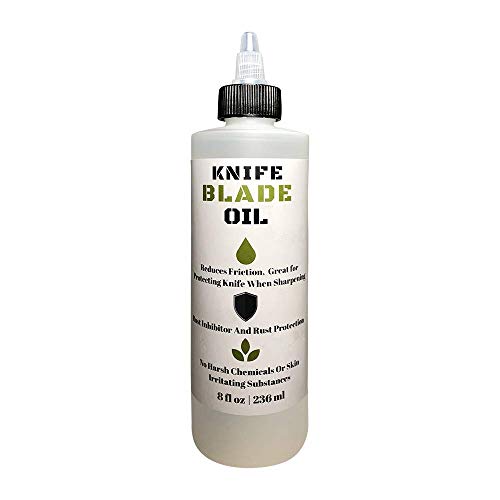
NATURAL & SAFE: Our Knife Blade oil is composed of 100% natural food-safe ingredients to provide worry-free use. While also providing superior protection for kitchen knives, pocket knives, and more

One-Stop Sharpener: The Orange Ninja Multi-Sharpener is your all-in-one solution for maintaining razor-sharp edges on a vast array of tools. Expertly crafted to cater to everything from knives to hunting gear, and garden tools including axes, hatchets, machetes, pruners, hedge shears. With our advanced sharpening system, you can be confident that each tool, whether used indoors or outdoors, will deliver peak performance every time
Inspect and Prepare Your Blades
Before you begin sharpening, thoroughly inspecting your clipper blades will help you identify whether they need restoration or replacement. Check blade edges for nicks, dull spots, and visible damage that might necessitate replacement rather than sharpening. Examine teeth for rust, corrosion, and misalignment that could compromise cutting performance.
Next, employ effective cleaning techniques to prepare your blades. Use a soft-bristled nylon brush to remove loose hair clippings and debris from blade surfaces and teeth. Clear buildup between teeth where hair and product residue accumulate. Dip blades into rubbing alcohol or wipe with an alcohol-soaked cloth to disinfect and degrease surfaces, making sure all residue reaches crevices. A well-ventilated area helps prevent inhaling particles while cleaning and preparing your blades. Regular maintenance prevents fungal and bacterial growth that can accumulate on blade surfaces over time. Proper blade lubrication every 10 minutes during use will also help maintain cutting performance and prevent overheating during sharpening processes.
Finally, rinse blades under warm water and dry completely with a microfiber cloth. This blade inspection and preparation guarantees ideal sharpening results.
Sharpen Different Blade Types Correctly
Different clipper blade types require tailored sharpening approaches to maintain their cutting performance and lifespan. Steel blades tolerate aggressive sharpening techniques, while ceramic blades demand a gentler touch due to their brittleness. A2 and A5 blades are resharpenable multiple times using professional methods, though A5 blades require reassembly and tension reset after sharpening. For flat blades, lay them flat on your stone and run them back and forth—ten passes typically suffice. Start with a 1000 grit stone for sharpening, then follow with 6000 grit for polishing, completing the process in 1-2 minutes. Proper blade care guarantees minimal steel removal while maintaining precision. Minimal steel removal during sharpening ensures maximum longevity of the blades. Test your results on faux fur to verify clipping efficiency before returning blades to service.
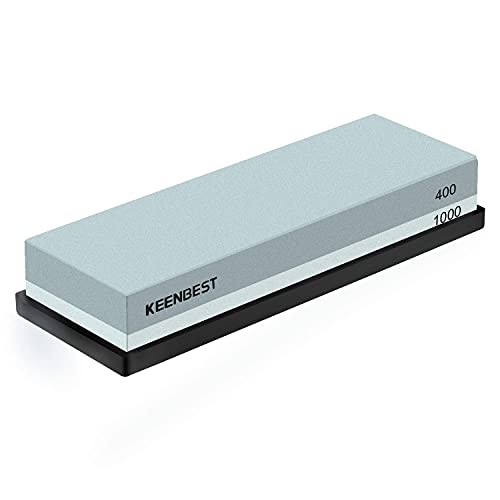
Made with superior silicon carbide, the 400 grit side is suitable for any daily sharpening, such as repairing the knives with big cutting edges, and polishing the knives, the 1000 grit will help you to make the knives more smooth after using the 400 grit
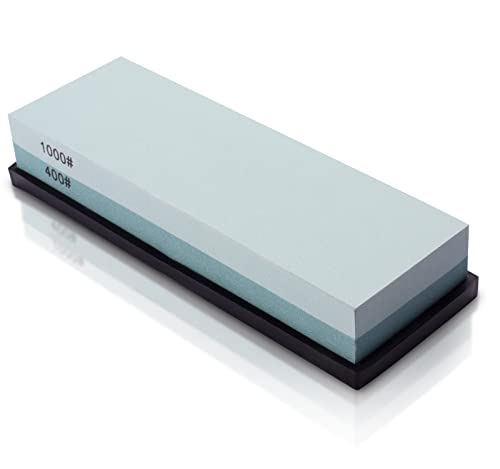
DUAL SIDED SHARPENING STONE: Made from durable silicon carbide(processes and inspections.), this two-sided sharpening block comes with both a 400-grit side, used for returning edges to their original shape, and a 1000-grit side used for smoothing and polishing cutting edges. Corrosion-resistant, heat-resistant, edges, and corners are clearly demarcated
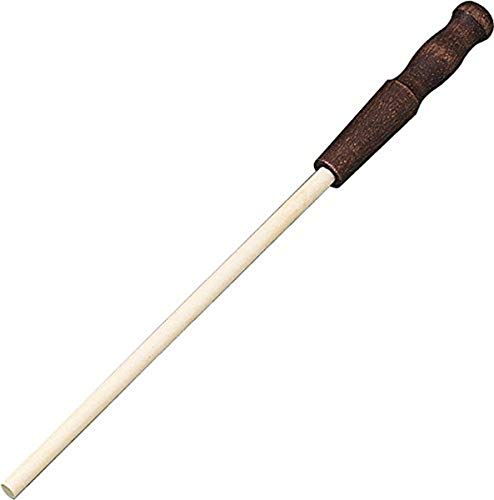
Wood handle
The 30-Degree Angle Technique for Home Sharpeners
While the foundational sharpening methods work well for most blade types, maintaining a consistent angle separates adequate results from precision performance. You’ll achieve ideal results by establishing a 30-degree secondary bevel using a honing guide set with a protrusion stop for exact blade mounting. This angle consistency proves critical—precision beyond 29–31 degrees becomes irrelevant if you repeat your angle reliably each session.
Position your honing guide carefully, center your blade side-to-side, and apply steady 1.5-pound pressure throughout the stroke. Push harder at the stroke’s end to guarantee even sharpening across the blade’s entire edge. To prevent overheating the steel and maintain edge integrity, avoid using dry grinders that generate excessive heat during the sharpening process. After sharpening, wipe the blades clean of metal dust to ensure optimal performance. Regular maintenance with specialized clipper oils between sharpening sessions will also help extend blade life and maintain optimal cutting performance. Once mastered, you’ll complete the secondary bevel in roughly 30 seconds.
This repeatable technique reduces total sharpening time to 60 seconds or less while delivering superior edge quality that exceeds freehand results.

𝐀𝐜𝐡𝐢𝐞𝐯𝐞 𝐫𝐚𝐳𝐨𝐫-𝐬𝐡𝐚𝐫𝐩 𝐞𝐝𝐠𝐞𝐬 𝐞𝐯𝐞𝐫𝐲 𝐭𝐢𝐦𝐞: SHARPAL 194H is the perfect tool to ensure that your knives, chisels and Plane Iron Blades are always sharpened at the correct angle, resulting in sharper edges that last longer.
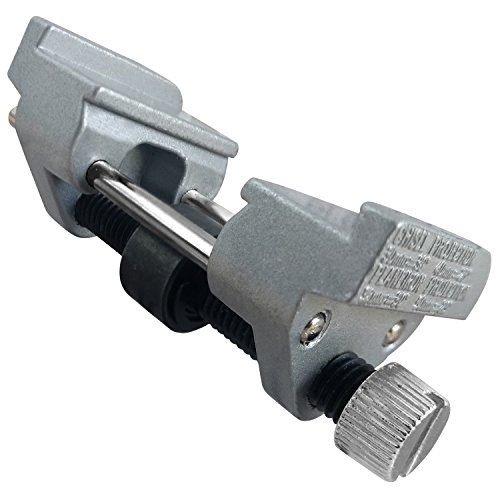
The ATLIN Honing Guide allows you to easily choose your desired sharpening angle, and consistently achieve the perfect edge on your tools

New Angle Fixing Tool - This honing guide can secure and fine-tune the angle where the chisel edge meets the whetstone, allowing the entire knife edge to be sharpened uniformly.
Use Professional Grinding and Hollow-Ground Methods
When you’ve mastered foundational home sharpening techniques, professional grinding and hollow-ground methods offer the next level of precision for clipper blade maintenance. Grinding techniques employ specialized wheels that remove micrometers of steel, ensuring consistent results when you maintain proper blade positioning perpendicular to the wheel’s center. You’ll prevent overheating by limiting pressure to 5-10 seconds of proper contact.
Hollow ground benefits include preserving your blade’s original geometry and cutting efficiency. You’ll notice the characteristic crescent or moon-shaped curve pattern when properly sharpened. However, selecting the correct wheel type for your blade’s specific grind is critical—incorrect choices can ruin blades irreparably. Professional services inspect blades beforehand, identifying whether they’re flat or hollow-ground before determining appropriate sharpening equipment and techniques. For users who groom frequently and need comprehensive grooming capabilities, investing in professional blade maintenance ensures optimal performance. Regular maintenance is crucial to extend blade life and prevent the need for professional sharpening services, with some users finding that proper care can extend blade effectiveness significantly beyond initial wear indicators.

Dual-Function Grooming Tool for Dogs and Cats - This 2-in-1 pet nail clipper combines a dog nail trimmer and pet nail grinder, making it ideal for both large dogs and small dogs. It ensures a precise, safe, and easy nail trimming experience for your pets, from puppies to adult dogs and even indoor cats

Dual-Function Grooming Tool for All Pets: This 2-in-1 nail clippers combines a powerful dog nail clippers trimmer and precision grinder — perfect for small, medium, and large dogs, as well as cats. Designed for multi-pet households, it works great as a cat nail clipper and dog nail grinder, ensuring fast, safe, and accurate trimming with one professional tool. Ideal dog nail trimmers for grooming comfort.

All-in-One Dog Paw Trimmer: Replace 4 tools with 1 pro-grade dog trimmer for grooming! Trim pet body coats, shave sensitive dog paw trimmer areas, detail face/ears, grind nails, and remove mats – no extra blades needed. Suitable for full-body care in 15 minutes
Test Your Sharpened Clipper Blades
After you’ve sharpened your clipper blades, you’ll need to verify the work’s quality through systematic testing before returning them to regular use. Start with visual inspection, examining the edge for a polished appearance without nicks or dull spots. Run your finger lightly across the blade to feel noticeable sharpness, then test cutting capability on hair or synthetic fibers for clean results without pulling.
Next, perform blade testing during operation. Listen for smooth humming without unusual noises or grinding sounds. Check edge stability by measuring spring tension using a blade scale tool—aim for the green zone of 2-3/4 to 3-1/4 pounds. To prevent damage and ensure optimal blade performance, maintain correct spring tension throughout the testing process. Finally, run the clippers through a small hair section to confirm clean cuts and proper performance across full speed range. Just as safety razor blades require recognition of signs of dullness to maintain performance, clipper blades benefit from regular testing to ensure they continue delivering quality results. Proper hygiene during and after blade testing helps prevent folliculitis or infection that can result from contaminated cutting tools.

Package Include:2Set/4Pcs*Cutter Accessories+1PCS Motor

𝐏𝐞𝐫𝐟𝐞𝐜𝐭 𝐅𝐢𝐭: These Electric Hair Clipper Springs are precisely designed to be compatible with Babyliss FX870 clippers. Please verify compatibility with your specific cordless clipper model before purchasing

Univen hair clipper blade tension spring, cam follower and blade guide
Reassemble and Adjust Blade Tension
You’re now ready to reassemble your clipper head with the sharpened blades. Position them with a 1-2mm leading edge on the comb blade, ensuring the top cutter aligns squarely with the bottom cutter before sliding into place. Apply clipper oil to lubricate the blades prior to final seating.
For tension adjustment, turn the tension knob clockwise until you feel resistance, then add a quarter turn more. Consult your model-specific guidelines, as different clippers require varied approaches—Lister models need 1.5 turns counterclockwise, while Wolseley requires 4 turns anticlockwise after tightening fully. Proper tension ensures smooth gliding and clean cuts while minimizing hair chewing during clipping operations. Always ensure guide combs are properly attached by aligning tabs and snapping them securely into place before operation.
Measure pressure by sliding the top cutter one inch using a scale. Aim for 2 pounds of pressure. Test the cutter under your finger; it should slide easily. Run the clipper powered on and listen for pitch changes, adjusting tension accordingly for peak performance. Different blade types like ceramic offer varying durability characteristics that may affect how tension adjustments perform over time.
Build Maintenance Habits for Lasting Sharpness
Sharpening your clipper blades is only half the battle—the real key to maintaining peak cutting performance lies in establishing consistent maintenance routines that prevent premature dulling. Implement daily cleaning techniques by brushing away debris and applying blade wash solution after each client. This removes hair, skin, and product build-up that accelerates blade degradation. Combine these cleaning techniques with effective lubrication methods: apply three drops of oil to the blade’s top edge before every use, reapply every 15-20 minutes during operation, and wipe away excess to prevent debris attraction. Touch blades every 5-10 minutes to monitor temperature, applying coolant spray when necessary. Consider using professional-grade balding clippers with ceramic blades that resist dulling compared to standard options. Perform thorough cleaning every 1-2 weeks and disinfect blades between appointments. Regular maintenance sustains your clippers’ performance and lifespan, ensuring that exceptional condition of tools reflects your dedication to craft. These habits extend blade life considerably and reduce your professional sharpening frequency.