You’ll find that buzz cuts range from #1 guards (1/8 inch) for bold aesthetics to #4 guards (1/2 inch) for crew-cut shifts. Modern fades—skin, taper, and high-and-tight—create visual contrast and definition. Your face shape determines ideal lengths: oval faces suit all styles, while round faces benefit from shorter cuts (#1-#3). Textured techniques and dimensional blending enhance natural hair texture. Coloring options include bleaching and gradient effects for personalized looks. Understanding these visual elements helps you identify the style that matches your features and lifestyle.
Find Your Perfect Buzz Cut: A Quick Face Shape Guide
How does your face shape influence which buzz cut length‘ll work best for you? Your face shape determines ideal styling tips and cut proportions.
Oval faces offer maximum flexibility across all lengths, making them perfect for experimentation. Round faces benefit from shorter cuts (#1-#3) paired with facial hair to create definition and elongate features. Square faces showcase strong jawlines beautifully with tapered cuts in the #1-#3 range that highlight bone structure.
Oblong faces require longer lengths (#3-#5) to avoid emphasizing vertical proportions. Heart and diamond faces suit medium lengths (#3-#4) that balance angular features while maintaining visual interest. Maintenance frequency varies depending on which guard length you choose, so plan your barbershop visits accordingly.
Each face shape responds differently to clipper grades. Understanding your specific proportions allows you to select lengths that enhance your natural features rather than work against them. For best results, assess your scalp and use proper blade oiling techniques to ensure even cutting across all areas. When traveling with your clippers, remember that hair clippers are permitted in both carry-on and checked baggage according to TSA guidelines.

Color Coded: Each guards with a different color and different cutting lengths. Grab quickly based on the identity of color. Please note that the color are randomly assigned.

FITS MULTIPLE MODELS: The clipper guards set is designed to fit Wahl/Suker hair clipper. Please note that they are not compatible with Wahl's competition series and detachable blades.(Note:Please check that the blade size is compatible when purchasing.)

High Quality: Made of sturdy ABS material. Not cheap plastic. Flexible and durable like as original.
Buzz Cut Grades Explained: #1, #2, #3, and #4
The clipper guard system—numbered 1 through 4—creates the foundation of every buzz cut you’ll wear. Understanding grading significance helps you communicate exactly what you want at the barber shop.
A #1 guard delivers 1/8 inch length, exposing your scalp for bold, minimalist aesthetics. The #2 grade steps up to 1/4 inch, providing coverage while maintaining that clean buzz cut appearance. Moving to #3, you’re looking at 3/8 inch—the sweet spot for traditional fades with fuller volume.
Your buzz cut comparisons clarify that #4 represents the longer boundary at 1/2 inch, shifting toward crew cut territory. Each grade progression offers distinct visual impact and maintenance requirements. The taper lever adjustment can further refine your desired length by creating either a closed or open blade position. Shorter buzzes like #1-#2 transition noticeably within 2-3 weeks, while #3-#4 versions maintain their defined appearance longer. These guard lengths require maintenance every 1-3 weeks to preserve the sharp definition and clean appearance of your chosen style. Your hair type, texture, and personal style dictate which grade suits you best for achieving seamless blending and structured definition.
Modern Buzz Cut Fades: Skin, Taper, and High-and-Tight
Once you’ve mastered the clipper guard system, you’re ready to explore fade variations that define modern buzz cut aesthetics. The Skin Fade delivers maximum contrast by exposing skin at the sides and back, creating bold visual impact. The Taper Fade offers a softer, more versatile shift—available in high, mid, or low heights—making it ideal for professional settings. The High Fade begins 2-3 inches above your ear, establishing sharp silhouette and height for angular face shapes. The Mid Fade provides balanced modernity, starting at temple height with minimal maintenance demands. Finally, the High and Tight represents an extreme skin variation, keeping your top extremely short for military-inspired precision. To maintain sharp fade lines between clipper lengths, regular cleaning and blade maintenance are essential to prevent tugging and ensure consistent cutting performance. Maintenance for these fades is required every 1–2 weeks, varying by fade height and individual growth patterns. Each variation transforms your overall appearance distinctly.

High Quality: Constructed from robust nylon material. Flexible and sturdy like the original.

Durable Molded Construction: Crafted using high-quality molds, not 3D-printed, ensuring superior durability and resistance to wear and tear

Color Coded Convenience – Each guard comes in a distinct color and cutting length, making it easy to identify and grab the right one at a glance. (Note: Colors are randomly assigned.)
Add Texture and Dimension: Textured Buzz Cuts for Every Style
While fade variations establish your silhouette’s framework, adding texture and dimension transforms that foundation into a contemporary, dynamic style. You’ll achieve textured techniques by combining clipper work with precision scissoring on your uniform top length. Your barber uses overlapping clipper strokes and multiple angles to catch every strand, then applies texturing scissors for variation without sacrificing length. This approach suits thick, coarse, and fine hair equally well—enhancing natural texture or preventing flatness. Dimensional styles benefit from a number four or five guard on top, blended downward with smaller guards. Light wrist flicks during blending maintain smoothness, while bare clippers define edges for sharp contrast. For achieving these precise cuts, professional clippers like the Wahl Professional 5 Star are designed to handle close blending and edge definition without irritation. Quality blade materials like stainless steel ensure durability and consistent performance across multiple haircuts. The result’s a polished, textured cut requiring minimal daily styling—just pre-styler product and a hairdryer for pieced definition.
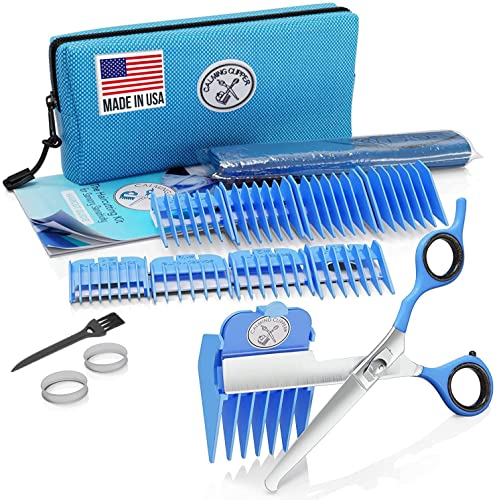
EASY HAIRCUTS: The gentle alternative to buzzing clippers for individuals with sensory sensitivity. PATENTED

Handle Length:Approx.12cm/4.72inch

Gold Home Haircut Kit: 360° automatic rotating head, realize the true meaning of full self-service haircutting; head using sharp stainless steel blades, sharp and durable, without the help of others, fast to deal with the perfect inch hair
Make It Yours: Coloring and Customizing Your Buzz Cut
How far you’ll push your buzz cut’s aesthetic depends entirely on bleaching technique and color application. You’ll start by applying bleach from temple to temple, processing for up to 45 minutes until you achieve that essential pale yellow base. A scrape test confirms readiness—aim for banana skin interior tones.
Once bleached, you’ll shampoo twice before toning with 20 volume developer and semi-permanent dyes. Your bleach techniques establish the foundation for vibrant results. You can then experiment with color mixing directly on your scalp, adjusting intensity by layering shades like pink over brighter sections. Gradient effects emerge when you blend adjacent colors with your brush, creating ombre shifts or asymmetrical patterns. Since buzz cuts reveal your natural facial structure, consider how your chosen colors will complement your face shape for the most flattering overall appearance. After rinsing your color, apply a moisturizer with hyaluronic acid to restore hydration to your scalp and hair. Conduct a strand test 48 hours before beginning the bleaching process to ensure your hair can handle the chemical treatment. Leave colors processing for 30 minutes before rinsing for ideal saturation and customization.
Pair Your Buzz Cut With Facial Hair
Your buzz cut‘s foundation is complete—now you’ll shape the overall aesthetic by pairing it with facial hair that complements your head and face structure.
Current buzz cut trends showcase strategic beard grooming as essential to your look’s success. Match your face shape deliberately: oval faces benefit from rough, long beards with short buzz cuts, while round faces pair induction buzz with stubble for balance. Square jawlines demand super-short styles highlighting facial contours.
Beard grooming requires consistent maintenance. Trim your beard to match your buzz cut’s clean lines, visiting your barber regularly for fades and blends. For longer styles, apply beard oil and lightweight cream to keep whiskers moisturized. Shape shorter beards on top if you’re not growing them fully. Professional barbers often recommend using quality clippers to maintain sharp, precise lines between your facial hair and buzz cut. For sensitive skin prone to irritation, consider pairing your shaving routine with foil shavers designed to minimize bumps and razor burn. Consider combining your buzz cut with beard for a well-groomed appearance that enhances your overall style. This coordinated approach creates intentional, polished masculinity.
Keep It Fresh: Maintenance and Upkeep for Buzz Cuts
Because hair grows approximately 1/8 inch weekly, you’ll need to establish a consistent trimming schedule to preserve your buzz cut’s sharp lines and uniform appearance. Induction cuts require trims every 1-2 weeks, while burr and standard cuts need attention every 2-3 weeks. Butch and brush cuts extend to 3-5 weeks between trims.
Invest in quality maintenance tools: adjustable clippers, a precision trimmer, and handheld mirrors for ideal DIY techniques. Wash and dry hair thoroughly before trimming against the grain for even results.
Scalp care proves equally critical. Moisturize daily with lightweight lotion, wash 2-3 times weekly with mild shampoo, and exfoliate weekly to prevent ingrown hairs. Apply sunscreen during outdoor exposure. Consider incorporating shea butter and seed oils into your scalp care routine for enhanced moisturization and conditioning benefits. Incorporate scalp massages to promote blood circulation and maintain scalp health. Product recommendations include minimal styling products to prevent buildup while maintaining your cut’s clean aesthetic. Using high-quality clippers with adjustable guards from reputable brands will ensure your maintenance routine produces professional-looking results every time.
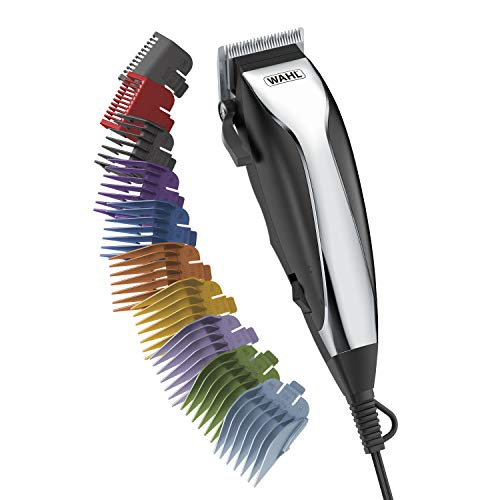
Multi-Cut Hair Clipper - Heavy duty motor for exceptional power and no-snag cutting; features an adjustable taper lever for easy blending and fading. This results in a very strong audible hum, but is completely normal to its operation. Don’t settle for a weak clipper.

Hair Clipper:Heavy-duty gear for proper powerful cut, with stable and steady control. The R shaped rounded edge design prevents from accidentally hurting skin.

CORDLESS&CORDED TCMKY Hair Clippers for men can be with cord or cordless which is super convenient for self cutting. USB charging 3Hours One full charge Last up to 200 minutes of use.When the power of the hair cutting kit is used up This hair clippers for men supports plug and play.When charging The charging capacity can be seen from the display.When the power in the display screen is 100% unplug the power cord
What to Tell Your Barber for the Perfect Cut
Communicating your desired guard size sets the foundation for achieving the buzz cut you’re envisioning. Use precise buzz cut terminology when describing your preferences—specify guard numbers rather than vague descriptors like “short” or “long.” If you’re uncertain, mention that you’re a beginner and want to avoid overly short results; your barber can recommend higher guards accordingly.
Detail your fade style explicitly: indicate whether you want a low taper, mid skin fade, or butch cut with faded sides. Reference specific guard combinations, such as #7 on top paired with a mid skin fade for beginner-friendly results. Remember that smaller number guards create shorter cuts, which is essential knowledge when communicating with your barber.
Don’t hesitate to ask your barber about blending techniques and neckline shaping. For the best results, your barber should maintain their clippers with regular oiling to ensure smooth, precision blending without pulling or snagging. Effective barber communication also benefits from understanding that proper grooming hygiene reduces bacteria and infection control during the cutting process. Effective barber communication guarantees your vision translates accurately to execution, delivering the polished finish you’re seeking.

Hair Clipper Companion – Wahl’s Secure-Snap guide combs with colored metal clips are an upgrade to your existing hair clipper guide combs; Organizer conveniently and hygienically stores all the included hair clipper guards

ADJUST CUTTING LENGTH: Adjusts the length of the cut to make the haircut simpler. Assist you in creating numerous hairstyles to satisfy your diverse needs. Fits Models-LCL, ML, MLC, US-1

High-Grade Nylon Build: Crafted from durable, flexible nylon designed to withstand daily use while providing a smooth, comfortable glide equal to original guards.
Buzz Cut Transformations: Real Results by Face Shape
Since face shape fundamentally influences how a buzz cut frames your features, selecting the right guard length and fade style can either enhance or diminish your natural proportions.
Oval faces gain flexibility with uniform cuts using guards #2-#3 paired with low skin fades. Round faces benefit from #4+ lengths with high-and-tight fades that elongate and define. Square faces showcase strong jawlines with tapered buzz cuts in #1-#3 ranges, emphasizing natural angles. Oblong faces require #3-#5 guard lengths to minimize vertical emphasis and add facial bulk. Professional barbers recommend regular maintenance every 2-3 weeks to prevent uneven regrowth that can compromise the sharp definition these styles require. Maintaining proper hygiene during the trimming process ensures both healthy skin and optimal results. Just as with eyebrow grooming, keeping skin taut during the cutting process helps prevent accidental nicks and ensures cleaner lines.
Diamond and heart-shaped faces thrive with mid fades at #3-#4 lengths, balancing angular cheekbones. Understanding your face shape enables you to communicate precisely with your barber, ensuring results that maximize your best features while addressing proportional concerns effectively.