

You’ll uncover that a safety razor’s guarded blade design delivers a closer, safer shave than modern cartridge systems by maintaining a fixed cutting angle and exposing only a controlled portion of the blade edge. The guard limits blade exposure to protect your skin while directing the blade at a consistent 30-degree angle. You’ll achieve superior results with proper grip technique, using light pressure and three-finger stability. Understanding blade types, maintenance protocols, and common issues will transform your shaving experience.
What Is a Safety Razor and How Does It Work?
Because straight razors posed significant injury risks, the safety razor was invented as a protective alternative—featuring an exposed blade edge guarded by a mechanical mechanism that minimizes cuts.
When you use a safety razor, you’re leveraging a two-component design: a cap and base plate that securely brace your replaceable blade at a fixed angle. This positioning prevents the blade from moving excessively, which is essential for safe shaving techniques.
You’ll find blades made from high-carbon or stainless steel materials, offering durability and sustained sharpness. The cap exposes just enough blade edge to slice lifted hair during your skin pass while protective elements limit blade depth. Safety razors deliver closer shaves with significantly less skin irritation compared to multi-blade cartridge systems. Many safety razors feature adjustable aggression levels, allowing you to customize blade exposure for your specific skin sensitivity needs.
To operate yours, you’ll twist or unscrew the head, insert your blade between cap and base, then reassemble. Post-shave, you’ll disassemble for cleaning and blade replacement, maintaining hygiene standards that straight razors couldn’t match. The butterfly mechanism in many safety razors allows easy blade replacement without any risk of contact with the sharp edge.
The Guard: Your First Line of Defense Against Cuts
The guard—that protective bar or comb positioned between your blade and skin—is what transforms a straight razor’s dangerous edge into a controlled shaving tool. This ingenious design limits skin contact with the blade while guiding it at a consistent 30-degree angle, greatly reducing cut risk.
Guard effectiveness depends on blade exposure—how much your blade protrudes beyond the guard. Negative exposure recesses the blade for milder shaves, ideal if you’re starting out. Neutral exposure balances aggression and safety, while positive exposure protrudes the blade for more aggressive cutting. Professional barbers often rely on trimmers with high-speed magnetic motors to achieve precise lines alongside safety razors for detailed grooming work.
Guard types vary considerably. Solid bars provide consistent protection for sensitive skin, while open comb or scalloped designs increase aggressiveness by creating skin tension. Understanding these variations helps you select the right razor for your needs, whether you’re a beginner exploring safety razors for beginners or an experienced wet shaver. The metal guard also smooths the surface and ensures minimal contact with the skin during the shaving process.
Single-Edge vs. Double-Edge Blades: Which Should You Choose?
Single-edge blades feature thicker construction with approximately 50mm cutting surfaces, delivering superior stability and reduced flex during shaving techniques. They’re ideal for beginners due to their lower learning curve and ergonomic handles. Double-edge blades measure 37mm and offer two usable sides, minimizing rinse frequency while reducing irritation through thinner, sharper edges.
Your blade types selection depends on your priorities. If you’re new to safety razors, single-edge models provide predictable, consistent shaves with enhanced angle control, particularly in difficult areas like your chin. If you’re experienced and prioritize cost-effectiveness, double-edge blades offer superior precision, easier cleaning, and better hygiene benefits. The greater standardization of double-edge blades across manufacturers ensures reliable compatibility with most handles on the market. Models like the King C. Gillette and Merkur 34C HD showcase how well-designed double-edge razors deliver consistent performance across different experience levels. Both blade types outperform cartridges considerably in skin health and overall shaving performance, particularly when using sharp blades to prevent ingrown hairs and razor bumps that plague users of multi-blade cartridge systems.
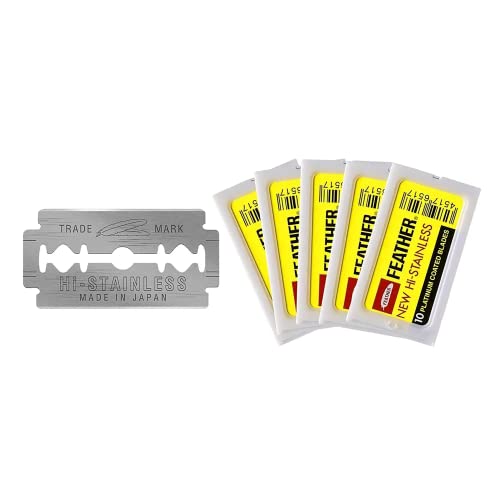
Fifty Count Of Double Edge Razor Blades; Our Razors For Men Feature A Fifty Count Of Double Edge Razor Blades; Feather Razor Blades Are Extremely Sharp And Will Give You A Great Shaving Experience

Model Number: ASTRA01

Sharp and Precise- Highest quality edging blades for a precise and clean shave.
How Safety Razors Were Invented (and Why They Beat Straight Razors)
Once you’ve settled on your preferred blade type, you’ll want to understand how safety razors came to exist and why they’ve become superior to their straight razor predecessors. The historical evolution began with Jean-Jacques Perret’s 1762 wooden guard design, which inspired subsequent design innovations. William Samuel Henson’s 1847 patent introduced a detachable comb guard, while the Kampfe brothers enhanced it with reversible guards. The Kampfe brothers, who immigrated from Saxony to the U.S. in 1872, became notable cutlery manufacturers and filed the first “safety razor” patent in 1880, marking a significant milestone in shaving history. King Camp Gillette revolutionized shaving in 1904 by patenting the double-edged safety razor with disposable blades. Unlike straight razors requiring constant stropping and honing, Gillette’s innovation eliminated maintenance demands entirely. His thin, stamped-steel blades could be discarded when dull, making quality shaving accessible and affordable for everyone. This breakthrough transformed personal grooming fundamentally. While safety razors remain popular for their effectiveness, modern alternatives like rotary shavers also offer users exceptional comfort and close shaves through innovative technologies such as multi-directional heads. Safety razors deliver a closer shave with less irritation compared to the tugging action of multi-blade alternatives, contributing to their enduring popularity among modern shavers.
The Right Grip and Angle for Your Closest Shave
Why does grip matter so much when you’re learning to shave with a safety razor? Your grip techniques directly control blade angle and pressure, determining shave quality and safety.
Use three fingers—index, middle, and thumb—securing the handle’s base. Let the razor’s weight do the cutting work; avoid excessive pressure. Position your index finger at the balance point for precision control. Maintaining grip pressure at the base ensures stability during upward strokes and prevents unwanted pressure on sensitive facial areas.
For ideal angles, hold the handle at 30-45 degrees depending on your razor’s head design. Rock the blade lightly until hair lifts, confirming proper positioning. This angle should feel natural, producing a smooth, audible pass. Different blade gap specifications may require slight angle adjustments for optimal results. Experimenting with blade variety allows you to find the sharpness and smoothness level that works best for your specific skin type and hair coarseness.
Grip at your fingertips like holding a pen, allowing precise head control. Stretch skin taut with your free hand before each pass. These grip techniques and ideal angles transform your shaving experience into controlled, close results.
Safety Razors vs. Cartridge Razors: Cost and Performance
Now that you’ve mastered grip and angle, you’re ready to understand why safety razors outperform cartridge razors across multiple dimensions. Safety razors deliver superior shaving techniques through their fixed heads and single double-edged blade types, requiring fewer passes while minimizing irritation. You’ll experience closer, smoother shaves with reduced ingrown hairs and razor burn compared to cartridge razors’ tugging action.
Financially, safety razors prove remarkably more economical. Your metal handle lasts a lifetime while individual blades cost pennies and last 3-5 shaves. Cartridge replacements accumulate substantial long-term expenses, despite their lower initial price. You’ll also reduce environmental impact since double-edge blades are fully recyclable, whereas billions of plastic cartridges enter landfills annually. For those with sensitive skin, milder safety razor options like the Henson AL13 and Edwin Jagger 3one6 are often endorsed by dermatologists to minimize nicks, burns, and ingrown hairs. Consider closed-comb designs if you’re new to safety razors, as they provide greater forgiveness during your learning curve. This combination of superior performance and cost efficiency makes safety razors the intelligent choice for discerning shavers.

Natural Bamboo Grip: Experience comfortable shaving with a double edge safety razor featuring a natural bamboo handle that provides warmth and anti-slip texture even with wet hands. The 5.93-ounce weighted metal head maintains precise blade angle control, letting gravity do the work for a smooth, close shave without added pressure

Precision Shaving for a Smooth, Close Shave: Achieve a precise, close shave with our single blade safety razor designed for men's facial shaving and women's body grooming. The closed comb safety razor head glides smoothly along skin contours, helping reduce tugging and pulling. Enjoy a classic wet shaving experience that's perfect for both beginners and experienced shavers

THE PERFECT SHAVE: Make skin irritations and ingrown hair a problem of the past. With the double sided razor, you will achieve the closest shave effortlessly.
Cleaning, Stropping, and Replacing Blades: A Maintenance Guide
Your safety razor’s longevity depends on consistent maintenance that keeps the blade sharp, prevents corrosion, and guarantees hygienic shaving conditions. Establish cleaning techniques by rinsing all disassembled parts under warm water immediately after each use, then gently scrub threads and crevices with a soft-bristled brush and mild soap. Rinse thoroughly and dry completely with a microfiber cloth to prevent moisture buildup.
For blade maintenance, perform deep cleaning monthly using diluted vinegar soaks to dissolve mineral deposits. Sanitize with isopropyl alcohol periodically, especially before storage. The frequency of cleaning depends on your water’s mineral content, so adjust your routine accordingly for hard or soft water conditions. Unlike electric razors powered by lithium-ion batteries, which require charging management, safety razors demand only manual blade care and storage maintenance. Safety razors with adjustable aggression levels allow you to customize blade exposure for your specific skin sensitivity needs. Replace blades when they appear dull or lose cutting efficiency—typically every 5-10 shaves depending on your beard density and water hardness. Store your clean, dry razor properly to maximize lifespan and performance.
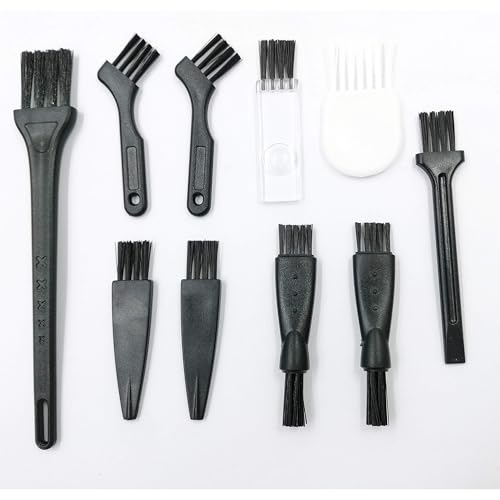
Electric razor cleaning brush
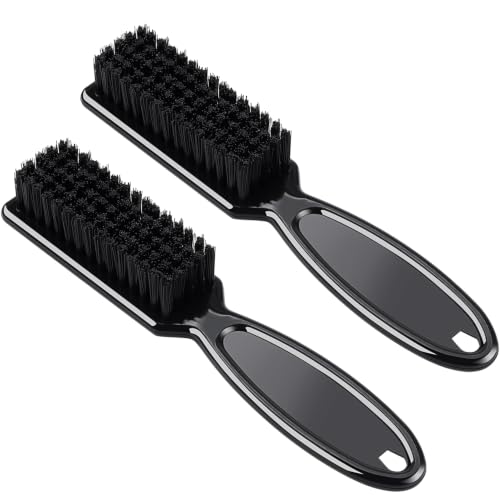
Sturdy Bristles: the cleaning brush can be applied as a brush for edges or to clean clippers and trimmers, study bristles make it nice for clipper cleaning, also suitable for fades and tapers

Electric razor cleaning brush
Common Safety Razor Problems and How to Fix Them
Even with proper maintenance, you’ll encounter issues that compromise shaving performance. Pressure problems rank among the most common culprits—excessive force causes nicks and razor burn. Instead, use a light touch and let the razor’s weight do the work.
Blade alignment and angle matter greatly. You’ll want to maintain a 27-30 degree angle for ideal cutting. Incorrect blade alignment prevents clean cuts or causes irritation.
Your lather technique directly impacts results. Insufficient lather leaves whiskers too short for blade gaps, requiring multiple passes. Use a hot towel over your lather for 2-3 minutes to soften stubble and improve preparation. For those with coarse hair, adequate lubrication like pre-shave oil provides essential extra conditioning before you begin shaving. Regular maintenance like rinsing blades under water helps prevent buildup that compromises performance. Cold water rinsing during or after shaving can reduce inflammation and soothe irritated skin.
Finally, shaving direction affects irritation levels. Always shave with the grain first, relather, then adjust direction if needed. These adjustments eliminate most performance issues.

Nourish and Prepare - Bevel Pre Shave Oil is enriched with a powerful blend of Castor Oil, Olive Oil, and Tea Tree Oil, providing deep hydration and nourishment to your skin, while preparing your facial hair for a smooth shave

NATURAL FORMULA FOR SCALP CARE. Specially designed for head shaving, our blend of natural oils softens hair and protects the scalp. Rich in antioxidants and vitamins, it nourishes and conditions the skin, ensuring a healthy, great-looking scalp.
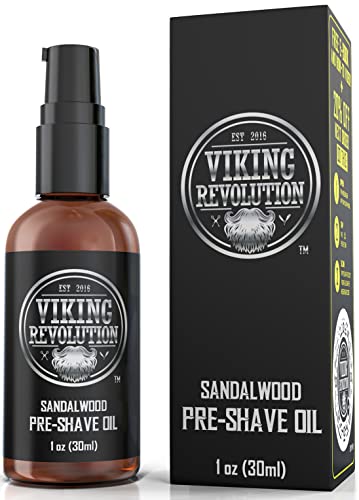
Silky Smooth Shave- Apply our pre-shave oil before your shaving regimen to leave your skin incredibly soft.
Choosing and Setting Up Your First Safety Razor
Once you’ve mastered the fundamentals of technique, selecting the right razor becomes your next priority. For beginners, closed comb razors offer mild shaves with reduced nicks, while adjustable models let you customize blade gap settings to minimize irritation. Consider the Rockwell 2C or Merkur 34C—both feature balanced designs that allow the razor’s weight to do the work without requiring pressure.
Next, match your blade materials and sharpness levels to your skin sensitivity. Medium sharpness blades like MÜHLE suit most beginners and work universally across standard razors. You’ll find common brands including Derby and Astra available in affordable packs. All double-edge blades are compatible with standard safety razors, making it easy to experiment with different options. Like electric beard trimmers, safety razors should be selected based on factors such as precision and ergonomics to ensure comfort and effectiveness during grooming. If you have sensitive skin conditions, consult with a dermatologist about whether safety razors are appropriate for your specific needs.
Finally, disassemble your three-piece razor, load the blade securely, and maintain a 30-degree angle during initial practice strokes. Let the razor glide naturally without forcing pressure against your skin.
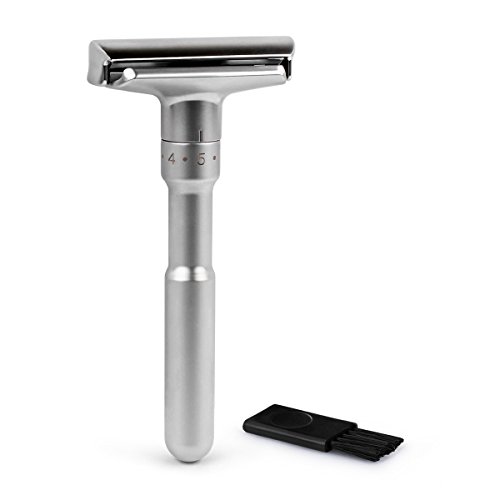
German Design Adjustable Handle to set blade exposure levels from 1 to 6. Matte chrome plated over zinc.

Matte Silver finishing adjustable long handle safety razor to set blade exposure levels from 1 to 6, High quality stand made by aluminum alloy, also matte Silver finish.

German Design Adjustable Handle to set blade exposure levels from 1 to 6. Matte chrome plated over zinc.


