You’ll master the double edge safety razor by holding it at a 30-45 degree angle with light pressure, making short strokes with the grain first. Keep your skin taut and reapply lather between passes. Rinse thoroughly after each shave, dry upright completely, and store away from humidity. Choose blades matching your hair type—Derby Extra works well for sensitive skin, while Feather handles coarse hair aggressively. Deep clean monthly with vinegar and alcohol. The details that’ll truly perfect your technique await ahead.
Safety Razor Basics: Components and How They Work
A double-edge safety razor‘s head consists of two primary components—the cap and baseplate—that sandwich your blade securely between them while a safety bar or guard shields your skin from direct blade contact. Your handle provides the grip and control you need during shaving, while the baseplate aligns with the safety bar to support your blade properly.
Understanding razor functionality requires knowing how these parts work together. The cap guarantees blade rigidity and stability, preventing wobbling that could cause cuts. When you’re ready for blade disposal, you’ll appreciate that double-edge blades are infinitely recyclable after safe removal. Most razors feature either a twist-to-open or butterfly mechanism that simplifies accessing your blade for changes, making maintenance straightforward and efficient. For beginners seeking added safety during their shaving learning curve, guarded alternatives like those with round points can minimize nicks while still delivering an effective shave. Like clippers that work best when held with proper control and grip, safety razors require steady hand positioning to achieve consistent results. Different razor materials like aluminum, brass, stainless steel, and titanium influence the overall weight and durability of your razor, affecting how much pressure you need to apply during your shave.
Assembling Your Double Edge Safety Razor
Assembling your double-edge safety razor involves three main components—the cap, blade, and baseplate (or clamp)—that you’ll combine to form the complete head before attaching it to your handle. Position the blade between the cap and baseplate with correct blade orientation to guarantee proper cutting function. The guard should sandwich the blade, with it extending slightly beyond the safety guard’s edge.
Next, secure all three components together before screwing the head onto your handle. Use firm, gentle tightening without over-cranking to maintain thread integrity. A video tutorial is available for quick assembly guidance to help you through the process. Popular blade brands like Astra, Parker, and Wilkinson Sword offer reliable options for your safety razor once you’ve mastered the assembly technique.
Proper blade angle is essential for achieving optimal shaving results and preventing skin irritation during use. Complete assembly verification by confirming blade extension and checking that all connection points are secure. This final inspection guarantees peak performance and prevents malfunction during use.

CLEAN SHAVE: Traditional Wet shave is the secret of a clean shave. The close comb design provides gentle, close and smooth shave. It will eliminate the skin irritation. It's also perfect for bikini, underarm, facial and leg hair removal.

Premium high-end blade materials & SUPERB quality control, A SUPERIOR, WEISHI Shaving Tool without burning your pocket.

Finding Your Perfect Shaving Angle and Grip
Once you’ve assembled your double-edge safety razor, you’ll need to find the correct shaving angle and grip to achieve an effective, comfortable shave. Start by holding your razor handle perpendicular to your skin, then gradually lower it until the blade contacts your hair. You’re aiming for a shaving angle between 30-45 degrees, though beginners often find 45 degrees more forgiving. Listen for a clean cutting sound as you adjust. Your grip techniques should emphasize light pressure and short, controlled strokes. Pull skin taut before each stroke to maintain consistent angle contact. Remember that your specific razor’s head geometry influences the ideal angle—experiment cautiously until you identify what works best for your equipment and skin. Like choosing between manual and electric back shavers, selecting the right shaving angle and pressure requires testing different approaches to match your individual needs. For those with sensitive skin conditions, selecting a safety razor with adjustable aggression can help minimize irritation and razor burn during the learning process. Maintain consistent angle throughout the shaving area to avoid unevenness and ensure an even, smooth result.
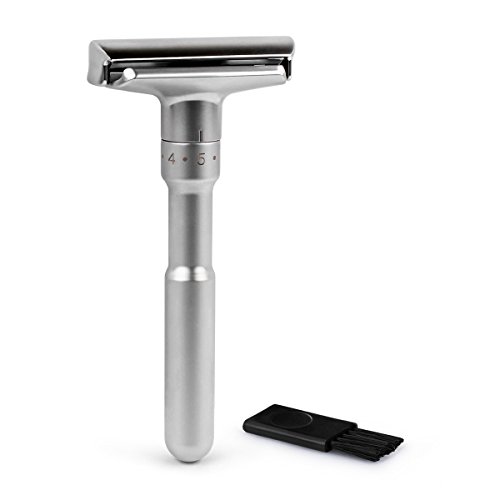
German Design Adjustable Handle to set blade exposure levels from 1 to 6. Matte chrome plated over zinc.

THE SMOOTHEST SHAVE for both men & women – Significantly reducing ingrown hair, skin irritations and razor burn often experienced with plastic cartridge razors, helping you finally achieve the smoothest, cleanest and closest shave.

THE SMOOTHEST SHAVE for both men & women – Significantly reducing ingrown hair, skin irritations and razor burn often experienced with plastic cartridge razors, helping you finally achieve the smoothest, cleanest and closest shave.
The Proper Shaving Technique: Step-by-Step
Now that you’ve mastered the angle and grip, you’re ready to execute a proper shave. Start with your first pass going with the grain from the top downward, using short 1-3cm strokes at a 30-45 degree angle. Let the razor’s weight do the work—apply zero pressure.
Contrary to common shaving myths, multiple passes aren’t necessary for closeness. After completing the first pass, reapply lather and execute a second pass across the grain at 90 degrees. Different lather types perform differently; thicker lathers provide better cushioning and exfoliation. For optimal results, consider using tube cream over aerosol for its higher fat content and superior skin protection. The Merkur 34C is a reliable double-edge safety razor option for executing this systematic technique.
For sensitive areas, skip the against-grain pass entirely. Rinse your blade between sides to prevent clogging. Quality blade materials like stainless steel maintain sharpness and reduce irritation throughout your shave. This systematic approach minimizes irritation while delivering a close, comfortable shave.
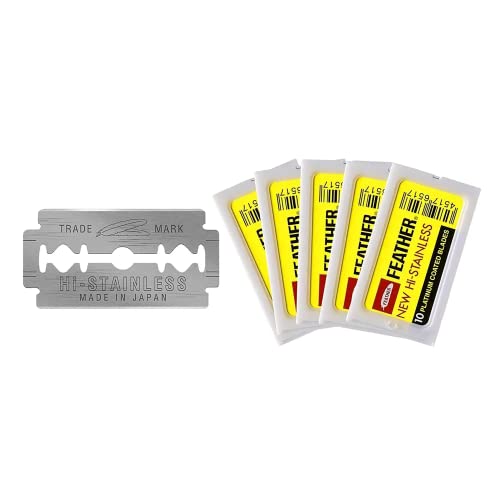
Fifty Count Of Double Edge Razor Blades; Our Razors For Men Feature A Fifty Count Of Double Edge Razor Blades; Feather Razor Blades Are Extremely Sharp And Will Give You A Great Shaving Experience

Model Number: ASTRA01

Perfiect in all brands of Safety Razors
How to Avoid Cuts and Irritation When Shaving
While a double-edge safety razor’s design provides inherent protection, your technique matters equally in preventing nicks and irritation. Master two critical elements: skin tension and stroke technique.
Create taut skin before each stroke using your free hand. Pull skin around sideburns, cheeks, and jawline, or use subtle muscle engagement to tighten loose areas. Taut skin minimizes dangerous folds that catch blades. Regular maintenance of your razor, including proper blade cleaning and oiling, helps maintain its effectiveness and prevents buildup that can cause irritation. For sensitive skin, choosing a mild double-edge safety razor like the Feather AS-D2 can further reduce irritation risk.
Your stroke technique should prioritize short, slow movements perpendicular to the blade edge. Apply no pressure—let gravity and razor weight do the work. Maintain a 30-45° blade angle to guarantee the safety bar contacts skin, reducing blade exposure. Understanding blade angle and pressure contributes to a successful shave and enhanced control throughout each stroke.
Shave with the grain exclusively on your first pass. Rinse your blade between strokes and alternate sides to maintain sharpness. These practices virtually eliminate cuts and irritation.

THE SMOOTHEST SHAVE for both men & women – Significantly reducing ingrown hair, skin irritations and razor burn often experienced with plastic cartridge razors, helping you finally achieve the smoothest, cleanest and closest shave.

THE PERFECT SHAVE: Make skin irritations and ingrown hair a problem of the past. With the safety razor for women, you will achieve the closest shave effortlessly.

Durable long metal handle fits naturally in your hand and provides a weighted-feel for stability while shaving your face
Choosing and Changing Your Blades
Selecting the right blade is as essential as your shaving technique, since different blades suit different hair types, skin sensitivities, and razors. You’ll need to assess sharpness levels carefully: Feather Hi-Stainless (10/10) handles coarse hair aggressively, while Derby Extra (7/10) suits sensitive skin and beginners. For blade compatibility, verify your safety razor accepts your chosen blade type before purchasing.
Test multiple options using sample packs to find your ideal match. Consider platinum coatings like those on Merkur Super Platinum for enhanced durability and smoothness. Match sharpness to your hair coarseness—thicker hair demands sharper blades, fine hair prefers milder options. Popular beginner-friendly razors like the Edwin Jagger DE89 offer excellent blade compatibility and gentle performance for those new to safety razors. Regular blade changes enhance the shaving experience and minimize irritation over time. Pairing your razor with compatible blade options, such as matching the Pils with Feather blades, can optimize your overall shaving results.
Change blades every 5-7 shaves to maintain peak performance. Dull blades increase irritation risk and require excessive pressure. DE blades cost considerably less than cartridges, making experimentation affordable and practical.

50 Gillette Saloon Double Edge Razor Blades

Sharp and Precise- Highest quality edging blades for a precise and clean shave.

Two packs of 5 blades.
Your Daily Razor Care Routine
Maintaining your safety razor’s performance and longevity hinges on three essential practices: rinsing immediately after each shave, drying completely between uses, and monitoring for corrosion monthly. After shaving, rinse your razor thoroughly under running water, loosening the head slightly for ideal water flow. Run water from back to front to dislodge hairs and debris effectively.
Store your razor upright to air dry completely—avoid towel wiping that damages blades. For hard water buildup, use an old toothbrush with mild soap as one of your key razor maintenance tips. Brush threads and weight posts gently, then rinse thoroughly. Consider using a dedicated razor stand for proper storage to prevent rust and humidity damage. After disinfecting, apply clipper oil or a comparable lubricant to keep metal components protected from oxidation. Just as precision matters when using professional shears for detailed work, taking small, intentional steps in your maintenance routine prevents blade damage.
These cleaning products and techniques prevent corrosion. Inspect your razor monthly for rust signs, catching oxidation early. This straightforward daily routine extends your razor’s lifespan considerably.
Monthly Deep Cleaning Protocol
Beyond your daily rinse-and-dry routine, you’ll want to perform a thorough deep clean every one to two months—or weekly if you’ve got hard water—to prevent mineral buildup and corrosion that simple rinsing can’t remove. Start by completely disassembling your razor, setting the blade aside safely. Rinse all parts under warm water to dislodge loose debris, then identify gunky areas like threads, hinges, and adjustment wheels. Apply mild dish soap with a soft toothbrush, scrubbing thoroughly under warm water. For stubborn gunk buildup, soak parts in diluted vinegar (1:4 ratio) for 20-30 minutes. Repeat the soap-and-brush process if calcium deposits persist. Rinse completely, then soak in isopropyl alcohol for disinfection. Dry everything thoroughly with a lint-free cloth before reassembling. To prevent damage during cleaning, avoid harsh chemicals and abrasive cleaners that can scratch or corrode your razor’s finish. Regular maintenance enhances the overall shaving experience and extends the lifespan of your razor by preventing moisture and bacteria buildup that can compromise both hygiene and performance.
Storing Your Razor to Prevent Rust
Your razor’s worst enemy isn’t daily use—it’s improper storage that invites rust and corrosion. You’ll prevent oxidation by keeping your razor away from shower and tub environments where razor humidity accelerates rust formation on metal and plated finishes.
After each shave, dry your blade and handle thoroughly with a towel, then loosen the blade slightly to allow airflow. This simple step stops moisture from pooling between components. For added protection, consider using stainless steel or brass razors that naturally resist rust development better than standard materials. Just as with mustache grooming, methodical maintenance of your tools ensures they perform optimally over time.
Apply protective oils before storage—a few drops of blade oil create a barrier against corrosion. Wipe excess oil before your next use. Unlike electric body groomers that require different maintenance approaches, safety razors benefit significantly from oil-based protection against environmental moisture.
Store your razor in dry locations like medicine cabinets or on dedicated stands. Use blade covers and avoid proximity to water sources. These practices extend blade life and maintain your razor’s condition for years.