You’ll face distinct trade-offs between these methods. Electric shavers deliver a 2/5 closeness rating but reduce injury risk considerably—only 0.7% of grooming injuries stem from them versus 83% from blade razors. You’ll spend roughly $260–$450 over three years with electric shavers compared to $514 for cartridge razors. Electric shavers complete sessions in 3–4 minutes without prep work, while razors require 5+ minutes including setup. Your choice depends on prioritizing speed, safety, cost, or shave closeness—each method’s advantages become clearer when you examine your specific grooming demands.
Electric Shavers vs. Blade Razors: The Key Trade-Offs
Because electric shavers and blade razors employ fundamentally different cutting mechanisms, they produce distinctly different results across multiple performance dimensions. Blade razors cut hair with a single stroke, lifting it from the follicle before severing it below the skin’s surface—delivering a 4-5 star closeness rating. Electric shavers, conversely, use scissor-like motions between dual blades, achieving only a 2/5 star rating for closeness.
Your shaving preferences determine which razor technologies suit you best. If you prioritize closeness, blade razors win decisively. However, electric shavers offer superior convenience and speed, requiring no prep work or products. For sensitive skin, blade razors with proper technique minimize irritation, though guarded electric shavers reduce injury risk. Blade razors also provide less skin irritation and a lower risk of ingrown hairs compared to multi-blade systems that can tug hair and scrape skin layers. Stainless steel blades provide rust resistance and durability for long-term reliability. Multi-blade cartridges provide the closest shave but carry higher ongoing costs than economical double-edge alternatives. When transitioning between shaving methods, you should allow about a month for your skin to adjust to the new technique and achieve optimal results.
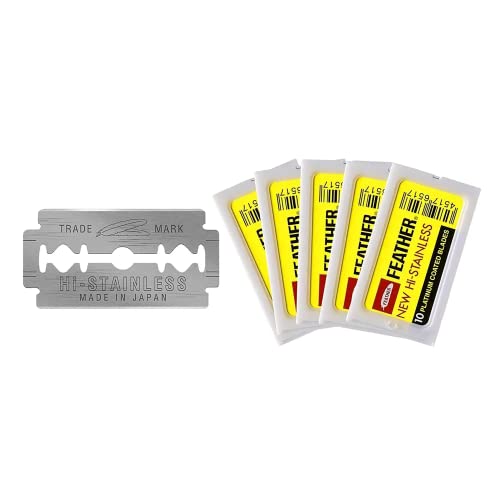
Fifty Count Of Double Edge Razor Blades; Our Razors For Men Feature A Fifty Count Of Double Edge Razor Blades; Feather Razor Blades Are Extremely Sharp And Will Give You A Great Shaving Experience

Model Number: ASTRA01

Sharp and Precise- Highest quality edging blades for a precise and clean shave.
Why Electric Shavers Pose Lower Injury Risk
While blade razors dominate pubic grooming injury statistics, electric shavers demonstrate a markedly safer profile through both epidemiological data and mechanical design. You’ll find that electric razors account for only 0.7% of pubic grooming injuries presenting to emergency departments, compared to 83% from non-electric razors. This dramatic difference stems from shaver safety features inherent in enclosed blade systems and motor-driven cutting mechanisms. You’re considerably less likely to experience lacerations—which comprise 61% of all grooming injuries—because electric shavers eliminate the skin-catching hazards present with manual blades. When electric shaver injuries do occur, they remain minor enough for same-day emergency department discharge. For those with sensitive skin, choosing a quality electric shaver with enclosed blade systems can provide additional protection against irritation and discomfort. However, users should remain cautious with inferior electric shavers, as low-quality materials in budget products can cause skin allergies and irritation despite their mechanical safety advantages. To maintain optimal safety and performance, plan to replace blades and foils regularly to prevent decreased shave quality and skin irritation. You’ll benefit from superior injury prevention through engineering design that protects sensitive tissue while delivering effective grooming results.
Skin Irritation: Blade Razors vs. Electric Shavers
When you compare the irritation profiles of blade razors and electric shavers, the epidemiological data reveals distinct patterns in user-reported skin reactions. A 2021 questionnaire study documented that 78.3% of blade razor users experienced redness, dryness, razor burn, or cuts, compared to 49.4% of electric shaver users reporting similar skin problems.
The irritation causes differ mechanically. Blade razors create direct contact with your epidermis, causing abrasions and razor burn, particularly when blades dull after 4-5 shaves. Electric shavers generate friction and heat during dry use, though their perforated metal foils provide a protective barrier between blades and skin. Electric shavers with intelligent Sonic Technology can adapt to beard density and reduce the number of passes needed over sensitive skin, further minimizing irritation.
For skin sensitivity, electric shavers demonstrate advantages by reducing nicks and ingrown hairs. Foil shavers are particularly recommended for very sensitive or acne-prone skin due to protective guards limiting blade contact. However, individual responses vary, and proper technique with either method mitigates adverse reactions. Approximately 41% of males experience adverse skin reactions post-shaving, such as redness, itching, and burning, highlighting that irritation remains a significant concern regardless of shaving method chosen.

Skin Friendly Foil System: Dudes, meet your no-yank zone! These grooming beasts rock precision titanium blades with built-in smart sensing tech – bye-bye beard tugging. The floating head design? Lets your portable razor glide like butter on facial contours. Smooth operator status: unlocked

CLOSE, CLEAN SHAVE: 3 blade free floating system follows facial contours for a flawless finish and includes a middle trimmer to cut difficult hairs along with 2x SensoFoil shaving elements for ultimate closeness and skin comfort

4 BLADES FOR SMOOTH AND SILKY RESULTS: The hypoallergenic foils and trimmers move smoothly across the skin and leave no hair behind
What You’ll Actually Spend: 3-Year Cost Breakdown
The total cost of ownership markedly diverges between electric shavers and blade razors, with initial purchase prices representing only a fraction of your three-year expenditure. You’ll spend $190–$450 on electric shavers, including maintenance replacements like foils, blades, and cleaning cartridges. The Panasonic ES8103S costs approximately $260 over three years, while premium Braun models reach $450. Conversely, cartridge razors total $514 with gel and balm included, though safety razors offer long term savings at $280. Your cost comparison reveals that basic electric shavers deliver competitive pricing against multi-blade systems. However, subscription blade services and replacement cartridge frequencies substantially increase razor expenses, making electric shavers potentially more economical for consistent users. Modern electric shavers now offer capabilities that rival traditional wet shaving in key areas, including closeness of shave and comfort performance. Premium options like the Braun Silk-épil 9 Flex feature flexible heads and versatile attachments designed for effortless navigation of various body areas. Time efficiency also favors electric shavers, with the Braun requiring 3-4 minutes compared to traditional wet shaving methods that often exceed five minutes when accounting for preparation and cleanup.

In two years, your Philips shaver heads cut up to 9 million hairs on your face − replace the shaver heads and get your electric razor back to 100% performance


From the #1 electric shaver brand¹: Shaver 2400 Series gives you a fast, clean shave even on sensitive skin thanks to 27 self-sharpening ComfortCut blades and 4D Flex Heads
How Close of a Shave Do You Need?
Because shave closeness directly impacts grooming maintenance frequency and skin health outcomes, you’ll need to evaluate your specific requirements against each method’s mechanical capabilities. Multi-blade manual razors achieve a 5/5 closeness rating through the hysteresis effect, where sequential blades lift and cut hair below the skin’s surface. Straight razors deliver a 4/5 rating, cutting at skin level without pulling action. Electric shavers provide inferior closeness due to their scissor-like cutting motion and metal gate barriers. Foil models outperform rotary designs by reducing physical barriers between skin and blades, with options like the Philips Norelco Bodygroom delivering particularly close, nick-free results on sensitive body areas. If you demand maximum shave closeness and prefer less frequent grooming sessions, manual razors suit your needs. Conversely, if you prioritize comfort and tolerate slightly shorter shave closeness intervals, electric shavers minimize irritation risks while maintaining adequate grooming frequency. Electric shavers date back to patented designs as early as 1900, making them a well-established technology in the grooming industry.
Styling Versatility: Which Method Offers More Options?
While shave closeness establishes your baseline grooming frequency, styling versatility determines what you can actually accomplish with each tool. Electric shavers excel through integrated trimmer attachments that deliver precision detailing on mustaches and sideburns without additional equipment. Multiple length settings and adjustable combs enable quick style modifications on-the-go, accommodating different facial hair textures and contours seamlessly. For more refined styling, understanding numbered guard attachments can help users optimize their trimmer’s full potential for blending and tapering.
Razors offer different advantages through customizable angles and replaceable cartridges that allow you to swap blade types for specific results. Single-blade options provide surface-level cuts, while multi-blade designs penetrate deeper for varied shave depths. This flexibility supports ritualistic precision tailoring and luxury customization experiences. However, dual-edged razors require practice for consistent results when first adopting this traditional shaving method. Electric trimmers with rounded blades for safety further enhance versatility by accommodating sensitive areas and various grooming needs beyond facial hair.
Your choice depends on priorities: electric shavers provide faster adaptability for frequent style changes, while razors support meticulous, personalized grooming protocols.
Your Morning Routine: Speed and Convenience Reality Check
How much time you actually spend shaving depends largely on your tool choice, and electric shavers consistently outperform razors in morning efficiency. You’ll complete electric shaver sessions in 5–10 minutes, while razors demand 15–25 minutes including preparation and multiple passes. This shaving speed difference stems from motorized heads covering larger areas with fewer strokes.
Convenience factors heavily favor electric shavers for rushed mornings. You eliminate gel application, skin wetting, and lathering steps entirely. Electric shavers enable dry shaving without sink access, supporting anytime use if charged. Top models like the Brio Raze Head Shaver deliver up to 20 shaves per charge, ensuring reliable performance throughout your week. Cleanup requires minimal effort—no blade rinsing or product residue. Electric shavers utilize guarded blades to reduce irritation while maintaining their efficiency advantage. For those seeking professional-grade results, considering battery life specifications can help you choose a model that aligns with your daily grooming demands.
Razors demand careful technique mastery, frequent rinsing, and blade replacements every 4–5 shaves. You’ll need consistent water access and recovery time from potential irritation. For integrated daily routines, electric shavers substantially reduce time investment while maintaining shaving effectiveness.

Essential electric shaver for women and girls is designed for shaving sensitive skin on legs

Braun Series 3 3010s Men's Electric Shaver with Protective Cap and Smart Plug (for automatic 100-240 voltage adjustment)

From the #1 electric shaver brand¹: Shaver 3600 Series gives you a comfortable, clean shave even on sensitive skin thanks to 27 self-sharpening ComfortCut Blades and 5D Pivot & Flex Heads
Which Shaving Method Fits Your Lifestyle?
Your lifestyle ultimately determines which shaving method delivers the best practical value. If you’re constantly traveling, electric shavers‘ travel compatibility outweighs manual razors‘ portability limitations. You’ll avoid carrying lather, water access requirements, and cleanup obligations. For busy professionals, electric shavers streamline grooming habits through faster daily sessions without preparation steps. However, if you prioritize the closest possible shave for special occasions, manual razors excel in precision despite requiring multiple passes. Budget-conscious users should calculate long-term costs: electric shavers cost $50-$100+ upfront but eliminate recurring blade expenses over 3+ years, while manual razors demand continuous product replacement. Sensitive skin users benefit from electric shavers’ gentler, enclosed blade design, reducing irritation risks. For those with particularly sensitive skin, specialized options like hypoallergenic blade shavers offer enhanced protection against irritation while maintaining effective grooming performance. Regular grooming also provides hygiene benefits including reduced sweat, odor, and bacteria buildup in the pubic region. Many men use both electric shavers and razors for optimal results, combining methods to achieve their ideal grooming outcomes. Evaluate your specific demands—frequency, portability, skin sensitivity, and financial considerations—to select your ideal shaving method.

Gentle on Skin: Hypoallergenic foil and three floating blades provide a close, comfortable shave; suitable for legs, underarms, and bikini areas

BI-DIRECTIONAL SHAVING TECHNOLOGY: Experience the “Queen Bee” of electric razors for women. Our unique triple-blade system allows you to smoothly shave both forward and back, cutting your grooming time in half for a closer, more efficient shave.

VERSATILE COMPATIBILITY: Designed to fit and protect both manual razors and electric shavers during travel and storage