
You’ve got two main electric razor technologies to choose from: foil shavers with oscillating blades excel at close, precise cuts for sensitive skin and straight hair, while rotary shavers with circular heads contour better to facial contours and handle longer stubble plus curly growth patterns. Foil models minimize irritation; rotary options run quieter and self-sharpen. Your choice depends on your beard type, skin sensitivity, and grooming routine—each technology delivers distinct advantages you’ll want to evaluate carefully.
Foil vs. Rotary Shavers: Which Technology Suits You?
How you shave matters as much as what you shave with. Foil shavers utilize oscillating blades beneath protective foil guards, delivering superior skin comfort through reduced blade exposure. Their foil advantages include gentler glide and precision edging, making them ideal for sensitive skin and thin hair types. You’ll achieve close shaves with straight up-and-down motions while minimizing irritation and razor burn.
Rotary shavers, conversely, employ circular rotating heads that contour your face effectively. However, their rotary disadvantages become apparent with sensitive skin—thicker metal discs create rougher exteriors causing potential discomfort. Rotary excels with thick, coarse hair but demands circular motions for peak performance. Higher-end rotary models provide gentler cutting options that can reduce skin irritation when used properly. Using quality pre-shave products designed for electric shavers can further enhance comfort and performance with either technology.
For daily shaving on sensitive areas, foil technology outperforms rotary. Both minimize razor burn compared to cartridge razors, yet foil edges ahead for skin protection and precision results.

CLOSE, CLEAN SHAVE: 3 blade free floating system follows facial contours for a flawless finish and includes a middle trimmer to cut difficult hairs along with 2x SensoFoil shaving elements for ultimate closeness and skin comfort

Essential electric shaver for women and girls is designed for shaving sensitive skin on legs

Professional Precision: Designed for professional use on the face, head, and neckline, this electric shaver delivers the sharp performance that experts demand
Match Your Beard and Skin to the Right Shaver Type
Since your beard characteristics and skin sensitivity directly influence shaver performance, matching these factors to the right technology guarantees maximum results. For short stubble on sensitive skin, foil shavers deliver superior closeness without irritation—the Braun Series 7 excels here. Coarse beard types benefit from dual or triple foil designs that cut efficiently through dense growth, though the Panasonic Arc5 offers comparable performance. If you’re managing longer stubble, rotary heads lift hair before cutting, making them ideal for thicker, flat-lying growth patterns. Skin types also matter: rotary shavers run quieter and self-sharpen, suiting durability-focused users, while foil shavers remain the safer daily choice for sensitive skin. Models like BaBylissPRO and similar professional-style options are specifically engineered to prioritize comfort for those with reactive or easily irritated skin conditions. The outer mesh design of rotary shavers features small holes between 0.5-0.6mm in diameter that prevent direct blade contact with skin. For coarse facial hair and kinky beard texture, sharp blades with robust motors effectively remove strong facial hair roots and deliver the close shaves necessary for managing ingrown hairs. Your specific beard and skin combination determines whether reciprocating or rotary technology delivers peak comfort and closeness.

A Safe and Gentle Electric Razor for Women: Experience easy, curve-hugging, smooth shaving with a womens electric razor for bikini area in a reusable, rechargeable design that minimizes skin irritation while reducing disposable waste

3 BLADES FOR SMOOTH AND SILKY RESULTS: Women’s electric shaver with advanced 3 Blade System for a close shave that helps prevent irritation in sensitive areas.

Braun Series 3 3010s Men's Electric Shaver with Protective Cap and Smart Plug (for automatic 100-240 voltage adjustment)
Top Foil Shavers: When to Choose Oscillating Blades
Oscillating blade technology delivers superior precision through rapid back-and-forth motion beneath a perforated metal foil, fundamentally differentiating itself from rotary systems’ spinning heads. You’ll achieve remarkably closer shaves because the vertical blades cut with exceptional accuracy along straight paths, while the stepped foil design accommodates your face’s contours seamlessly.
For skin sensitivity, you’ll benefit from the foil’s protective barrier, which minimizes nicks and irritation. The multiple foil layers with varying hole sizes enhance shaving efficiency by capturing hair at ideal angles before cutting, reducing necessary passes. The hypoallergenic metal mesh composition of the foil makes it particularly suitable for those with reactive skin conditions. Foil shavers cut hair at or above the skin surface, eliminating common issues like razor burn and micro-trauma that occur with traditional blades.
You should choose oscillating blades if you prioritize daily close shaves without razor burn, particularly on sensitive skin. They excel on coarse, straight-growing hair and deliver precise edges ideal for styling. Many people report experiencing increased confidence when maintaining a well-groomed appearance with consistent, irritation-free shaving results. Apply pre-shave oil beforehand and use short, directional strokes against hair growth for best results.

Skin Friendly Foil System: Dudes, meet your no-yank zone! These grooming beasts rock precision titanium blades with built-in smart sensing tech – bye-bye beard tugging. The floating head design? Lets your portable razor glide like butter on facial contours. Smooth operator status: unlocked

PIVOT & FLEX FOIL TECHNOLOGY: Shaver adjusts to facial contours for a close, comfortable shave. Use short circular strokes and light pressure. Best results when used daily for the first few weeks.

4-Blade Floating Precision: Engineered with 4 independent floating blades, the foil shavers for men contour to the jaw, chin, and neck in a single pass, capturing flat-lying hairs that fixed-head designs miss. Each blade flexes individually to maintain consistent skin contact, reducing repeated strokes and post-shave redness
Top Rotary Shavers: When to Choose Circular Motion
Rotary shavers fundamentally outperform foil systems when you’re dealing with longer stubble, irregular growth patterns, and challenging facial contours. Their 360-degree circular motions excel at capturing thick, coarse hair that foil designs frequently miss, particularly around your neck and jawline.
The rotary advantages become evident through their multidirectional slots, which catch hairs growing in varying patterns for consistent results. You’ll benefit from superior performance on curly hair and flat-lying growth that oscillating blades struggle with. Philips Norelco dominates the rotary shaver market with superior technology advancements that set industry standards.
For ideal shaving techniques, employ small, controlled circular motions moving against hair growth direction. Pull skin taut around contoured areas to guarantee complete head contact. Start with your neck using cool heads to minimize irritation. Like beard trimming, using controlled light pressure prevents irritation and ensures smooth results across all facial areas. This Triple Action Lift & Cut technology pulls stubble below skin level for lasting smoothness. Ensure your shaver is fully charged before each shaving session for optimal performance and cutting efficiency.

4-DIRECTION FLOATING ULTRA-ADVANCED SHAVING HEAD: The 3D rotary shaver head follows every contour of your face to remain in close contact with the skin for a fast shave that's also gentle on the skin

Close & Comfortable Shave: Get a smoother shave with 4D floating rotary heads that adapt to your face contours. Dual-ring blades capture more hair in one pass, reducing irritation and shaving time.

【 Wet and Dry Shaver 】Our men's shaver offers the flexibility to be used dry or wet with foam or gel, and even in the shower. Whether you prefer dry comfort or wet convenience, our electric razor ensures easy cleaning between uses
Electric Razor Price Tiers: What Features Cost What
Understanding where your money goes in the electric razor market requires examining how manufacturers tier their products across five distinct price ranges, each delivering progressively advanced capabilities. Budget models ($50-$100) prioritize affordability, featuring basic designs with minimal accessories. Mid-range shavers ($100-$200) introduce power adjustments and contouring heads, improving daily performance. Premium options ($200-$300) add blade counts and pivoting mechanisms for closer shaves. High-end razors ($300-$500) incorporate advanced technologies like 6-blade systems and specialized motors. The Braun Series 9 Pro exemplifies this premium tier, featuring 40,000 cross-cutting actions per minute for superior shaving performance.
Cleaning stations and PowerCases considerably impact final pricing, adding $50-$100 to base costs. Blade count directly correlates with expense: mid-range models use 4-5 blades while premium tiers employ 6. For specialized grooming needs, skin-friendly ceramic blades provide durable cutting efficiency without scratches. Consider long-term maintenance costs and battery life when evaluating true value across tiers.
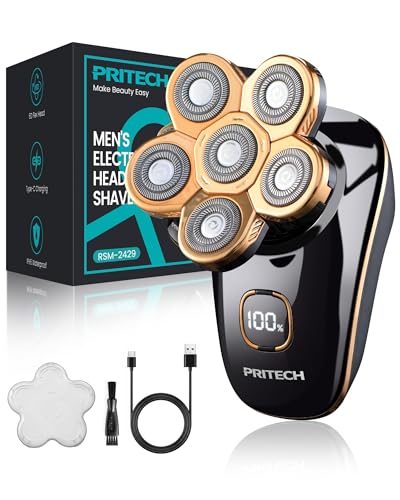
Fast & Efficient Shaving:Can you shave your head in just a few minutes? Absolutely. With 6 floating rotary heads and a powerful motor that captures more hair with each pass, this head shavers for bald men quickly delivers a smooth, bald look — without multiple strokes

Men's electric shaver replacement head compatible with many brands. Compatible with Freedo* groom***,YEMIU**, SEFO*, CHI*,Telfu* ZumY*, SKE*, Upmo**, AidallsWel***, Vifyc**, Kibi*, AsaVe*, Aroam**, Rozi*, Roziap**, Vsmoot*, OriHe*, WOOPO***, Tiklea*, PaiTre*, MANL*, Asome*, GOOLE**, Roziaho**,Everfu*,Auruveby,Notes:Any brand mentioned above is only used to facilitate customer purchase and show compatibility, and is not our brand, our brand is Auruveby.

【Versatile 6D Magnetic Replacement Blades】Our 2-pack 6D magnetic head shaver replacement heads are compatible with all 6D magnetic electric razors,like compatible with Kensen,DOAO,NIWUIO,Ufree,Solimpia 6d magneitc 6d shaver. Enjoy a seamless wet/dry shave with waterproof capabilities, ensuring a smooth, irritation-free experience every time. Perfect for travel size convenience.