
You’ll get ideal results by choosing the right shaver for your hair type—foil shavers suit sensitive skin and fine hair, while rotary shavers excel with thick, coarse growth. Prepare your face properly: wash with warm water for wet shaving or guarantee completely dry skin for dry shaving. Use short, controlled strokes with foil shavers or circular motions with rotary models, maintaining a 90-degree angle and minimal pressure. Regular maintenance keeps your razor performing at its best, though several additional techniques can greatly enhance your shaving experience.
Choose Between Foil and Rotary Shavers
Because electric shavers operate through fundamentally different mechanisms, selecting the right type depends on your hair characteristics and shaving preferences.
Foil advantages include exceptional gentleness for sensitive skin and precision control. You’ll achieve cleaner results on fine, straight hair while minimizing irritation, cuts, and razor burn. Foil shavers excel at detailed grooming around sideburns and beards. Their straightforward maintenance and flexible heads in modern models make them ideal for daily use. Automatic cleaning stations are often included with higher-end foil models to ensure optimal performance and longevity. For those with particularly sensitive skin prone to razor bumps and ingrown hairs, Braun Series shavers utilize ultra-thin foils with ergonomically formed holes that prevent direct blade contact with skin.
Rotary benefits shine when you’re managing thick, coarse, or fast-growing hair. You’ll cover larger areas faster with multi-head designs that adapt to your face’s contours. Rotary shavers navigate difficult areas more effectively, though they’re less suitable for sensitive skin. The Panasonic Arc6 demonstrates rotary technology’s effectiveness with its six titanium blades and 84,000 cross-cutting motions per minute for superior performance on coarse facial hair.
Both deliver close shaves, but your choice ultimately hinges on hair type and sensitivity levels.

CLOSE, CLEAN SHAVE: 3 blade free floating system follows facial contours for a flawless finish and includes a middle trimmer to cut difficult hairs along with 2x SensoFoil shaving elements for ultimate closeness and skin comfort

Skin Friendly Foil System: Dudes, meet your no-yank zone! These grooming beasts rock precision titanium blades with built-in smart sensing tech – bye-bye beard tugging. The floating head design? Lets your portable razor glide like butter on facial contours. Smooth operator status: unlocked

4-Blade Floating Precision: Engineered with 4 independent floating blades, the foil shavers for men contour to the jaw, chin, and neck in a single pass, capturing flat-lying hairs that fixed-heads miss. Each flexes for consistent skin contact
Match Your Shaver to Your Skin Type
What makes your skin type the deciding factor in choosing an electric razor? Your skin’s unique characteristics directly determine which shaver prevents irritation and delivers peak results.
For sensitive skin, you’ll want foil shavers with hypoallergenic materials and flexible heads that minimize friction and redness. Braun Series 9 and 8 models excel here, cutting above skin level to reduce razor burn and ingrown hairs. Identifying skin type is crucial for selecting the appropriate shaver that matches your specific needs.
Oily skin requires razors with cleaning functions and waterproof designs. These features prevent oil buildup that clogs shavers and triggers acne. Wet shaving compatibility helps manage excess oil during grooming.
Dry skin demands versatile shavers that handle varied textures without pulling. You’ll benefit from wet shaving options that soften whiskers, combined with pre-shave oils for enhanced glide and comfort. Proper preparation with warm water before shaving is essential for minimizing irritation and achieving better results. Additionally, daily moisturization with lightweight products formulated for your scalp will help prevent dryness and maintain skin health after shaving.

Precision Rotary Blades: Experience a close and comfortable shave every time with Barbasol's advanced stainless steel rotary blades, designed to glide smoothly over your skin for a precise shave that leaves you looking sharp.

Skin-Friendly Floating Foil System: Precision hypoallergenic blades with smart contour adaptation technology eliminate tugging, reducing irritation even for sensitive skin, 360° floating head seamlessly glides across facial curves for barber-level closeness without nicks or burns.

NATURAL FORMULA FOR SCALP CARE. Specially designed for head shaving, our blend of natural oils softens hair and protects the scalp. Rich in antioxidants and vitamins, it nourishes and conditions the skin, ensuring a healthy, great-looking scalp.
Prepare Your Face Before Shaving
Proper face preparation separates a comfortable shave from one marked by irritation and ingrown hairs. You’ll choose between dry and wet shaving methods, each demanding distinct moisture control strategies. For dry shaving, you’ll maintain completely dry skin by washing several hours before, preserving natural oils for ideal blade glide. Wet shaving requires the opposite approach—you’ll wash your face with warm water to soften hairs and open pores, then apply shaving cream designed for electric razors.
Both methods benefit from regular skin exfoliation. You should exfoliate one to two times weekly with gentle facial scrub to remove dead skin and dirt. This practice prevents ingrown hairs and reduces irritation during shaving. For optimal results, consider applying lubricant oil after shaving to maintain your razor’s performance and protect your skin. Before shaving, ensure your shaver is fully charged to maintain optimal cutting performance throughout your routine. Additionally, stretch your skin taut with your free hand to create an even surface, ensuring your shaver contacts all areas uniformly. While electric razors offer convenience, those seeking the sharpest beard lines and longest-lasting results may explore traditional straight razors for advanced grooming techniques.
Master Your Shaving Technique
Mastering your shaving technique hinges on understanding the fundamental differences between foil and rotary shavers, as each demands distinct stroke patterns and pressure application. With foil shavers, you’ll use short, controlled strokes against your beard’s grain direction, moving in straight lines up-down or side-to-side. Rotary shavers, conversely, require circular overlapping motions—both clockwise and counterclockwise—combined with multi-directional strokes to catch hairs effectively.
Regardless of shaver type, maintain a 90-degree perpendicular angle and apply minimal pressure to prevent irritation. Keep your shaving head flat against your skin while using your free hand to stretch skin taut. Listen and feel for smooth operation indicating completion. For optimal results, ensure your stubble is short before using an electric shaver, as longer hair can reduce shaving effectiveness. Premium models like the Series 9 Pro+ feature advanced cutting elements that handle denser facial hair more efficiently than basic shavers. These shaving techniques develop through consistent practice and mental mapping of your unique beard growth patterns.
Shave Different Facial Areas Correctly
Since different facial areas present distinct challenges and require tailored techniques, you’ll need to adjust your approach based on each region’s contours, sensitivity, and hair growth patterns. Neck shaving demands extra attention—start here before your razor heats up, using small circular motions while stretching skin taut for closer contact. For your cheeks and jawline, follow natural facial curves with light strokes, smiling to improve blade contact. Mustache trimming requires precision; use your trimmer attachment for the under-nose area, angling carefully to avoid over-shaving. Address sideburns and edges with deliberate movements, experimenting with angles for best blade contact. Throughout, shave against hair growth direction, rinse frequently between areas, and maintain steady pressure to prevent irritation across all regions. For sensitive facial areas, consider using tools specifically designed with skin-safe blades and combs to minimize the risk of cuts and irritation. After shaving, apply moisturizing lotion to soothe and hydrate the skin, which helps reduce irritation and promote scalp health. To minimize discomfort during your shave, consider using electric pre-shave lotion on dry skin to enhance lubrication and reduce friction.
When to Use Wet vs. Dry Shaving
Beyond perfecting technique for each facial area, you’ll find that your shaving method itself markedly impacts results. Dry shaving convenience suits your lifestyle if you’re frequently traveling or maintaining a tight schedule. You’ll appreciate the minimal preparation and portability, though you’ll accept a slightly less close shave. Conversely, wet shaving closeness delivers superior results when you prioritize a smooth finish over speed. You’ll employ water, cream, and traditional or wet/dry electric razors to cut hair at skin level, removing dead skin cells simultaneously. Foil shavers are particularly recommended for sensitive skin due to their protective guards limiting blade contact. Proper post-shave care and moisturization becomes increasingly important after wet shaving due to the removal of skin during the process. For those considering alternative grooming options, face shape evaluation can help determine whether a buzz cut might better suit your lifestyle and maintenance preferences.
Your choice ultimately depends on balancing three factors: desired closeness, irritation tolerance, and daily routine. You should expect your skin to adjust within one month to whichever method you select, so commit to your preference before reassessing.

【 Wet and Dry Shaver 】Our men's shaver offers the flexibility to be used dry or wet with foam or gel, and even in the shower. Whether you prefer dry comfort or wet convenience, our electric razor ensures easy cleaning between uses

4-DIRECTION FLOATING ULTRA-ADVANCED SHAVING HEAD: The 3D rotary shaver head follows every contour of your face to remain in close contact with the skin for a fast shave that's also gentle on the skin

SkinProtect Technology: Achieve a clean, gentle shave with 5D pivot contour and AntiCorrosion Shaving System
Clean and Maintain Your Electric Razor
Your razor’s longevity and performance hinge on consistent maintenance—a straightforward regimen that prevents the blade degradation and motor strain caused by accumulated hair, skin cells, and debris. You’ll maintain ideal cleaning frequency by rinsing after each use and performing deeper cleaning weekly. When tugging or visible grime appears, clean immediately. For maintenance tips, disconnect power before cleaning, then use a soft-bristled brush to remove loose debris. Dampen a cloth with mild soap for external surfaces; rinse waterproof models under warm water. After cleaning, apply blade lubricant to prevent overheating and maintain sharpness. For non-waterproof razors, use spray cleaners instead of water submersion. To disinfect your razor blades and maintain hygiene, spray 70% isopropyl alcohol on the blade surfaces and let it sit briefly before air-drying. Replace blades regularly as dullness reduces effectiveness, especially on coarser body hair where adjustable combs and proper blade maintenance ensure optimal performance. Use cotton swabs for detailed cleaning of hard-to-reach areas between blade components. Consult your manufacturer’s manual for model-specific protocols.

Rust Prevention – Prevents rust from forming & helps extend the life of the clipper & blades; can also reduce the likelihood of blades becoming dull

PREMIUM PROTECTION - Protects your cutting equipment from rust and corrosion. Ensuring a prolonged life for your clipper and razor
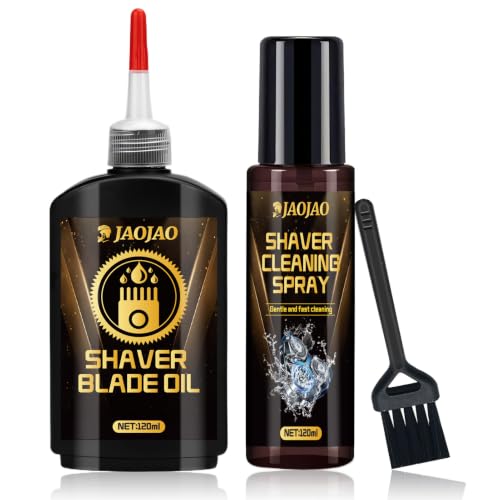
Deep Cleans and Lubricates: Our electric shaver cleaning solution and lubricant with stiff-bristle brush effectively dissolves and removes residue between blades and heads, leaving your razor looking like new.
Fix Common Shaving Problems
Even with meticulous maintenance, you’ll encounter shaving problems that stem from blade degradation, mechanical issues, and technique missteps rather than neglect alone. Dull blades cause tugging and poor cuts after 12-18 months of regular use, necessitating replacement every 6-12 months depending on frequency. Clogged heads from hair and oil buildup reduce efficiency, particularly on 3-4 day growth. Address clogs through weekly deep cleaning: remove the head, rinse under hot water for 30 seconds, apply soap, and brush out hidden hair clots beneath the blades. For severely worn blades that resist standard cleaning methods, consider using mild abrasive compounds like toothpaste or polishing compound to remove oxidation and restore edge sharpness. Monthly lubrication of the cutting mechanism helps reduce friction and keeps blades sharp, extending their overall lifespan. Pressing too hard during shaving causes irritation and lacerations, while repeated strokes over the same area lead to razor burn. To minimize injury risk, shave with light circular motions in the direction of hair growth to reduce skin irritation and achieve ideal results.

The authentic genuine Philips OneBlade blades

The authentic Philips Norelco OneBlade blades

In two years, your Philips shaver heads cut up to 9 million hairs on your face − replace the shaver heads and get your electric razor back to 100% performance