
Your electric shaver works through a rechargeable lithium-ion battery that powers a high-speed DC motor running at 10,800 RPM or higher. This motor drives either oscillating blades beneath a metal foil or spinning rotary heads that trap and cut hair with scissor-like precision. A circuit board regulates consistent voltage delivery, while gear trains synchronize blade movement for maximum cutting efficiency. The blade design—whether foil or rotary—determines how effectively you’ll remove hair from different facial areas. Understanding these interconnected systems reveals why shaver quality directly impacts your shaving results.
What’s Inside an Electric Shaver
An electric shaver’s engineering is a marvel of compact efficiency—several interconnected systems work in concert to remove facial hair quickly and safely. You’ll find sophisticated blade technology at the core, where an outer metal mesh guards your skin while precisely-angled inner blades oscillate at remarkable speeds. These blades feature tiny sharp edges and strategic bends that optimize cutting action.
Motor types vary between models. High-speed DC motors typically drive reciprocating motion at 10,800 RPM, while advanced designs employ linear stepper motors for enhanced precision. The motor connects to blades via drive shafts or transmission gears, creating the rapid movement you feel vibrating against your face. Lithium-Ion batteries power modern shavers with high energy density and fast charging capability. Professional barbers and home users alike rely on electric shavers to maintain sharp outlining and precise edging for clean facial lines.
Supporting these systems are rechargeable batteries, circuit boards managing power distribution, and protective plastic casings with sealed gaskets preventing water damage—all working seamlessly together. For those seeking alternatives to shaving, methods like electrolysis and laser hair removal offer semi-permanent or longer-lasting results for facial and body hair reduction.
Foil Shavers vs. Rotary Shavers: What’s the Difference?
How you shave matters just as much as what you shave with—and your choice between a foil shaver and a rotary shaver fundamentally determines both your shaving technique and results. Foil shavers feature oscillating blades beneath a thin metal mesh that captures hairs poking through perforations, requiring straight-line upward strokes. Their foil advantages include precision cutting on flat areas and speeds reaching 13,000-14,000 cycles per minute. Rotary shavers employ three spinning heads with internal cutters that pull stubble into circular slots using gliding motions. Their rotary advantages shine maneuvering facial contours like your neck and chin. Both designs trap hair between fixed guards and moving blades, reducing direct blade contact with skin to minimize nicks and cuts. Foil shavers like Panasonic Arc 5 models are particularly praised for delivering an ultra-close shave on coarse hair and flat-lying stubble. For those with sensitive skin concerns, foil and rotary shavers both offer gentle designs that prioritize comfort while maintaining effective cutting performance. Both designs trap hair between fixed guards and moving blades, but their distinct mechanics demand different application techniques for ideal results.

World's #1 Foil Shaver Brand. The perfect holiday gift.

Three-Head Floating Design: Experience professional grooming with our advanced Foil Shavers for Men featuring an innovative three-head system that adapts seamlessly to facial contours. The flexible floating heads glide smoothly across your face, neck, and jawline, capturing both short stubble and longer beard hair without pulling

[CLOSE SHAVE WITHOUT THE PULLING] Engineered with 4 floating blades (3 ultra-thin foils and 1 specialized trimmer), this electric razor captures flat-lying stubble in a single pass. It smoothly adapts to your facial contours to deliver a clean, close shave—saving your morning time and saving your skin from painful pulling or razor burn.
How the Motor Creates the Cutting Action
Whether you’re using a foil or rotary shaver, the blade movement that makes either design effective doesn’t happen on its own—it’s generated by a precisely engineered motor working in concert with mechanical transmission systems. Your razor’s motor types typically include DC motors powered by rechargeable batteries, converting electrical energy into mechanical motion through electromagnetic induction. The energy conversion process channels low-voltage input—usually 1.5 volts—through permanent-magnet motors that drive shaft systems with minimal energy loss. Gear trains translate this rotation into either reciprocating or rotary blade motion, depending on your shaver’s design. These transmission assemblies use offset mechanisms and direct-drive systems to synchronize motor activation with blade speed, ensuring the high-velocity cutting action you need for effective shaving coverage. Different blade materials and designs, such as stainless steel or platinum coatings, influence both the sharpness and longevity of your shaver’s cutting performance. After shaving, it’s important to apply moisturizing immediately after shaving to soothe the skin and prevent irritation. The stainless steel blades within these systems maintain their durability and cutting performance through repeated use cycles.
Why Oscillating Blades Trap and Cut Hair Efficiently
While your razor’s motor generates the cutting motion, it’s the foil’s ingenious design that transforms that movement into efficient hair removal. The perforated foil traps individual hairs through tiny holes, positioning them precisely for the oscillating mechanism beneath. As blades reciprocate in rapid linear strokes, they shear trapped whiskers close to your skin without pulling or tugging. This scissor-like action—one stationary edge (the foil) working against one moving edge (the blade)—delivers exceptional cutting precision. Multiple oscillating blades coordinating across the head unit maximize efficiency throughout your shaving area. The controlled linear motion provides superior results compared to rotary shaving systems, ensuring consistent hair capture without jamming while maintaining comfort and clean cuts with each blade reciprocation. For best results, hold your razor at a 90-degree angle with a light grip to optimize the blade’s contact with trapped hairs. Oscillating razors peaked in popularity during the 1940s when manufacturers refined the technology to perfect the back-and-forth motion that defines their cutting mechanism.
How Your Shaver’s Battery Powers the Motor
The oscillating blades‘ precision depends entirely on reliable power delivery, which your shaver’s battery provides through a sophisticated system of electrical components. Your rechargeable lithium ion battery stores energy at 1.2 or 2.4 volts, converting AC input into DC current that powers the motor directly. The circuit board regulates voltage delivery, guaranteeing consistent performance while maximizing battery longevity. This voltage regulation prevents power fluctuations that’d compromise blade oscillation quality. Modern lithium-ion batteries offer 2-3 times longer lifespan compared to older battery technologies, ensuring your shaver remains reliable through extended use. Connected via bent copper plates in advanced models, your battery transmits power through the PCBA to drive permanent-magnet or stepper motors. These motors then spin shafts fitted with plastic gears, which translate rotational force into the high-speed reciprocating blade action you depend on for efficient cutting. Premium electric razors are engineered with superior internal components that deliver wet/dry use capabilities while maintaining consistent power output. The quality of internal components significantly impacts electromagnetic radiation emissions during operation, making premium razors safer than cheaper alternatives. Your shaver’s engineering guarantees ideal power transfer throughout every shaving session.
Which Shaver Type Works Best for Your Beard?
Foil shavers excel on short stubble and coarse hair. The Braun Series 9 Pro senses beard density 300 times per second, handling wiry hairs effectively with minimal irritation for sensitive skin. Rotary shavers like the Philips Norelco 9800 deliver 150,000 cuts per minute and perform better on longer stubble, featuring micro-bead coating that reduces irritation. For coarse beards, the Panasonic Arc 5 achieves 84,000 cross-cutting actions per minute, providing the closest shave possible. The Braun Series 7 serves as a budget-friendly alternative with adequate power for regular shaving, though it may require additional passes for longer stubble growth. Foil shavers cut hair at or above the skin surface, which helps eliminate razor burn and nicks compared to traditional blades. TechRadar tests electric razors across diverse skin types to ensure continuous updates to recommendations based on the latest performance feedback.
Trimmers and hybrids offer versatility with adjustable combs for various beard lengths. Consider your beard type and skin sensitivity when selecting your shaver to optimize comfort and performance.

Skin Friendly Foil System: Dudes, meet your no-yank zone! These grooming beasts rock precision titanium blades with built-in smart sensing tech – bye-bye beard tugging. The floating head design? Lets your portable razor glide like butter on facial contours. Smooth operator status: unlocked

Ultra-Portable Grooming, Anywhere: Electric shavers for men, sized at 2.44" × 1.28" × 3.16", fit effortlessly in pockets or toiletry bags. The travel lock prevents accidental activation, making them ideal for business trips, daily commutes, and vacation essentials.

PIVOT & FLEX FOIL TECHNOLOGY: Shaver adjusts to facial contours for a close, comfortable shave. Use short circular strokes and light pressure. Best results when used daily for the first few weeks.
When to Replace Your Blades and Why It Matters
Once you’ve matched your shaver to your beard type, maintaining peak performance requires regular blade replacement. Manufacturer guidelines suggest timelines: Braun every 18 months, Philips OneBlade every four months, and general electric shavers every 1-2 years. However, blade durability varies considerably based on shaving frequency, facial hair density, and maintenance practices.
You’ll recognize replacement indicators through visible wear signals—Philips models display wear indicator arrows or green bars. More importantly, you’ll notice pulling, irritation, or reduced closeness during shaving. These symptoms signal diminished cutting efficiency. Regular lubrication and cleaning after each use can significantly extend the life of your blades and foils before replacement becomes necessary. For those with sensitive skin, using razors with ultra-thin foils can reduce irritation while maintaining blade sharpness between replacements.
Neglecting timely replacement causes skin irritation and compromised shave quality. Sharp blades guarantee close, comfortable results while maintaining your shaver’s longevity. Proper cleaning and lubrication extend usability between replacements, optimizing your investment. If you subscribe to a shaver service like a subscription replenishment plan, you can set up automatic blade deliveries to ensure you never run out of replacement parts.

The authentic Philips Norelco OneBlade blades

In two years, your Philips shaver heads cut up to 9 million hairs on your face − replace the shaver heads and get your electric razor back to 100% performance

One authentic Philips Norelco OneBlade stainless steel 360 blade lasts up to 4 months¹; trim, edge, and shave any length of hair, even the longest one
Cleaning Your Shaver to Maintain Peak Performance
Because regular cleaning directly impacts your shaver’s cutting efficiency and longevity, you’ll want to establish a consistent maintenance routine. You should rinse waterproof models under hot water after each use, then apply mild soap with a soft brush for thorough cleaning. For non-waterproof razors, use spray disinfectants like Andis Cool Care Plus or Oster Blade Disinfectant Spray instead. Your shaver maintenance routine should include dry cleaning with a soft-bristle brush to remove hair and debris without damaging foils. Cleaning frequency depends on your usage, but weekly lubrication with a drop of oil keeps blades performing effectively. For deeper cleaning, consider a vinegar-water soak enhanced with baking soda to remove stubborn residue and buildup. Monthly lubrication with clipper-specific oil drops applied while running the trimmer briefly before wiping excess will maintain optimal blade performance. You’ll dry all components completely before storage to prevent bacterial growth and maintain peak performance. Detaching the razor head if possible allows you to access hard-to-reach areas for more thorough cleaning and ensures all components function optimally.
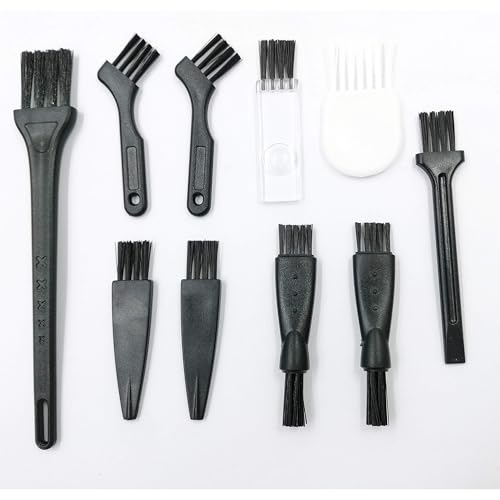

ShaverAid Electric Razor Shaver Cleaning Brush

🍒High Quality Materials: Our shaver brush is made of high quality PP plastic and the brush head is made of high-quality nylon material Durable and sturdy the shaver brush is sturdy and not easy to fall off with good toughness The brush handle is designed with anti slip particles, providing a comfortable grip that will not easily fall off or deform.It can be used for a long time