Your facial hair choice broadcasts psychological signals instantly. Clean-shaven looks boost trustworthiness in service roles, while beards enhance perceived dominance and status—especially when uncommon in your environment. The paradox? Beards increase general trust but decrease customer confidence. Your choice also shapes your own behavior; commitment to facial hair alters self-perception and assertiveness. Context matters greatly: tech and finance prefer cleaner aesthetics, while agriculture and forestry favor beards. Understanding how different grooming styles interact with professional settings and social dynamics reveals why your decision extends far beyond personal preference.
Why People Judge Your Facial Hair Before You Speak
Within milliseconds of meeting someone, you’re already being evaluated based on your facial hair—or lack thereof. This rapid assessment stems from deeply ingrained facial hair stereotypes that shape how others perceive your character before you’ve spoken a word.
Research demonstrates that trustworthiness perceptions form instantaneously. Men with beards are frequently judged as less trustworthy than clean-shaven counterparts in quick-decision scenarios. Simultaneously, facial hair triggers associations with aggression and reduced likability, particularly in formal contexts. Studies reveal that bearded faces appear wider, which observers unconsciously link to lower trustworthiness levels based on facial geometry assessments.
However, the judgment cuts both ways. Your facial hair also conveys competence and authority—beards enhance perceived confidence and sophistication. If you’re considering a beard, proper grooming with sharp blades and frequent replacement can help maintain a polished appearance that supports these positive perceptions. To achieve the sharpness needed for optimal grooming results, understanding proper blade loading techniques ensures you maintain the precision required for a well-groomed appearance. The contradiction reveals a complex psychological phenomenon: your grooming choice simultaneously activates conflicting impressions of trustworthiness, professionalism, and dominance that observers unconsciously weigh within seconds.

29-piece hobby knife set includes a modeling knife, 26 razor-sharp blades (6x #1,4x #3,4x #4,2x #10,6x #11,4x #12), a grindstone for sharpening, and a pair of tweezers

Heavy-Duty & Lightweight Utility Knife : Aluminum alloy and stainless steel design with rust-free powder-coat makes the box cutter durable and lightweight (0.7 oz), passing the 1.5m drop test. SK5 razor blades through 1922 °F heat treatment are up to 64 HRC. For long-lasting, extremely durable cuts and slices on boxes, plastic packaging, and straps.

5-blade MotionSphere razor handle and 16 refill cartridges
The Beard-and-Trust Paradox: Why Beards Backfire in Service Roles
Two seemingly contradictory findings emerge from recent research: while bearded faces score higher on trustworthiness in general evaluations, they simultaneously undermine customer confidence in service-oriented roles.
You’ll find this beard perceptions paradox particularly pronounced in hospitality settings. Restaurant servers and hotel attendants with beards receive lower confidence ratings from guests, despite broader trust associations. The culprit? Beards amplify dominance and aggression cues that conflict with service role expectations. Guests attribute less assurance to bearded staff, directly impacting satisfaction metrics. In contrast, those who maintain closer shaves with safety razors present a cleaner appearance that aligns better with service industry standards. Achieving this clean appearance can be enhanced by employing modern neck shaving techniques that create seamless grooming results.
These trust dilemmas reflect context-dependent psychology. While beards enhance perceptions of expertise—making them effective for advertising—they backfire where approachability matters. The signals beards project—dominance, authority, reduced approachability—undermine the reassurance customers seek from service providers. Brands must recognize that personalization and trust, like facial hair choices, require context-specific strategies to align consumer expectations with service delivery. You’re maneuvering through competing social narratives when choosing facial hair for customer-facing positions.

COMPLETE MEN'S SHAVING KIT: The Gentleman Jon Shaving Kit for Men is a comprehensive set that includes a safety razor, badger hair brush, alum block, shave soap, stainless steel bowl, shaving stand, canvas & leather dopp kit, and five razor blades - everything needed for a luxurious, comfortable and smooth wet shave experience. With its compact design, our product is also a suitable travel companion to those who value traditional shaving, ensuring a neat shave even while on the go.

ADJUSTABLE LENGTH: Our hair trimmer template features adjustable circular size, suitable for adults and children alike. This versatile design allows for DIY haircuts at home without worrying about incorrect sizing

COMPLETE MEN'S SHAVING KIT: The Gentleman Jon Shaving Kit for Men is a comprehensive set that includes a safety razor, badger hair brush, alum block, shave soap, stainless steel bowl, and five razor blades - everything needed for a luxurious, comfortable and smooth wet shave experience. With its compact design, our product is also a suitable travel companion to those who value traditional shaving, ensuring a neat shave even while on the go.
Facial Hair, Dominance, and Status Signaling
The trust dynamics you’ve just explored reveal only part of beards’ social impact—their role in status perception and dominance signaling operates through distinctly different psychological mechanisms. When you sport facial hair, observers consistently rate you as higher in social status and dominance than clean-shaven counterparts. This beard signaling effect proves particularly pronounced among men, who detect aggression and dominance more readily on bearded faces. Research indicates beards function as deterring displays in intrasexual competition, with dominant men strategically cultivating facial hair to establish social positioning. A study of 97 young men found that beard length showed no correlation with testosterone levels or self-reported dominance, challenging earlier assumptions about beards as biological markers. For those seeking to maintain precise facial hair styling, precision edging tools can help define and sharpen beard lines to enhance the dominance signaling effect. Top models like the Brio Beardscape V2 offer exceptional precision and 0.5mm bare blade detailing for professional neckline shaping. Notably, this dominance perception persists despite evidence showing beard length correlates neither with actual testosterone levels nor self-reported dominance scores, suggesting beards operate as psychological signals rather than honest biological indicators of underlying traits.

ACHIEVE PERFECT SYMMETRY IN MINUTES: Stop guessing where to trim. Our professional beard shaping tool uses built-in leveling marks to ensure a perfectly symmetric look every time. Simply line up the stencil and follow the guide for accurate, clean shave lines that mimic a professional barber finish.

Get the ultimate grooming experience with the Line-Up Razor, proudly made in Korea.

Perfect Gift for Men: Creating a neat beard line will tidy up the look of the beard immensely. Get a perfect trim anytime at your own home — no need to spend more money on barbershops! Makes for great gifts for dad. Perfect fathers day gifts from daughter or wife.
When Beards Stand Out: The Rarity Advantage
Rarity fundamentally shifts how you’re perceived when you’re sporting facial hair. When beards aren’t ubiquitous, they command heightened social attention and status elevation. Research demonstrates that bearded faces receive markedly higher status ratings than clean-shaven counterparts, particularly in contexts where facial hair remains uncommon.
This rarity impact operates through distinctiveness. You’re leveraging scarcity as a competitive advantage in male social hierarchies. The less prevalent beards are in your environment, the more potently they signal maturity, authority, and confidence. Your facial hair becomes a visual differentiator that amplifies dominance cues. Proper grooming is essential to maintain these positive perceptions and prevent unkempt appearances from undermining the status benefits of your beard.
Cross-cultural evidence supports this pattern. Men consistently perceive rare bearding as conferring greater importance and social positioning. You’re fundamentally capitalizing on the psychological principle that uncommon traits receive disproportionate value and attention within social groups.
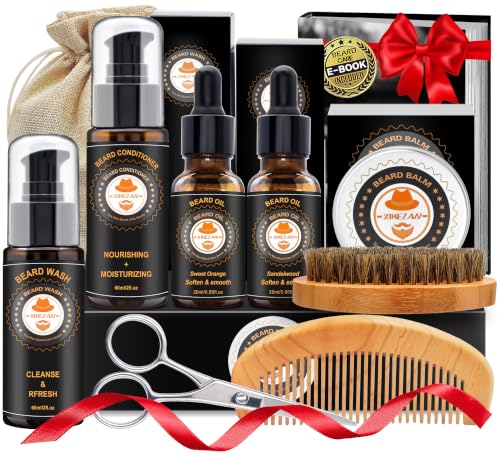
【The Ultimate Beard Grooming & Care Kit】Achieve a smooth, shiny, impeccably trimmed and styled beard with XIKEZAN's most complete 10 piece set. Designed for all beard types—long, short, thick, thin, coarse or tangled—this premium grooming set has everything you need for precise trimming and flawless daily care. Packed in a luxury gift box,it includes beard wash,conditioner,sweet orange & sandalwood beard oil,balm,comb,brush,scissors,travel storage bag and e-book.

Cedar & Sandalwood Beard Oils & Balm: Enjoy distinct aromas with our Cedar Beard Oil’s woodsy scent and Sandalwood Beard Oil’s warm fragrance. Our natural Sandalwood Balm styles, hydrates, and nourishes for perfect control and a non-greasy finish. Indulge in ultimate beard care
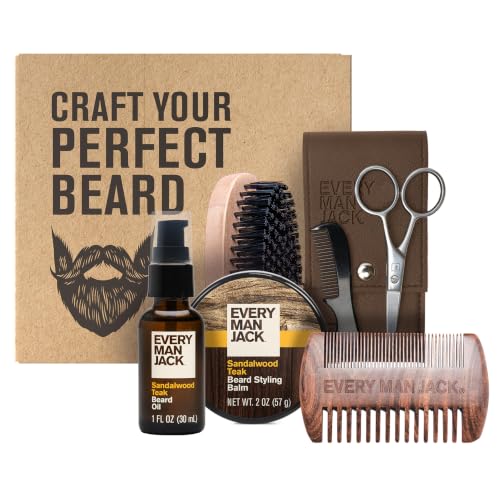
Complete Beard Kit: One box holds five pieces, a beard oil, a beard balm, a vegan beard brush, a beard comb and stainless steel scissors. A full beard maintenance kit for men, for work days and weekends outside
Why Men Want Beards More Than Other Men Do
Why do men consistently prefer more facial hair for themselves than they’d want to see on other men? The answer lies in competitive advantage. You value beard preference when facial hair’s rarity gives you an edge—a phenomenon called frequency-dependent sexual selection. Men currently sporting heavy stubble or full beards strongly prefer maintaining more facial hair, likely because they’ve already invested in displaying it. Meanwhile, clean-shaven and lightly stubbled men prefer less facial hair overall, both for themselves and others. This self-serving bias suggests you’re influenced by your current appearance. Your beard preference reflects strategic thinking: you want traits that differentiate you competitively while limiting others’ impression management opportunities through similar facial hair displays. Beyond competitive dynamics, choosing a shaved head or specific facial hair style can serve as a bold style statement signifying confidence and a fresh start. For those committed to maintaining their chosen facial hair look, investing in quality detailer trimmers ensures precise grooming and polished presentation. Research indicates that bearded men exhibit higher levels of hostile sexism compared to clean-shaven men, revealing how facial hair choices intersect with broader social attitudes and competitive positioning.
Clean-Shaven, Stubble, or Full Beard: What Each Context Demands
Your facial hair choice isn’t simply a personal preference—it’s a strategic decision that should align with your professional context. Clean shaven standards dominate broadcasting, legal services, and food processing, where safety and tradition prevail. Stubble acceptability varies widely; while high-tech sectors embrace casual grooming, 72% of interviewees ignore company policies entirely pre-hire.
Full beard advantages emerge in telecommunications, agriculture, and forestry, where bearded men earn 8% more than their stubble-wearing counterparts. Research demonstrates that 90% of workplaces tolerate beards if kept neat and trimmed. Achieving a polished beard appearance requires proper clipper guard selection and consistent maintenance techniques to ensure even blending and symmetry. Professional beard maintenance should prioritize skin cleansing and hydration to prevent irritation and maintain a polished appearance. For those with sensitive skin, using a safety razor with a single stainless steel blade can help prevent irritation while maintaining facial hair grooming standards. Professional expectations ultimately hinge on industry norms rather than universal rules. Before your interview, investigate your target company’s culture through social media and team pages to calibrate your grooming strategy accordingly.

Material & Sharpness: Our RUST PROOF Beard and Mustache Scissors for men are made-up from High Carbon Stainless Steel, which is Extra Harder & Stronger than regular steel, that keep these Beard Scissors for men STAY SHARP for more longer time.
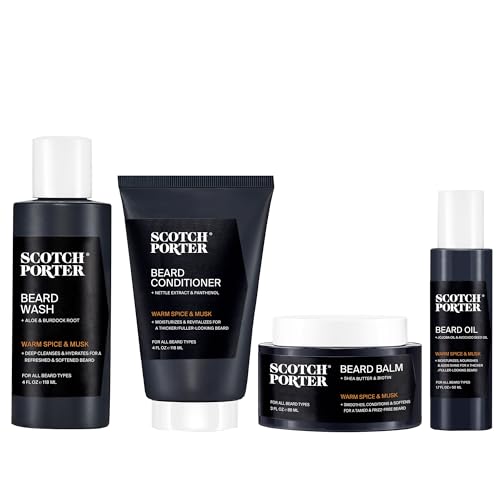
Wash for a Gentle, Non-Drying Clean: Massage a small amount of this hydrating cleanser to a wet beard in the shower 2-3x/week to remove product build-up, residue, dirt and grime, leaving your beard feeling clean, refreshed and never stripped or dry

4 in 1 Grooming Set: This hair trimmer kit includes hair clippers, hair trimmer, foil shavers, and nose trimmer, providing everything you need for a professional haircut at home
How Male Competition and Stress Drive Beard-Keeping
Beyond professional contexts, your beard-keeping decisions respond to deeper psychological forces rooted in male competition and gender role stress. You’re likely growing facial hair to signal dominance and formidability during intrasexual rivalries. Research shows bearded men appear more physically threatening and capable in confrontations, enhancing perceived male aggression without explicit violence.
Your beard also buffers against gender role stress. When you feel physically inadequate or threatened by subordination, facial hair compensates by bolstering your perceived masculinity and maturity. The heavier your beard, the stronger your self-protection motivation tends to be. Similarly, men dealing with hair loss may opt for a shaved head, which can make you look younger by eliminating signs of aging and baldness. For those maintaining beards, selecting the right beard trimmer for thick beards ensures optimal grooming and appearance maintenance.
Additionally, your social status concerns drive beard maintenance. In competitive environments with other men, you’re more likely to maintain facial hair as a nonverbal assertion of dominance and worth, leveraging biology to navigate hierarchies. Heavy facial hair increases your perceived age, signaling maturity and greater suitability as a father figure in social hierarchies.
Confidence From Commitment: How Your Choice Changes Your Behavior
Once you’ve committed to a facial hair choice, you’re not simply changing your appearance—you’re altering how you perceive yourself and behave accordingly. Your confident choices trigger measurable behavioral shifts. When you wear a beard, you self-rate as more masculine, which motivates assertive conduct and dominance-oriented postures. Conversely, adopting a clean-shaven look enhances sociable and integrable behaviors in social settings. These beard benefits extend beyond mere psychology—your commitment directly influences workplace and home interactions. Full beards particularly motivate nurturing actions due to higher perceived parenting ability. Even fake facial hair produces genuine confidence boosts. Research shows that visual perception of hair can lead to more assertive and dominant behavior, with actions like beard scratching providing satisfaction to wearers. For those maintaining clean-shaven appearances, selecting appropriate grooming tools like electric shavers for coarse hair ensures consistent results that reinforce your commitment to the look. Top body trimmers for men offer features like foil head and shearing blade attachments that deliver the close, nick-free shaves necessary for maintaining a polished clean-shaven appearance. Your grooming decision becomes self-reinforcing: confidence from commitment shapes how you carry yourself, interact with others, and ultimately define your social presence.
Your Framework: Matching Facial Hair to Your Situation
Since the confidence you’ve built through your grooming commitment now shapes how you interact with the world, it’s essential to align your facial hair choice with the specific contexts where you’ll spend your time. Professional expectations vary considerably across industries. Tech and finance sectors favor cleaner looks for video conferencing clarity, while beards signal leadership in decisiveness-focused roles. Formal situations demand less facial hair (M=2.18) versus informal settings (M=2.62). Consider your industry’s facial hair trends—they’re shifting toward minimalism in corporate environments. Service-oriented roles like healthcare benefit from clean-shaven perception of approachability and trustworthiness. For those maintaining facial hair, proper grooming with electric trimmers helps prevent irritation and maintains a polished appearance. Evolutionary psychology suggests that facial hair signals maturity and dominance, which can influence how colleagues perceive your authority in specific professional contexts. Just as face shape determines whether certain hairstyles like buzz cuts will flatter your appearance, your facial hair choice should complement your natural features and professional environment. Your choice shouldn’t reflect only personal preference; strategic alignment with professional and social contexts maximizes how others perceive your competence and character.