
You’ll find that safety razors deliver superior closeness with a 5/5 rating by pulling hair below skin surface, while electric razors prioritize speed and safety in just 5–10 minutes. Electric options minimize nicks through foil technology, making them ideal for sensitive skin, whereas safety razors require precise technique. Safety razors cost less long-term despite higher initial investment, while electric shavers demand regular maintenance. Your choice depends on whether you’re prioritizing closeness or convenience—and there’s much to take into account about how each aligns with your lifestyle.
Shave Closeness: Which Razor Cuts Smoother
When it comes to shaving closeness, electric shavers and traditional razors operate on fundamentally different principles that yield markedly different results. Electric shavers use scissor-like cutting technology with metal gates that leave uncut hair equal to the gate width, earning a 2/5 closeness rating. Safety razors employ multi-blade design that pulls hair from follicles and cuts below the skin surface, achieving a 5/5 rating through the hysteresis effect. Your shave quality improves dramatically with traditional methods—even a mediocre safety razor outperforms top-tier electrics like the Panasonic Arc 5. Straight razors score 4/5, offering precision that electrics struggle to match. While electric shavers provide convenience, their cutting technology fundamentally cannot deliver the smoothness that blade shaving provides with proper technique. For those seeking premium electric options, powerful motor technology in modern trimmers continues to advance cutting performance across various grooming applications. Popular models like the Philips Norelco Nose Trimmer 3000 demonstrate how specialized trimming devices have expanded beyond traditional shaving to address detailed grooming needs. The evolution of shaving tools over approximately 100,000 years demonstrates how refinements in technology continue to influence the effectiveness of modern razor designs.


Safety Trade-Offs: Nicks, Cuts, and Sensitivity
While safety razors deliver superior closeness, they introduce injury risks that electric shavers largely eliminate through their design philosophy. With safety razors, blade interaction with your skin creates vulnerability to nicks and cuts—particularly when using multi-blade cartridges, which increase nick frequency. Dull blades compound this problem through tugging and below-skin cuts.
Electric razors minimize these safety considerations by eliminating direct blade-skin contact. Their pressure distribution design reduces irritation probability while maintaining consistent shave planes. You’ll experience fewer nicks and considerably lower razor burn risks. Electric shavers with ultra-thin foils and advanced sonic technology are specifically engineered to prevent direct blade contact with skin while still delivering a close shave. Models like the Panasonic Arc5 demonstrate how advanced cutting efficiency can be achieved without compromising safety through their high-speed motor design.
Your technique matters greatly regardless of choice. Single-blade safety razors cause less irritation than multi-blade options when used properly. However, if you prioritize safety alongside shave quality, electric razors offer compelling advantages by virtually eliminating cutting injuries while delivering satisfactory closeness for most users. Research indicates that adjustable safety razors can significantly reduce injury frequency when properly calibrated to individual skin sensitivity levels.
Speed vs. Ritual: Electric Daily Use vs. Manual Technique
The choice between electric and safety razors fundamentally shifts your grooming approach—from prioritizing speed and convenience to embracing a deliberate ritual. Electric razors deliver results in 5–10 minutes without preparation, making them ideal for busy mornings. Their wide, flexible heads cover substantial area efficiently, requiring no specialized technique. Daily convenience matters when you’re rushing through routines. Leading models like the Panasonic Arc6 and Braun Series 9 Pro feature intelligent sensing technology and powerful motor speeds that enhance the efficiency of electric shaving. To maintain optimal performance, electric razors require regular lubrication and cleaning to prevent overheating and blade dullness.
Safety razors demand 15–25 minutes including prep work, precise angles, and multiple passes. However, they offer technique mastery—a crafted experience valued by grooming enthusiasts. The multi-pass process and sharp blades produce closer finishes than electric options. Safety razors are more cost-effective over time due to cheaper blade replacements compared to electric razor head replacements.
Your decision depends on priorities. Choose electric for speed and low-maintenance everyday use. Select safety razors if you value the methodical grooming ritual and superior closeness over quick results.

Safe and Efficient Trimming: PRITECH razors for men uses ceramic blades with built-in protection. On the surface where the blade contacts the skin, we have implemented a chamfered design, ensuring that it never cuts, pulls, or irritates the skin, and guarantees efficient hair trimming. This body trimmer for men equipped with 3 adjustable comb attachments and 5 lengths (1.5mm, 3mm, 6mm, 9mm, 12mm), it meets your diverse trimming requirements

4-Blade Floating Precision: Engineered with 4 independent floating blades, the foil shavers for men contour to the jaw, chin, and neck in a single pass, capturing flat-lying hairs that fixed-head designs miss. Each blade flexes individually to maintain consistent skin contact, reducing repeated strokes and post-shave redness
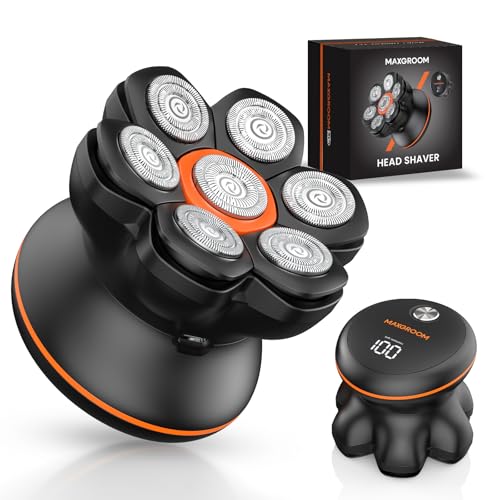
Ultra-Close Shave | 7D Floating Heads: MAXGROOM’s upgraded 7D floating heads contour precisely to every curve of the scalp for a true 0.10mm close shave. Each floating module independently flexes to match different hair textures—fine, thick or coarse—delivering a clean, even result with less pressure and fewer passes. The optimized surface contact reduces irritation and eliminates tugging, giving bald men a consistently smoother, polished look every single shave.
Best for Sensitive Skin: Why Comfort Varies by Type
If you’re managing sensitive skin, your razor choice greatly impacts comfort and irritation risk. Electric razors with foil technology offer superior protection through metal barriers that prevent direct blade contact, reducing micro-cuts and subsequent swelling. Models like the Braun Series 9 incorporate SkinSafe® technology, specifically engineered to minimize irritation types ranging from razor burn to ingrown hairs.
Safety razors demand precise technique to avoid nicks and bumps, making them riskier for sensitive skin without proper preparation. However, some users find blade shaving gentler when using non-comedogenic creams and correct methodology. Proper hygiene practices are essential to prevent folliculitis or infection when using manual blades. Traditional manual razors require lubrication to prevent the blade from tugging and shredding skin.
The critical difference lies in control: electric foils prevent excessive pressure automatically, while manual blades require careful angle and pressure management. Leaving hair slightly longer with adjustable guards minimizes stubble irritation and reduces the risk of uncomfortable regrowth patterns. Consider your skin’s specific irritation patterns—heat sensitivity versus mechanical irritation—when deciding between these options.

A Safe and Gentle Electric Razor for Women: Experience easy, curve-hugging, smooth shaving with a womens electric razor for bikini area in a reusable, rechargeable design that minimizes skin irritation while reducing disposable waste

Essential electric shaver for women and girls is designed for shaving sensitive skin on legs

Complete with All Essential Accessories: This women's grooming kit comes with a full suite of professional accessories - including 3 specialized trimmer heads (hair, foil, facial), 2 adjustable hair guards, a cleaning brush and USB charging cable. Everything you need for precise head-to-toe hair removal is conveniently included in one box.
Your Decision Framework: Comparing Closeness, Safety, and Time
Once you’ve narrowed your choice based on skin sensitivity, you’ll want to evaluate three performance metrics that directly affect your daily shaving experience: closeness of shave, safety profile, and time investment.
Safety razors deliver superior closeness by cutting hair below skin level, though they demand multiple passes and require cream, water, and rinsing setup. Electric razors sacrifice closeness for speed—their larger heads complete shaves in fewer strokes, and dry shaving eliminates prep time entirely. The number of U.S. consumers opting for electric razors is predicted to rise from 80.22 million in 2019 to nearly 85.6 million by 2023, reflecting the growing preference for this convenient technology. For those with sensitive skin, electric shavers with foil technology provide a gentler alternative that minimizes irritation compared to blade-based methods.
Safety considerations matter greatly: blade razors increase cut risk and cause redness in 78.3% of users, while electric shavers protect skin through foil barriers, affecting only 49.4%. Both methods carry risks such as ingrown hairs that may develop during the healing process after shaving.
Your decision framework should weigh user preferences against pricing considerations. If closeness trumps convenience, choose safety razors. Prioritize speed and safety? Electric razors win.