You’ll get the closest, most comfortable shave by shaving with your beard’s grain direction first, then across it, and finally against it for maximum smoothness. Start by growing your beard two to three days, then use tactile methods like your fingers or a credit card to identify your unique grain pattern across your cheeks, chin, and neck. This systematic three-pass approach minimizes irritation and ingrown hairs while delivering superior results tailored to your individual growth patterns.
Map Your Beard’s Grain Direction
Before you shave, you’ll need to understand how your facial hair grows—and it’s not uniform across your face. Your beard’s grain direction varies considerably between cheeks, chin, and neck areas, requiring individual examination of each section.
Start by growing your beard for 2-3 days—sufficient length reveals patterns without curl interference. Use tactile grain identification methods: run your fingers through the hair, glide a credit card across it, or pass a cotton ball gently over the growth. Smooth passage indicates the grain direction; resistance means you’re moving against it.
Complement these mapping techniques with visual inspection in a mirror or close-up photography. Document your findings by sketching directional arrows on a face diagram. Tape this reference to your mirror during shaving. Many people report experiencing increased confidence when they maintain a well-groomed appearance through proper shaving techniques. Keeping your razor clean and well-maintained with regular warm water rinses will help you achieve the best shaving results across all grain directions. With repeated use, you’ll memorize your unique patterns, eventually shaving without consulting your map. Understanding your beard’s growth pattern allows you to select the most appropriate shaving technique for each facial area.

Get the ultimate grooming experience with the Line-Up Razor, proudly made in Korea.

CLEAN BEARD LINE: Achieve professional barber straight hairline and clean mustache angles at home with our Vertex beard razors. These reusable men razors are made with straight blades to provide low resistance and detailed shaving for your facial hairs & Hairline Straightener.
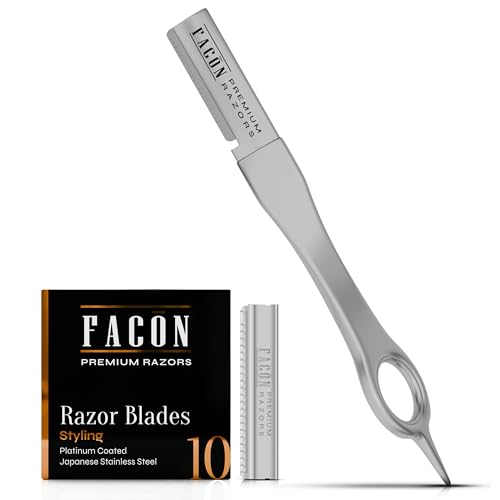
Precision Shaving with Professional-Grade Razor - Achieve barber-quality results at home with this stainless steel straight edge razor; designed for precise beard shaping and clean lines; outperforms traditional razors in control and accuracy
Start With the Grain: Your Foundation Pass
Your foundation pass—the first razor stroke across your beard—sets the stage for everything that follows. This shaving technique removes bulk gradually while minimizing irritation by working with your hair’s natural growth direction.
Begin by rinsing your face with hot water and applying lather generously. Use parallel strokes following the grain: north-south on your face, south-north on your lower neck. Keep strokes short on your mustache and chin, working from the sides toward center.
Stretch your skin taut for control and stop at your beardline to maintain shape. Don’t skip this foundation pass—rushing into against-grain shaving causes razor burn and ingrown hairs. Your initial pass shortens stubble for easier subsequent passes and establishes base smoothness without pressure. To prevent ingrown hairs, rinse your blade after each stroke to remove hair buildup and maintain razor effectiveness. Completing this first pass correctly is essential to prevent irritation and ensures you’re properly prepared for the additional passes that follow. After each shaving session, maintain your razor by lubricating with oil to ensure optimal performance for future shaves.
Refine Across the Grain: Closeness Without Irritation
Now that you’ve established your foundation with the with-grain pass, it’s time to refine your shave by working across the grain—perpendicular to your hair’s natural growth direction. This approach delivers superior closeness without the irritation risks of against-grain shaving techniques.
Apply horizontal strokes with a slight razor tilt, using light pressure to skim across your skin. Reapply lather between passes for maximum glide. This method removes finer whiskers remaining after your initial pass, achieving a glass-like finish on cheeks and neck. Choosing the right razor, such as one with a closed-comb design, can further enhance your ability to control blade exposure and minimize irritation during these multiple passes.
For skin sensitivity, across-the-grain shaving minimizes friction on follicles while preventing ingrown hairs and razor burn. It’s particularly effective on tricky areas prone to irritation. Many budget-friendly electric razors like the Braun Series 5 offer features specifically designed to reduce irritation during multi-pass shaving techniques. Positive feedback from customers has demonstrated that this two-pass method significantly enhances the overall shaving experience. Feel for feedback as you work—your beard growth pattern is unique, so adjust accordingly for your ideal balance between smoothness and comfort.
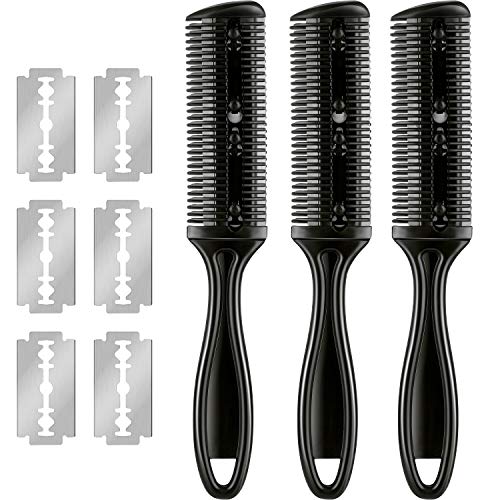
The set includes: 3 razor combs, 10 razors (made with stainless steel blades for durability); double-edged scissors, and double-bladed razor blades

What you will get: 5 pieces of dual side hair cutter combs and 20 pieces double sided razors that are made of quality carbon steel for stability and durability, enough for daily use and replacement

THE PERFECT SHAVE: Make skin irritations and ingrown hair a problem of the past. With the eco safety razor, you will achieve the closest shave effortlessly.
Finish Against the Grain: Maximum Smoothness
For the ultimate in closeness, the final against-grain pass delivers results you can’t achieve with directional shaving alone. You’ll lift hair beneath the skin surface, accessing it at the source for that baby-smooth finish you’re after.
This proper technique works best after completing with-grain and across-grain passes, targeting thick stubble effectively. You’ll notice the shaving benefits immediately: a cleaner, closer result that limits 5 o’clock shadow visibility—perfect for special occasions demanding a polished appearance. Regular trimming maintains beard shape and thickness while preventing the stubble from becoming unmanageable between shaves. Using quality clippers with appropriate guide combs ensures even results throughout the beard area. To minimize irritation and achieve optimal results, prepare your skin with a hot towel beforehand to open pores and soften hair.
However, assess your skin sensitivity first. This method suits those with less sensitive skin and coarse, straight-pattern hair. If you’ve got curly or multi-directional growth, proceed cautiously. With proper prep and technique adjustment, you’ll minimize irritation while maximizing smoothness and achieving that completely clean-cut look. Remember that trimming against the grain is recommended for shorter beards to promote uniform hair growth direction and reduce the chance of ingrown hairs.

Designed for Sensitive Skin: Vanicream is the #1 Dermatologist-Recommended Brand for Sensitive Skin*. This shaving cream creates a protective barrier between the razor and your skin to deliver a smooth, close, and comfortable shave for both men and women

HARRY'S SHAVING GEL: Forms a rich lather to cushion and protect skin and enhance razor blade control

Enjoy Shaving Again - Our men's grooming products are crafted with safe, natural, plant-derived ingredients to give you the smoothest shave possible without risking razor burn. Use this shaving cream anywhere you shave and pair with your skin care for men regimen.
The Mapping Technique That Reveals Your Pattern
Before you can shave effectively in multiple directions, you’ll need to identify exactly how your beard grows—and it’s not the same everywhere on your face.
Mapping techniques reveal your unique beard growth pattern through systematic observation. Start by allowing two days of growth, then run your fingers across your face in all directions to identify resistance points. The direction you feel resistance indicates grain direction. Document your findings by sketching directional arrows on a face diagram, noting how your cheeks, jawline, neck, and upper lip differ. Tape this map to your mirror as a reference guide. Since beard growth varies considerably across facial sectors and isn’t symmetrical between sides, your personalized map becomes essential for strategic shaving sequences and superior results. To maintain optimal shaving performance, ensure your razor remains sharp and well-maintained through regular oiling and cleaning to reduce friction and extend blade life. Using a sharp safety razor with proper technique helps prevent razor burn and ingrown hairs. Understanding these growth patterns leads to a smoother, irritation-free shave while helping you prevent razor bumps and ingrown hairs.
Execute the Three-Pass Shaving Method
With your beard map in hand, you’re ready to execute the three-pass shaving method—the gold standard for achieving a close shave while minimizing irritation. Start with Pass 1 (With the Grain), applying minimal pressure to reduce beard length incrementally. Re-lather before moving to Pass 2 (Across the Grain), where you’ll shave perpendicular to hair growth with a light, consistent touch. Finally, execute Pass 3 (Against the Grain) for the smoothest results, using more aggressive razor options if your blade allows adjustment. This gradual approach prevents irritation by cutting progressively shorter rather than forcing the razor below skin level. Tailor these shaving techniques to your beard density and skin sensitivity—skip ATG entirely if you’re prone to ingrown hairs. For sensitive areas like the upper lip, use buffing strokes with mild non-adjustable razors to reduce the risk of weepers. After shaving, apply beard oil or balm to hydrate and soften the skin while preventing irritation.
Shaving Mistakes That Cause Razor Burn and Ingrowns
Even when you’ve mastered the three-pass method, common mistakes derail your results and leave you battling razor burn and ingrown hairs. Your shaving frequency habits matter greatly—daily shaving without proper recovery time irritates follicles and increases ingrown hair formation. Inadequate skin preparation techniques compound this problem. You’re skipping essential moisturizing steps that protect your skin barrier, and you’re likely applying excessive pressure during passes. This aggressive approach damages skin and forces hairs beneath the surface. Using cheap tools with dull blades creates micro-tears and friction burns, whereas round-point blades in quality razors minimize nicks and irritation. Razors with five blades and advanced features like those found in premium models provide superior performance and reduce irritation compared to basic alternatives. Neglecting beard oil application leaves your skin stripped of protective sebum, heightening sensitivity. Selecting quality grooming tools over cheap implements prevents the blade degradation that leads to irritation and discomfort. Hot water showers post-shave further compromise your skin’s integrity, making razor burn inevitable and ingrowns more likely to develop.