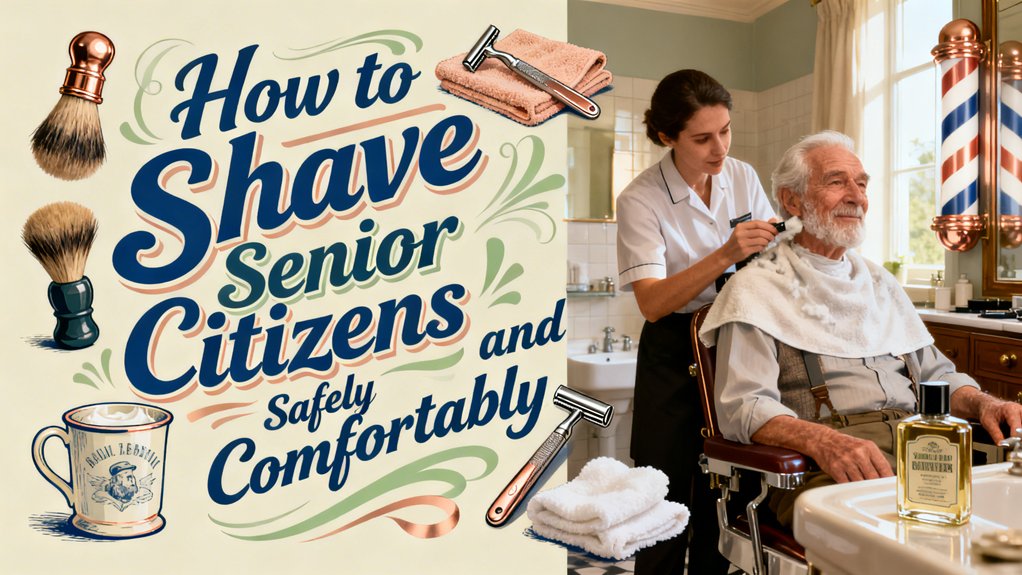
You’ll want to assess your senior’s physical abilities first, then gather gentle supplies like electric razors or single-blade options designed for delicate skin. Position them in a well-lit, stable area with grab bars nearby. Shave with the grain using minimal pressure and short strokes, re-lathering between passes. Apply alcohol-free moisturizer immediately after. If they’re on blood thinners, electric razors reduce cutting risk substantially. Maintain their dignity throughout the process by explaining each step. The specific techniques you’ll uncover ahead guarantee comfort while preventing injury.
Assess Your Senior’s Shaving Needs and Abilities
Before you help your senior with shaving, you’ll need to understand their physical capabilities and preferences. Start by observing their skin conditions—thin, sensitive skin requires gentler techniques to prevent irritation. Note any tremors or reduced dexterity that might lead to self-inflicted cuts, signaling when assistance becomes necessary.
Ask about their shaving preferences. Do they prefer starting with their neck or sideburns? Have they always used a straight razor, or would an electric option suit them better now? Consider their blood thinner medications; if they’re taking them, electric razors minimize bleeding from minor cuts. Cordless clippers offer additional mobility and safety for seniors with limited grip strength or balance concerns. For budget-conscious families, Remington electric razors provide effective shaving options that can handle various facial hair types while remaining affordable.
Assess their independence level honestly. Can they safely handle shaving independently, or do they need you gathering supplies and holding the mirror? Understanding these factors helps you provide dignified, personalized care while prioritizing their safety and self-reliance. Whenever possible, allow individuals to shave themselves and focus your assistance on preparation tasks instead.

SkinProtect Technology: Achieve a clean, gentle shave with 5D pivot contour and AntiCorrosion Shaving System

From the #1 electric shaver brand¹: Shaver 2400 Series gives you a fast, clean shave even on sensitive skin thanks to 27 self-sharpening ComfortCut blades and 4D Flex Heads

CLOSE, CLEAN SHAVE: 3 blade free floating system follows facial contours for a flawless finish and includes a middle trimmer to cut difficult hairs along with 2x SensoFoil shaving elements for ultimate closeness and skin comfort
Gather Shaving Supplies for Seniors
Choose grooming tools carefully—safety razors with single, sharp blades minimize tugging on delicate skin, while electric razors with blade stoppers prevent accidental cuts for those with balance concerns. Consider brushless gels that spread evenly and turn translucent, exposing contours requiring careful navigation.
For aftercare, select balms enriched with squalane and peptides for extended hydration. Airless pump dispensers preserve product integrity and maintain hygiene. Hydration is crucial for aging skin as it aids in smooth shaving and prevents irritation and razor burn. Electric foil shavers are particularly recommended for seniors with sensitive skin due to their protective guards limiting blade contact, which reduces micro-trauma compared to traditional blades. To maintain razor effectiveness, learn simple DIY sharpening techniques using fine-grit stones to keep blades in optimal condition for safe, comfortable shaving. Bundle supplies together in organized kits to reduce decision fatigue and simplify your shaving routine.

GET SMOOTH SHAVING EVERY TIME: The Kitsch Perfect Glide safety razor is a top-of-the-line tool designed for an exceptional shaving experience. This single blade safety razor delivers a smooth, close, and comfortable shave, making it one of the most reliable safety razors for daily grooming without the irritation often associated with multi-blade razors.

Perfect Holiday Gift For Men - Make any man extremely happy with Viking Revolution Safety Razor Shaving Kit. This luxury shaving kit for men is ideal as a gift for fathers, husbands, sons or any man for that matter.

COMPLETE MEN'S SHAVING KIT: The Gentleman Jon Shaving Kit for Men is a comprehensive set that includes a safety razor, badger hair brush, alum block, shave soap, stainless steel bowl, and five razor blades - everything needed for a luxurious, comfortable and smooth wet shave experience. With its compact design, our product is also a suitable travel companion to those who value traditional shaving, ensuring a neat shave even while on the go.
Position Your Senior Safely Before You Start
Proper positioning is fundamental to your senior’s comfort and safety during shaving. Start by having your senior sit in a sturdy chair or bed to maximize seating stability and minimize fall risk. Position them close to a mirror with excellent lighting conditions—shadows around the face create hazards, especially near sensitive areas like the neck and jawline.
Arrange supplies within arm’s reach and lay a towel across their lap to catch hair and cream. If your senior has mobility limitations, a shower chair offers additional support. Install grab bars nearby for extra stability if needed. Consider using an electric razor to further reduce the risk of cuts and injuries during the shaving process. Electric shavers with 27 self-sharpening blades are specifically designed to cut hair safely just above skin level. Look for devices with safety mechanisms for sensitive skin to provide extra protection during grooming.
Check that the lighting doesn’t create glare or direct into their eyes. Proper positioning reduces strain, prevents accidents, and helps your senior feel secure throughout the shaving process.
Choose the Right Razor Type for Fragile Skin
Your senior’s comfort and safety now depend on selecting a razor designed specifically for fragile, aging skin. Razor selection matters greatly because aging skin bruises easily and requires gentler approaches.
Consider weighted-handle options like the HANNI Dermaplane Razor, which scored 8.5/10 in testing. The handle’s weight does the work, eliminating the need for pressing hard. Safety razors with single-blade designs prevent ingrown hairs and reduce razor burn effectively. According to dermatologist recommendations, lubrication strips are essential for reducing skin stress during the shaving process. Electric razors with straight-line shaving motion and ultra-thin foils can also provide effective protection for fragile skin while delivering a close shave.
For skin sensitivity, heated electric options like the Gillette Labs Heated Razor reduce pulling and bleeding. The warmth relaxes skin, making shaving more comfortable. Alternatively, multi-blade cartridges with cushioned guards and lubricating strips provide smooth gliding.
Prioritize razors featuring protective technology between blades and water-activated serums. These features minimize irritation risk considerably. Test your chosen razor on a small area first to confirm compatibility with your senior’s individual skin needs.

THE PERFECT SHAVE: Make skin irritations and ingrown hair a problem of the past. With the double sided razor, you will achieve the closest shave effortlessly.

THE PERFECT SHAVE: Make skin irritations and ingrown hair a problem of the past. With the metal razor, you will achieve the closest shave effortlessly.

*PERFECT SHAVE*: Achieve a closer, smoother, more professional shave without the hassle of irritation or ingrown hairs with the Bambaw double edge safety razor.
Shave With the Grain Using Slow, Gentle Strokes
Because fragile senior skin bruises easily and heals slowly, shaving with the grain—in the direction hair naturally grows—is your safest approach to a clean shave. Start by mapping your facial hair’s growth pattern, which typically moves downward on cheeks and sideways along the jawline and neck.
Begin your first pass using minimal pressure, letting the blade cut hair just above your skin’s surface. This shaving technique minimizes irritation, razor burn, and ingrown hairs that compromise skin sensitivity. Move slowly with deliberate strokes, re-lathering between passes to maintain smoothness and comfort. For accurate mapping, analyze a couple days of growth to ensure you understand your unique beard direction before beginning. Understanding your face shape can also help you customize your grooming approach for optimal comfort and results.
Ensure your electric razor is fully charged for optimal performance and efficient cutting. Gently pull skin taut only during final passes, never initially. Avoid shaving against the grain entirely—this causes unnecessary trauma to delicate skin. Finish with a moisturizer to lock in hydration and prevent further irritation.
Navigate Sensitive Areas Without Nicks or Cuts
Steering through the delicate contours of a senior’s face—particularly the neck, jawline, and areas with thin, papery skin—requires mapping the landscape before you begin. Note existing skin folds and wrinkles that demand special attention. Adjust your angle around bony prominences like the Adam’s apple to prevent catches.
Tackle sensitive zones last, after you’ve completed less vulnerable areas. This sequence minimizes irritation and gives you better control practice first. Before approaching tricky spots, reapply lubricant generously. Use short, light strokes that allow the razor to glide freely without pressing into fragile skin. Stretch skin taut gently in sensitive areas for smoother passage. Limit passes to one or two maximum. Sharp blades facilitate smoother cuts with fewer strokes, reducing friction and skin irritation. For seniors with particularly reactive skin, consider using safety razors with protective guards that are specifically designed to reduce irritation risk. Pause frequently to rinse and monitor for redness, stopping immediately if irritation appears. Incorporating personal growth principles into your caregiving approach helps you develop greater patience and sensitivity to each individual’s unique needs.
Shave Safely With Blood Thinners and Thin Skin
Many seniors taking blood thinners face heightened risks when shaving because their medications slow clotting, turning minor nicks into prolonged bleeding episodes that can last well over five minutes. Your thin skin care requires extra attention and strategic blood thinner precautions.
Switch to an electric razor immediately—it minimizes nicks that trigger excessive bleeding. Avoid traditional razors that create deeper cuts vulnerable to prolonged oozing. Apply warm water to soften your skin before shaving, reducing irritation and micro-tears. Electric shavers with adjustable length settings provide safer trimming options for seniors managing anticoagulation therapy. Maintain your electric razor regularly by brushing off loose stubble and keeping the heads clean to ensure optimal performance and safety.
Shave gently with light pressure, never rushing or making multiple passes over sensitive areas. Keep a clean cloth nearby to apply direct pressure if bleeding occurs. Inform your healthcare provider about any bleeding incidents, even minor ones. Regular blood tests such as PT/INR monitoring help ensure your anticoagulant dosage remains appropriate for your safety. Monitor for signs of internal bleeding after falls or head bumps, which pose serious risks without visible injury.
Moisturize a Senior’s Skin After Shaving
Right after you’ve patted your skin dry, it’s the perfect moment to apply moisturizer—your freshly shaved skin is most receptive to hydration at this critical window. Delaying this step increases vulnerability to irritation and dehydration.
Choose an alcohol-free, lightweight cream or balm formulated for sensitive skin. Look for ingredients like niacinamide, ceramides, and glycerin that support your skin’s protective barrier. These moisturizer benefits include reducing redness, razor burn, and that uncomfortable tight feeling. Proper moisturizing is especially important for seniors, as it helps counteract the friction and heat that can occur during shaving. For those with particularly reactive skin, consider specialized shavers designed for hypoallergenic blades to minimize irritation before it starts.
Apply with a gentle patting motion rather than rubbing. Opt for non-comedogenic formulas to prevent pore clogging. Avoid heavy oils and fragrances that can trigger irritation and allergic reactions post-shave. If you’re shaving in the morning, follow with SPF 30+ for sun protection.
Consistent skin hydration after shaving prevents premature aging and helps you achieve smoother, more comfortable shaves long-term.
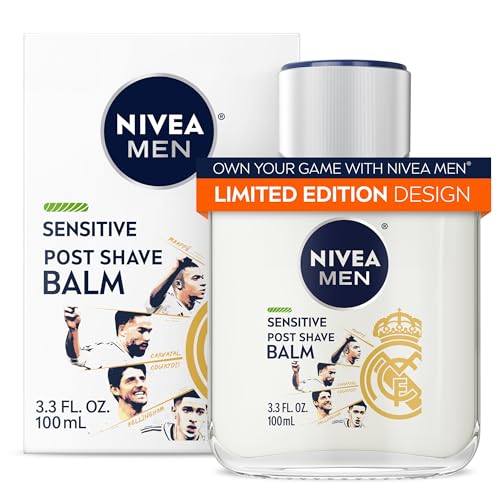
WITH VITAMINPRO COMPLEX: Enriched with VitaminPro Complex—Vitamin E, Provitamin B5 and Chamomile extract

IMMEDIATE RELIEF: Make your skin go "aaah". Our men’s aftershave balm is specially formulated to calm irritated skin on the spot. With a clean, invigorating feel right away, HEAL will transform your shaving routine into a shaving retreat.

WITH VITAMINPRO COMPLEX: Enriched with VitaminPro Complex—Vitamin E, Provitamin B5 and Chamomile extract
Fix Common Senior Shaving Problems
If you’re experiencing razor bumps or ingrown hairs, switch to a single- or two-blade razor like the Gillette SkinGuard, which cuts cleanly without tugging. Always shave with the grain rather than against it. For excessive irritation and redness, reduce pressure and use shorter, slower strokes while applying warm water beforehand to soften hair. As skin becomes thinner and more sensitive with age, these gentle techniques become increasingly important for preventing post-shave discomfort.
When nicks occur, remember that older skin heals slowly. If you’re taking blood thinners, electric razors become your safest choice, minimizing cut risk entirely. For seniors seeking a specialized solution, waterproof electric trimmers designed for sensitive areas offer additional safety and control during grooming.
The shaving psychology behind these problems often involves applying too much pressure. Instead, embrace patience and gentleness. High-quality shaving creams provide cushioning for skin sensitivity, reducing discomfort considerably. For seniors with coarse yet sensitive skin, consider using mild blades such as Accuforge or Kai that balance effective cutting with minimal irritation.
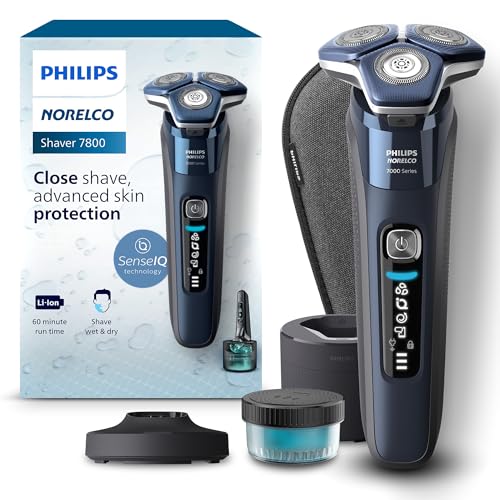
Made of up to 250,000 micro-tech beads per square cm, Nano SkinGlide coating improves gliding on skin by up to 30%*, to minimize irritation.

From the #1 electric shaver brand¹: Shaver 3600 Series gives you a comfortable, clean shave even on sensitive skin thanks to 27 self-sharpening ComfortCut Blades and 5D Pivot & Flex Heads

Skin Friendly Foil System: Dudes, meet your no-yank zone! These grooming beasts rock precision titanium blades with built-in smart sensing tech – bye-bye beard tugging. The floating head design? Lets your portable razor glide like butter on facial contours. Smooth operator status: unlocked
Support Your Senior’s Independence While Staying Safe
While helping your senior maintain independence during grooming routines like shaving, you’re also managing a critical balance between safety and autonomy. This independence balance matters because restricting activities increases depression and immobility, yet falls during personal care can trigger serious injuries.
Create a safe shaving environment by installing grab bars, ensuring adequate lighting, and removing clutter from bathroom floors. Your safety awareness should extend to evaluating whether your senior can safely stand or sit while shaving. Consider adaptive tools like electric razors that reduce fumbling and fall risk. Since balance issues are a major contributing factor to falls among seniors, encouraging your senior to use grab bars during their shaving routine provides essential stability. Electric razors designed for sensitive skin minimize the risk of nicks and cuts that could complicate healing in aging skin.
For seniors with sensitive skin, safety razors offer gentle performance that reduces razor burn and irritation compared to multi-blade cartridges. Encourage your senior to use assistive devices without shame—noncompliance increases injury likelihood. Support their choices while implementing practical modifications. This approach preserves dignity, maintains engagement, and prevents the hospitalization that often ends independent living.