You’ll find clippers fall into two main categories: electric models cut 70% faster and suit beginners, while manual clippers offer superior precision for skilled barbers. Motor types matter too—pivot motors excel with thick hair and run cooler, whereas rotary motors provide versatility across all hair types. Blade materials vary greatly: stainless steel’s affordable but dulls quickly, titanium retains edges longer, and ceramic minimizes heat and irritation. Your choice depends on skill level, hair type, and whether you prioritize speed or control. Understanding each clipper’s specific strengths reveals which one matches your grooming needs.
Electric vs. Manual Clippers: Which Do You Actually Need?
How you’ll cut hair depends entirely on your skill level, frequency of use, and desired results. If you’re a skilled barber, manual clipping techniques deliver superior precision and control through double-edged blades and direct force application. You’ll achieve personalized effects ideal for detailed shaping and classic cuts.
Conversely, if you’re a beginner or handle multiple cuts daily, electric clippers cut hair 70% faster with consistent power, maintaining smooth edges on thick hair. You’ll sacrifice some tactile feedback but gain reliability. Electric clippers are designed with obtuse angle blades for enhanced safety during operation. For sensitive grooming areas, specialized electric trimmers like the Manscaped Lawn Mower 5.0 Ultra offer additional skin-safe features beyond standard hair cutting.
Consider electric clipper maintenance requirements—battery charging, blade cleaning, and occasional repairs—against your schedule. To keep your electric clippers performing optimally, regular cleaning with a small brush and proper lubrication will extend their lifespan significantly. Manual clippers cost 60% less initially and need minimal upkeep, though they demand slower, deliberate movements. Electric models pay off long-term for professionals despite higher upfront costs.

Color Coded Guide Combs – Finding and remembering everyone’s favorite hair length is easier than ever. Corresponding the correct comb to the right cutting length is simple with our easy to see attachment guards

Cordless Convenience – The Home Pro Cordless is a rechargeable haircutting kit, offering maximum flexibility. Switch between cordless use for portability or plug it in to continue cutting while charging.
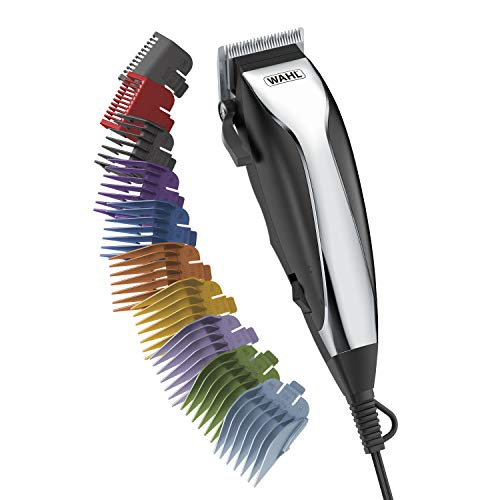
Multi-Cut Hair Clipper - Heavy duty motor for exceptional power and no-snag cutting; features an adjustable taper lever for easy blending and fading. This results in a very strong audible hum, but is completely normal to its operation. Don’t settle for a weak clipper.
Motor Types: Pivot Power vs. Rotary Versatility
Once you’ve selected between electric and manual clippers, the motor type becomes your next critical decision point. You’ll encounter two primary options: pivot and rotary motors, each offering distinct advantages.
Pivot motors deliver exceptional cutting power through opposing magnetic components, making them ideal for thick, coarse hair. Their pivot advantages include cool-running operation and maintenance-free design, though they operate at lower blade speeds and tend toward heavier construction. Pivot motors may compromise cut quality on certain hair types due to their slower blade movement.
Rotary motors provide superior rotary efficiency, converting circular motion into linear blade movement at high speeds. You’ll appreciate their versatility across all hair types, balanced power-to-weight ratio, and consistent performance during extended use. Rotary designs accommodate rechargeable batteries seamlessly and excel at fades and bulk removal. Unlike magnetic motors, rotary motors balance speed and torque efficiently without the rapid heat buildup. To maintain optimal performance, rotary motor clippers should be regularly oiled with clipper oil to prevent excess buildup in the motor. For best results with beard trimming, ensure you’re using 6-position guide combs to achieve even lengths and professional fades.
Your choice depends on your specific cutting requirements and hair types you’ll encounter regularly.
Guard Sizes 1–8: Choose Your Perfect Cut Length
Guard sizes fundamentally determine your cutting length, and understanding the numbering system—ranging from #1 through #8—ensures you’ll achieve the exact results you’re targeting. Each guard corresponds to specific millimeter measurements: #1 delivers 1/8 inch for close buzzes, while #8 provides a full 1 inch for maximum length retention.
When selecting guards, consider your desired style. Fades require pairing shorter guards (#0.5–#1) at the base with longer ones (#2–#3) on upper sides. Crew cuts typically use #1 on sides with #4–#7 on top. Guard size comparison reveals that textured styles benefit from #3–#5 on sides and #8 on top. The taper lever enables micro-adjustments between guard changes, allowing you to soften lines and blend transitions without switching to a different guard entirely. For professional results, many barbers recommend selecting trimmers with superior blade quality to ensure clean, precise cuts across all guard sizes.
Half-guards like #1.5 blend hard lines seamlessly between standard sizes. Start longer and adjust shorter as needed—this approach prevents over-cutting mistakes while refining your guard selection strategy. Different motor types like rotary and pivot designs can impact how efficiently clippers cut through various hair textures at each guard setting.
Blade Materials: Steel, Ceramic, and Titanium Compared
Because blade material directly impacts cutting performance, durability, and maintenance requirements, selecting the right composition for your clippers proves essential to achieving professional results. Stainless steel offers affordability and corrosion resistance, though sharpness diminishes with prolonged use. Titanium blades retain their edge considerably longer and reduce hand fatigue during extended sessions, justifying their higher cost. Ceramic blades generate notably less heat, minimizing skin irritation, while maintaining exceptional blade longevity despite increased brittleness. Carbon steel delivers superior cutting precision for intricate work, demanding regular maintenance. For home users seeking cost-effective solutions, DIY sharpening techniques using sandpaper or sharpening stones can restore blade edges between professional services. Coating technologies—including titanium, diamond-like carbon, and gold applications—further enhance wear resistance and glide performance. To maximize blade performance and lifespan, applying clipper-specific oil before or after each use reduces friction and prevents premature wear. Professional barbers should prioritize regular oiling and maintenance to ensure carbon steel blades sustain their cutting performance throughout their lifespan. Your choice depends on balancing budget constraints against desired blade longevity and the cutting precision your specific grooming applications require.

PRO TESTED, CREATED FOR ALL - Our Novah barber kit has been tested in some of the best barbershops around the world to do what they do best. Our barber clippers professional sets are being used worldwide to give zero gap cuts to the men who walk the walk. We have brought our most trusted professional cordless hair clippers to now be available to all

Hair Clipper:Heavy-duty gear for proper powerful cut, with stable and steady control. The R shaped rounded edge design prevents from accidentally hurting skin.

ALL-IN-ONE 18-PIECE HOME GROOMING KIT – Includes attachment combs, barber comb, tapered comb, stainless steel shears, blade guard, blade brush, blade oil, and a soft storage case for complete at-home haircuts and touch-ups.
Clipper Styles and Techniques: Standard, Adjustable, and Parallel
Your choice of clipper style fundamentally determines the precision, versatility, and control you’ll achieve during grooming work. Standard clippers offer fixed blade lengths, delivering consistent results for uniform cuts. Adjustable clippers provide variable cutting lengths through lever mechanisms, enabling seamless shifts between different guard sizes without changing attachments. Parallel clippers feature synchronized blades that move in the same direction, reducing skin irritation and improving cutting efficiency on sensitive areas.
Mastering clipper usage techniques requires understanding each style’s mechanics. Standard clippers suit beginners and quick touch-ups. Adjustable models demand practiced hand coordination but maximize versatility. Like electrical clippers that clip voltage to protect circuits, grooming clippers clip unwanted hair to create precise styling. For eyebrow grooming specifically, precision electric models with specialized attachments offer enhanced control for detailed work. Regular blade cleaning and disinfection prevents bacterial growth and maintains sharp blades for optimal performance. Essential clipper maintenance tips include regular cleaning, proper lubrication, and blade sharpening to guarantee peak performance. You’ll extend your equipment’s lifespan and maintain cutting quality by following consistent maintenance protocols.
Professional Clippers vs. Home-Use Models
When you’re selecting between professional and home-use clippers, the differences extend far beyond price—they fundamentally shape cutting performance, durability, and versatility. Professional clipper features include motors spinning at 6,500–9,500 RPM, delivering 90–120 W of corded power for heavy-duty performance. You’ll access 8–14 guide combs and titanium-coated blades lasting 1,000–3,000 hours. These models withstand 5–15 years of frequent use with metal construction minimizing vibration.
Home clipper affordability ranges $30–$80, utilizing pivot motors and simpler plastic builds for occasional grooming. You’ll receive 3–6 basic guide combs supporting straightforward cuts. While home-use cordless batteries degrade within 2–4 years, corded options guarantee constant power. Professional models cost $80–$200, justifying their advanced engineering for complex styling demands and professional barber environments. For those seeking the closest possible shave, electric razors with powerful motors and sharp blades offer an alternative grooming solution to traditional clippers. For specialized grooming needs like neckline shaping, consider models with precision for jawlines and necks to achieve skin-level closeness in hard-to-reach areas. Regular maintenance including cleaning blades with a brush and applying lubricating oil can extend the lifespan and improve operational efficiency of both clipper types.

Long Battery Life – 3.5 HOURS CORDLESS USE: Experience an impressive 210 minutes of high-performance cordless run-time with the added convenience of a Charging Stand. This versatile product is compatible with worldwide voltage, ensuring usability wherever you go. Enjoy a hidden salon Hanger for hanging purpose.

Heavy Duty Motor - Our PowerDrive Plus heavy-duty motor delivers exceptional power for no-snag cutting and runs 15% cooler vs. our standard PowerDrive motor. This powerful electric shaver cuts through the thickest of hair with no snags or pulls

A Game-changer Especially for Family Hair Cutting - This Mens Grooming Kit and Hair Trimmer can handle all your grooming needs. It includes a hair clipper with 9 guide combs(1/16",1/8", 3/16",1/4", 3/8", 1/2",5/8", 3/4",7/8" ) Right Ear Taper*1,Left Ear Taper*1, a 3-in-1 trimmer (nose/ear trimmer, beard trimmer, Zero Gapped T-blade) with 10 ml blade oil, blade cleansing brush ,even a barber cape, EVA package case and USB charging cable. Whether you're maintaining your beard, fading your haircut, manscaping, or all of the above, this grooming kit for men can handle it.
Best Clippers for Thick, Coarse, and Wet Hair
Thick, coarse, and wet hair demands clippers engineered with robust motors and specialized blade designs that won’t bog down or skip during cutting. The Wahl Pro-Series Elite delivers ultra power through self-sharpening precision blades and adjustable taper lever functionality, while the Andis Recon offers pro-grade barber quality with digital lever customization. For cordless versatility, the Philips Norelco Series 5000 requires no blade oil and handles wet grooming efficiently. The Bevel Pro Clippers feature a super smooth head design specifically engineered for tight coils and dense textures. You’ll find that quality clipper attachments and grooming accessories—including premium guards and customizable settings—ensure consistent results across varying hair thickness levels, making these models ideal solutions for demanding grooming applications. Proper preparation with warm water to soften facial hair before clipping helps minimize irritation and delivers better results. For genital grooming specifically, trimming is the most recommended option among men due to its speed, painless application, and reduced risk of ingrown hair compared to alternatives. The Wahl Lithium Pro Complete Cordless Haircut Kit offers up to 1 hour and 40 minutes of runtime, providing extended grooming sessions without interruption for thick hair cutting needs.

Smoother Trimming: The most powerful Panasonic nose trimmer yet, the Panasonic ER-GN70-K uses a high-velocity motor to drive blades effortlessly and smoothly through thick, coarse hair with no pulling or tugging while you remove unwanted hair

All-in-one Grooming Kit: Built for versatility, SHPAVVER ETHUP mens beard trimmer comes with 6 essential trimmer heads and 5 guide combs (3, 6, 9, 12mm) plus adjustable sideburn comb, meeting your diverse grooming needs from face, beard, nose hair to groin and intimate areas. Wonderful gift for birthday, Father's Day, Christmas, or Valentine's Day
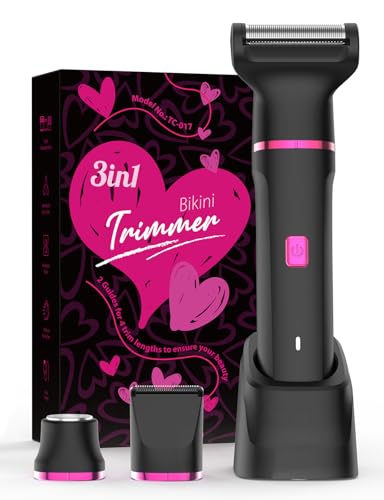
🖤 𝗕𝗢𝗟𝗗 & 𝗨𝗡𝗔𝗣𝗢𝗟𝗢𝗚𝗘𝗧𝗜𝗖 𝗗𝗘𝗦𝗜𝗚𝗡 - Jet-black body with hot-pink accents—for the woman who owns her choices. This isn’t just a trimmer; it’s your badge of body-positive confidence. Flaunt it on your vanity, flaunt your skin anywhere.
Low Noise, Low Heat, Less Vibration: Comfort Matters
Because extended grooming sessions can strain your hands and ears, clipper comfort directly impacts both operator wellbeing and cutting precision. You’ll find that noise reduction technologies, particularly magnetic motor designs, minimize auditory fatigue while maintaining performance. Models like BaByliss Pro and StyleCraft Ergo enable conversation-level communication during cutting, reducing operator stress throughout your workday.
Vibration control stems from several design elements you should prioritize. Ergonomic grip positioning reduces hand fatigue during extended use, while adjustable speed settings let you operate at lower speeds without sacrificing cutting effectiveness. Solid construction materials provide stable operation with minimal unwanted movement. High-quality clippers with durable motor construction are vital as low-quality tools can negatively impact both the operator experience and the client’s comfort during grooming sessions. Just as rotary shavers require light pressure and gentle movements to prevent skin irritation, clippers similarly benefit from controlled operation techniques.
You’ll notice that lower noise operation correlates with efficient motor design, which also reduces heat generation. This efficiency creates a more comfortable experience overall, allowing you to work longer without experiencing the physical strain associated with louder, heat-generating clippers. Premium brands like Philips incorporate self-sharpening steel blades that maintain consistent performance while reducing the force needed during operation, further enhancing comfort during extended grooming sessions.
How Blade Design Cuts Cleaner and Prevents Pulling
The foundation of a clean cut without pulling lies in precise blade geometry and manufacturing. You’ll find that acute angles created through forging reduce cutting resistance while enabling efficient hair removal at low torque. Secondary forging enhances both sharpness and blade strength, improving hair integration between fixed and moving blades.
Proper zero-gap adjustment aligns your blade tips flush, achieving closest cuts without snagging. The moving blade’s beveled design cuts closer without tugging, while the fixed blade combs and lifts hair for ideal positioning. Different tooth patterns—stagger-tooth, taper, surgical, and wedge—serve specific cutting needs. Sectioning the head for even coverage ensures consistent results when using clippers across different areas. Carbon steel blades maintain superior sharpness for smoother cuts, though they require regular oiling to prevent buildup and maintain performance. DIY maintenance like hand-sharpening flat faces can help preserve blade performance between professional services. Ceramic alternatives offer diamond-honed performance with reduced pulling risk, ensuring snag prevention regardless of material selection.
Top Clipper Brands for Barbers and Home Groomers
Finding the right clipper brand hinges on matching motor technology, blade quality, and ergonomic design to your specific cutting demands. The Andis ReVite Clipper combines professional-grade power with versatility, making it ideal for both barbers and home groomers. For detail work, the Gamma Shorty’s super-torque motor prevents snagging while its interchangeable levers enable precision fades. StyleCraft Saber II delivers brushless efficiency with zero-gap adjustment for sharp line-ups. BaBylissPRO’s x Tomb45 features high-torque digital motors for bulk cutting, while the JRL Onyx Clipper prioritizes quiet operation without sacrificing cutting power. Professional models like the Wahl Magic Clip and Legend offer adjustable blades and powerful motors reaching up to 7,200 RPM for versatile fading and textured blends. Each brand excels in specific areas—mastering clipper maintenance tips and grooming technique tutorials guarantees you maximize your chosen model’s performance and longevity regardless of your skill level. Regular cleaning and blade maintenance will help restore cutting performance and extend the lifespan of your clippers. Ceramic blades stay cooler during extended use, making them an excellent choice for professionals who work with multiple clients throughout the day.

💇♂️Professional Hair Clipper and Trimmer Set-- The large hair clipper can be used to shave both hair and beard, while the small trimmer is equipped with a T-shaped blade for zero-gap trimming of sideburns and edges around the ears. You can easily get the haircut you want at home, just like in a hair barbershop

Heavy Duty Motor – Our ultra-power heavy duty hair trimming system easily cuts the thickest hair with 35 percent more power than standard Wahl electromagnetic motor clippers, This results in a very strong audible hum, but is completely normal to its operation. Don’t settle for a weak clipper.

BESTBOMG ALL-IN-ONE GROOMING KIT: Includes professional hair clipper, precision beard trimmer & electric shaver. Meets all haircutting, beard fading, and close shaving needs for professional salon-quality results at home