
You’ll master rotary shaving by first preparing your skin with warm water and applying pre-shave lubricant to soften hair and reduce irritation. Execute small, overlapping circular motions at a 90-degree angle using minimal pressure to avoid razor burn and nicks. Adapt your technique to facial contours, adjusting stroke direction on the neck and cheeks according to hair growth patterns. Maintain your shaver through daily rinsing and weekly deep cleaning with vinegar and baking soda. Replace heads every 12-18 months for maximum performance. Understanding advanced techniques for thick beards and troubleshooting common issues will greatly enhance your results.
Prepare Your Skin and Shaver Before Your First Pass
Before you begin shaving with a rotary shaver, you’ll need to prepare both your skin and device to guarantee an effective, irritation-free experience. Start with shaver maintenance by fully charging your device and cleaning the blades under running water to remove debris. Apply a drop of lubricant post-cleaning to prevent wear.
For skin preparation, wash your face with warm water to soften hair and open follicles. This thermal conditioning reduces irritation and improves cutting efficiency. If dry shaving, allow several hours to elapse so natural oils remain intact. Apply an appropriate pre-shave product—foam, gel, cream, or oil—to protect your skin. Massage the product against the grain to lift flat-lying hairs, ensuring ideal razor-blade contact and performance. Since electric shavers can cause razor burn through excessive pressure and improper technique, maintaining a light grip is essential for safe and comfortable results. Hold the shaver at a 90-degree angle with a light grip to avoid excess pressure and prevent razor burn. Note that regular maintenance and cleaning extend the lifespan of your electric shaver and ensure optimal results.
Master the Circular Motion Technique for Rotary Shavers
Now that you’ve prepared your skin and device, you’re ready to engage the shaver’s mechanism—and that’s where circular motions become your primary technique. This shaving technique leverages the rotary shaver‘s three individual heads, which capture stubble growing in multiple directions simultaneously.
Employ small, overlapping circular motions across your face, maintaining a 90-degree angle to your skin. Alternate between clockwise and counterclockwise directions to address multi-directional whisker growth thoroughly. Apply light pressure initially, particularly in sensitive areas, as increased friction causes irritation.
On curved surfaces like your neck and chin, circular motions prove especially effective. For areas with varied grain patterns, incorporate short, vigorous strokes alongside circular movements. Unlike foil shavers with oscillating blades, rotary shavers excel at capturing hair growing in multiple directions with their rotating head design. Rotary shavers are particularly beneficial for sensitive skin, as they produce less irritation and fewer nicks compared to traditional razors. To optimize results, allow yourself an adjustment period of three weeks to fully adapt to your new rotary shaver and experiment with different techniques. Make multiple passes on both sides of your face, adjusting your stroke direction constantly to guarantee ideal coverage and closeness.
Adapt Your Approach to Face Contours and Shape
Your rotary shaver’s independent, floating heads are engineered to conform to the unique topography of your facial anatomy—but maximizing this adaptive capability requires deliberate technique adjustments across different zones. The jawline and neck demand slow, clockwise circular motions that allow rotary heads to trace angular contours without forcing contact. Your cheeks benefit from broader sweeping circles across flatter surfaces, while defined facial lines require heads to flex outward and tilt inward simultaneously. The Gyroflex 3D system‘s three independently moving parts actively track your specific facial shape, reducing missed hairs by 40% on irregular areas. For optimal results with rotary technology, consider models featuring self-sharpening blades that maintain consistent cutting performance across your facial contours. Premium options like the Philips Norelco i9000/S9000 Prestige Ultra offer advanced rotary technology designed to enhance contour adaptation and precision shaving. Consulting with a professional about your initial contour baseline can establish maintenance patterns that work specifically for your face shape. Contour adaptation succeeds through gentle pressure and single-pass efficiency rather than aggressive repositioning, preserving skin integrity while achieving ideal coverage across variable topography.
Handle Thick Beards With Circular Pressure and Plowing Technique
Thick beards demand a dual-technique approach combining circular pressure with strategic plowing motions to maximize efficacy while minimizing skin trauma. Your rotary technique should leverage the shaver’s 5,000 to 10,000 RPM blade rotation, which creates a scissor effect to slice coarse hair without pulling. Apply gentle, light pressure—excessive force causes discomfort and reduces efficiency. Use overlapping clockwise and counterclockwise circular strokes to capture multidirectional growth patterns across cheeks and jawline. For stubborn beard thickness, incorporate against-the-grain plowing strokes on resistant areas like your neck and chin. Pull skin taut to guarantee ideal blade contact, similar to how you must stretch skin carefully when working with sensitive skin areas. The independent head movement of rotary shavers allows for maintaining consistent skin contact in tricky areas, ensuring you achieve even coverage without excessive passes. Models like the Philips Norelco i9000 Prestige excel at handling circular strokes and mixed growth patterns. This combined approach requires only one to two passes, noticeably reducing irritation while delivering superior results for coarse facial hair compared to traditional foil shavers.

4-DIRECTION FLOATING ULTRA-ADVANCED SHAVING HEAD: The 3D rotary shaver head follows every contour of your face to remain in close contact with the skin for a fast shave that's also gentle on the skin

Precision Rotary Blades: Experience a close and comfortable shave every time with Barbasol's advanced stainless steel rotary blades, designed to glide smoothly over your skin for a precise shave that leaves you looking sharp.

3-in-1 Grooming Solution: Designed as a versatile glassy black electric razor for men, the device integrates beard shaving, nose hair trimming, and sideburn grooming in one compact unit. Replacing 3 separate tools, it streamlines your daily routine and frees up drawer space. Intuitive mode switching delivers consistent results at home, in a hotel, or at the gym
Shave Multi-Directional Rather Than With the Grain
Because facial hair grows in multiple directions across different anatomical zones, strict with-the-grain shaving leaves missed patches and reduces closeness. Your rotary shaver’s circular design excels at multi-directional techniques that address this anatomical reality.
Employ an against-grain strategy using short, controlled strokes across varying directions rather than following a single grain pattern. This approach captures hairs your rotary heads would otherwise miss with uniform motions. Apply moderate pressure during circular passes, allowing the independent head suspension to contour your facial curves while targeting multi-directional growth simultaneously. Users with sensitive skin should shave gently and adjust pressure based on skin sensitivity to minimize irritation while still achieving effective results. For specialized grooming areas, consider using water-resistant trimmers designed to safely navigate contoured zones. Proper technique combined with post-shave care such as quality balms can further prevent irritation and razor bumps.
Adjust stroke direction constantly on your neck and cheeks where hair growth patterns diverge most notably. Combine circular motions with up-and-down and sideways strokes for thorough coverage. This systematic multi-directional approach yields remarkably closer results than conventional with-grain techniques, particularly on contoured areas where traditional methods prove inadequate.
Choose Wet, Dry, or Shower Shaving Based on Your Skin?
How you prepare your skin before shaving greatly impacts both comfort and results. Your skin type determines whether wet shaving or dry shaving works best for you.
If you have sensitive skin, wet shaving reduces irritation through lubrication and hot water softening. This approach minimizes razor bumps and ingrown hairs while enabling closer cuts. Normal or coarse beards respond well to dry shaving’s efficiency, as rotary shavers glide effectively over dry skin without preparation. Wet hair is easier to cut, resulting in noticeably better outcomes for those seeking precision. Professional barbers often use taper levers and guards to customize cutting techniques for different beard types and skin sensitivities. For those with particularly sensitive or acne-prone skin, wet/dry shavers offer the flexibility to choose the most comfortable shaving method.
Consider your lifestyle and environment too. Dry shaving suits high-humidity settings and quick shaves without water damage concerns. For versatile options, shower-compatible wet/dry models like the Philips Norelco i9000 Prestige adapt to both methods.
Test wet shaving on challenging facial areas for ideal closeness, then maintain daily with dry shaving when appropriate for your specific needs.

From the #1 electric shaver brand¹: Shaver 2400 Series gives you a fast, clean shave even on sensitive skin thanks to 27 self-sharpening ComfortCut blades and 4D Flex Heads

SkinProtect Technology: Achieve a clean, gentle shave with 5D pivot contour and AntiCorrosion Shaving System

Wet/Dry Shave- The Philips Shaver S5966 is wet and dry shaver that adapts to your preference. Choose a convenient dry shave, or pair with your favorite foam or gel for a refreshing wet shave.
Apply Gentle Pressure to Minimize Nicks and Irritation
The key to a comfortable shaving experience with your rotary shaver lies in applying minimal pressure rather than the forceful technique you’d use with manual razors. Electric shavers are engineered for light contact, so excessive force actually undermines results while causing razor burn and irritation.
Guide your shaver with gentle, steady motions using even pressure across facial contours. Avoid pressing the blades into your skin—this prevents irritation without compromising closeness. For stubborn areas, stretch skin taut instead of increasing force, a proven skin care principle that enhances blade glide. Applying shaving oil before your shave improves glide and visibility while providing superior protection compared to cream.
Adopt consistent light-touch shaving techniques across multiple passes without repeating the same area excessively. Maintain a deliberate, unhurried pace to minimize nicks and discomfort. Using shaving cream during your shave improves glide and further reduces the need for pressure. Always ensure proper blade positioning before and during use to maintain optimal performance and safety. This approach requires slightly more time but substantially reduces inflammation and maintains skin integrity.
Keep Your Rotary Shaver Clean and Well-Maintained
Regular maintenance directly preserves your rotary shaver’s cutting efficiency and extends its operational lifespan. You’ll benefit from establishing a structured maintenance schedule that addresses both immediate and long-term care requirements.
Implement daily cleaning by tapping your shaver head on the sink and rinsing with warm water and gentle soap. Use specialized cleaning tools—a small brush for internal components and soft cloth for drying—to prevent moisture accumulation. Perform weekly deeper cleaning by soaking blades in vinegar and baking soda solution to remove sebum and debris. For non-waterproof shavers, consider using compressed air or specialized spray cleaners instead of water to avoid damaging internal components.
Every six months, conduct thorough degrease with hot vinegar treatment. Replace shaver heads every 12-18 months to maintain optimal cutting performance. You’ll also need to apply machine oil or clipper lubricant post-cleaning to prevent overheating and maintain blade sharpness. Many modern razors feature self-sharpening mechanisms that reduce the frequency of manual maintenance interventions. This systematic maintenance schedule guarantees peak performance and longevity.

ShaverAid Electric Razor Shaver Cleaning Brush


Complete Cleaning System for Electric Shavers - Replace flimsy original brushes with our ergonomic, long-handle tools. The large brush quickly removes stubble and debris, while the dual-head brush (stiff + soft bristles) tackles tight crevices and delicate parts. Clean faster and more thoroughly.
Replace Rotary Shaver Heads and Install New Blades
Replacing rotary shaver heads is an essential maintenance procedure you’ll need to perform every 3-5 months to maintain peak cutting performance and prevent deterioration from accumulated shaving cream, hair buildup, or mechanical damage. Before initiating blade installation, verify replacement compatibility by locating your model number on the shaver’s base and consulting the manufacturer’s specifications—mismatched heads compromise performance and waste resources. Sharp blades are essential for a close, comfortable shave and maintaining cutting precision reduces the risk of nicks and cuts. For optimal longevity, replace cutter heads periodically according to manufacturer recommendations, typically every 18 months for cutters. After replacing your shaver heads, store the device in a dry location away from heat and humidity to preserve blade sharpness and prevent performance degradation.
To begin, unplug your device and press the release button to detach the head. Twist the locking piece counterclockwise to access the cutters. During blade installation, align metal tabs toward the center notch and position each cutter face down in its designated spot. Secure the cutter lock loops by twisting clockwise, ensuring all blades sit flush. Finally, snap the head cover firmly onto the body and test operation to confirm seamless functionality.

High Quality: crafted with durable stainless steel blades and ABS material to maintain sharpness. the four-head design contours perfectly to the skin, delivering efficient performance

In two years, your Philips shaver heads cut up to 9 million hairs on your face − replace the shaver heads and get your electric razor back to 100% performance

[Fit Model] - This 5-head blades for shaver, shaving kit head shaver for bald men, head shaver kit
Fix Missed Patches, Skin Irritation, and Blade Clogging
Once you’ve installed fresh blades and confirmed your shaver’s mechanical integrity, you’ll want to master proper technique to maximize cutting efficacy and minimize common complications. Run your hand over shaved areas to detect remaining stubble, particularly around your neck and chin where missed patches commonly occur. When choosing products, apply shaving cream or foam to create a protective barrier before reshaving dry spots. Adjust your shaving frequency based on your skin’s sensitivity—daily use increases irritation risk. Use light pressure and maintain a slow, steady pace to reduce cuts. For blade clogging, pop open the shaver head and brush out whiskers after each use. Remove individual blades gently and use a soft toothbrush to dislodge accumulated hair, ensuring complete dryness before lubricating with light oil. Electric razors are also effective for sensitive areas like armpits and bikini regions where precision and comfort are essential for preventing irritation and ingrown hairs. Rotary shavers move in small circular motions to effectively navigate curves on the head, neck, and chin where multi-directional hair growth patterns present shaving challenges.

This brush is pproximately 1-1/2 inches long x 1 inch wide.

For use with all brands of electric shavers and clippers
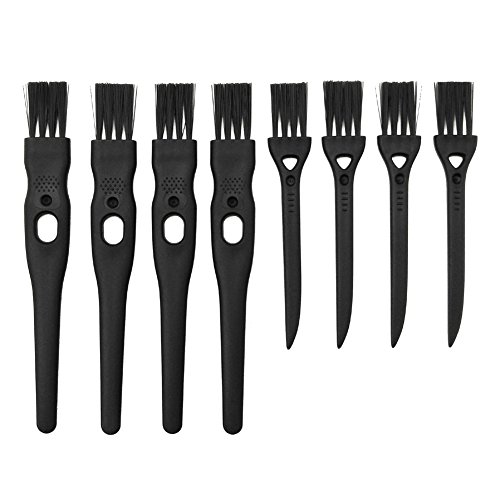
Very convenient to clean shaver / razor.