You’ll choose between a string trimmer and an edger based on your specific needs. String trimmers excel at versatility—they’ll maneuver tight corners, handle thick weeds, and adapt to various terrain quickly. Edgers deliver precision, creating sharp lines along walkways and driveways with adjustable depth control. Consider your yard size, frequency of use, and budget. Small properties benefit from cordless electric trimmers under $220, while larger areas justify premium models. The right choice depends on whether you prioritize flexibility or sharp, defined borders—and there’s much more to explore about maximizing your investment.
Pick the Right Tool: Quick Decision Guide
How do you know which trimmer or razor best suits your lawn?
Start by evaluating your yard size and grass conditions. For lawns up to half an acre, cordless electric trimmers between 20-40 volts deliver efficient performance. Larger properties demand gas trimmers‘ sustained power and 16-20 inch cutting widths.
Consider your power sources carefully. Cordless models offer quiet, low-maintenance operation ideal for small to medium yards. Corded electric trimmers work best within 100 feet of outlets. Gas trimmers excel in overgrown, heavy vegetation requiring sustained cutting force. Both cordless and corded electric options require less frequent maintenance compared to gas-powered equipment, making them attractive for homeowners seeking simpler upkeep. Regular maintenance tasks like applying specialized clipper oils help preserve blade performance and extend equipment life.
Examine your trimmer types next. String trimmers handle horizontal cutting in tight spaces around obstacles. Lawn edgers create precise vertical borders better than trimmers alone. For sensitive areas, shaving in the direction of hair growth minimizes irritation and delivers cleaner results. Multi-function models with guide wheels combine capabilities while prioritizing weed whacking efficiency.
Match your tool to your specific lawn demands for best results.

6200 RPM: The POWERDRIVE Transmission delivers more power from the motor to the cutting string so you can get the job done faster

Perfect present for Christmas, Mother's Day, Birthday, Anniversary, Valentine's Day, etc. Note: You can release the safety lock after starting the machine, by pressing and holding the ON/OFF switch. Tips: The blue viscous liquid flowing out of the blade gear is lubricating oil, which lubricates the gear and prevents rust. This is normal and helps lubricate the gear

22 in. dual-action blades on the shrub trimmer cut branches with up to 40% less vibration than single action blades
How Strings and Blades Differ
While strings and blades serve the same basic function, they’re fundamentally different tools that cut vegetation through entirely separate mechanisms. Strings utilize nylon or plastic materials that prioritize string flexibility, smashing vegetation through high tip speed and centrifugal force. They excel on grass and light weeds but wear quickly, demanding frequent replacement.
Blades, conversely, slice and chop using rotational torque and edge sharpness. You’ll find plastic, metal, or steel variants that handle thick undergrowth and roots effectively. Metal blades offer superior blade durability, retaining sharpness long-term and proving economical with occasional sharpening. Just as with grooming tools designed for sensitive skin applications, blade selection should consider the specific cutting requirements of your task. Steel blades with chainsaw-style teeth tackle stems up to 40mm, though they require powerful motors and generate higher torque demands than string equivalents. Similar to how surgical-grade blades excel in precision cutting applications, premium blade designs ensure optimal performance. Carbide-tipped designs like the Renegade blade eliminate the need for sharpening entirely, providing extended service life even with extensive usage.
String Trimmers Win for Versatility
Because string trimmers reach spaces where mowers can’t venture, they’ve become indispensable for thorough yard maintenance. You’ll find their cutting techniques superior for maneuvering tight corners, fence lines, and obstacles that fixed mower blades simply can’t access.
String trimmers excel across diverse task applications. You can trim thick weeds, edge flower beds, and clear overgrown areas with a single tool. Their adjustable heads and dual-line options let you switch between cutting techniques—from precision edging to aggressive vegetation removal—without changing equipment. Regular trimming prevents overgrown grass from encroaching into unwanted areas and maintaining clean boundaries throughout your yard.
Battery-powered models provide 20-40 minute runtimes, allowing you to handle entire yards efficiently. You’ll appreciate the ability to tilt heads for straight boundaries and adjust handles for comfort on uneven terrain. Just as electric razors benefit from regular cleaning and maintenance to prevent performance issues, string trimmers require routine care to keep cutting edges sharp and effective. Maintaining your trimmer with proper exfoliation of debris from the cutting head ensures optimal performance. This adaptability across various yard sizes and vegetation types makes string trimmers remarkably versatile compared to fixed-blade alternatives.

[Compact Storage and Easy Maneuvering] Designed for modern living, the innovative shaft folds 180° in three ways for vertical storage in tight corners, apartments, or crowded garages and it’s highly space saving. Featuring a 90° adjustable head and 180° rotatable handle, you can effortlessly tackle slopes, under-bench areas, and hard-to-reach corners, making a uniformly tidy garden

2-in-1 Trimmer & Edger: Easily switch between trimming and edging with one versatile cordless tool. Create clean, defined edges along driveways, sidewalks, flower beds, fences, and landscape borders while keeping grass and weeds under control

Trimmer & Edger 2-in-1: The weed trimmer is easy to convert from weed trimmer to wheel edger, meet your multiple needs. The spacer guard can protect your plants, landscape features, and lawn ornaments
Edgers Excel at Precision
Edgers deliver precision that string trimmers simply can’t match when you’re creating clean, defined borders throughout your landscape. You’ll appreciate how serrated steel blades handle both straight and curved edges effortlessly, maintaining sharp lines along walkways, driveways, and flower beds. The cutting techniques employed by edgers—whether rotating or oscillating blade mechanisms—slice through grass and soil with superior control compared to trimmers.
You can adjust depth from 1 to 2.25 inches for terrain adaptation, while adjustable bevel angles shift 15 degrees left or right for precise bevel cuts. Professional barbers and landscapers alike rely on equipment with zero-gap performance to achieve the crisp lines that define quality work. To maintain peak performance, edger blades should be regularly disinfected and oiled using clipper oil to prevent rust and ensure longevity. The four-wheel design provides stability you need for intricate work, and line-cutting guides guarantee edge precision along surfaces. Models with T-shaped handle and footplate designs enhance comfort and control during extended use. For trenching around garden beds or creating professional borders, edgers outperform trimmers consistently.
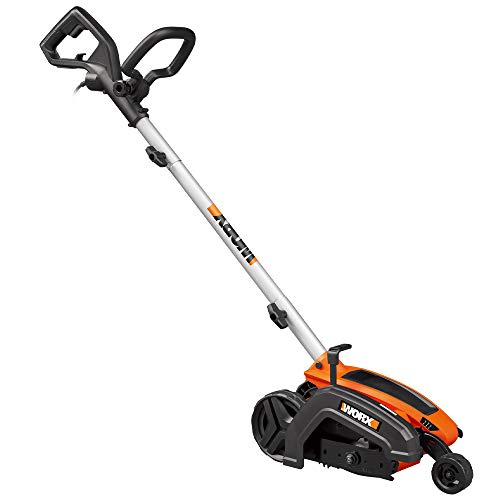
POWER LIKE THE PROS: The 12 Amp motor spins the 7.5” blade fast and deep at 4700 revolutions per minute, giving you professional-looking lines and edges.

High-Strength Serrated & Scissor Blades: Rust-resistant alloy steel blades stay sharp longer for reliable, long-lasting performance. Serrated edges and scissor-style action provide clean, precise cuts along lawn borders and in tight spots. Wheel-assisted blades glide smoothly over overgrown grass, making edging effortless and reducing strain on your arms and back. Lightweight and easy to maneuver, BlumeTrec grass edger tool helps you achieve a polished, professional-looking lawn every time.

Ideal Garden Edger: BlumeTrec lawn edger tool is designed to create crisp, clean edges along sidewalks, driveways, patios, walkways, and garden borders. Garden edger trims grass around flower beds, lawns, and landscaping areas with precision. The reinforced half-moon blade easily penetrates soil for smooth, controlled edging, allowing homeowners to maintain neat yard lines, define garden borders, and install plastic edging with ease, making everyday yard care simpler and more effective.
Trimmer and Edger Costs Compared
Trimmer pricing varies markedly by power source and features. Budget models start around $11, while mid-range cordless trimmers run $85–$220. Premium gas and battery-powered options exceed $350. For those seeking integrated grooming solutions, combined shaver-trimmer units like the Braun All-in-One Series 9 offer versatile functionality at competitive price points.
Edger pricing follows similar patterns. Integrated trimmer-edgers cost $100–$170 for dual functionality, while dedicated edgers command higher prices. You’ll find that battery voltage impacts cost: 20V models stay under $110, while 40V and 56V units exceed $150. The WORX 20V Cordless Brushless Pruning Shear exemplifies this value proposition at $93.99, offering professional-grade performance within the budget-conscious range. For those prioritizing comfort and performance with coarse facial hair, options like the Braun Series 9 provide professional-grade shaving capabilities alongside trimming functionality.
Bundles offer considerable savings. Complete kits with batteries and chargers often provide better value than purchasing separately. You’ll save $130–$350 by selecting bundle packages, making them your most cost-effective option for extensive yard maintenance equipment.
Prioritize Frequency, Yard Size, and Budget
Your trimmer selection ultimately hinges on three critical factors: how often you’ll use it, the size of your yard, and your budget constraints.
For frequency management, trimmers demand minimal upkeep—mainly string replacement—compared to mowers’ regular blade sharpening and oil changes. If you’re planning quick, frequent touch-ups, ceramic blades stay sharp longer, reducing replacement costs. Models with wireless charging capability allow you to recharge between sessions without requiring additional charging infrastructure, making maintenance even more convenient for frequent users. For those seeking alternatives, corded electric shavers offer consistent power without battery concerns for similar maintenance-free operation.
Yard size greatly impacts your choice. Small spaces favor lightweight trimmers for maneuverability and precision; large lawns demand mowers’ efficiency. Battery life up to 90 minutes supports extended sessions on bigger areas.
Budget considerations matter equally. Trimmers cost less initially with cheaper maintenance than mowers. Premium models featuring larger batteries and wireless charging justify higher investment through extended runtime and convenience, lowering long-term expenses through durable, replaceable ceramic blades.