You’ll find that foil shavers do leave behind stubble—typically 0.1-0.5mm depending on shaver quality—because their oscillating blade design prioritizes skin comfort over the ultra-close shave that wet razors deliver. High-end models perform better, but they can’t match the closeness of traditional razors. The trade-off is minimal irritation, which benefits daily shavers and those with sensitive skin. However, neck hairs present particular challenges since they grow flat against your skin, and specific techniques can greatly improve results.
Yes, Foil Shavers Leave Stubble: Here’s Why
Five distinct factors determine how much stubble your foil shaver leaves behind. First, your shaver’s quality directly impacts closeness—high-end models achieve 0.1-0.2mm, while basic ones leave 0.3-0.5mm. Second, blade sharpness matters; dull blades drag instead of slice, leaving visible stubble. Third, technique affects results; shaving against grain with multiple passes catches flat-lying neck hairs better. Fourth, maintenance is vital—replace blades and foils annually to prevent clogging and reduced efficiency. Finally, usage factors like dry skin preparation and proper battery levels influence performance. Understanding these stubble comparisons helps you optimize your shaver preferences. Premium models like the Braun Series 9 PRO+ offer superior performance that minimizes stubble through synchronized shaving elements and powerful motor technology. Research shows that foil shavers with high-speed reciprocating blades and thinner foil designs deliver significantly closer results compared to rotary alternatives. The foil barrier prevents blades from cutting below skin level, which is why foil shavers inherently cannot achieve the extremely close results that traditional razors provide. Even high-end foil shavers leave microscopic stubble due to their surface-level cutting mechanism, creating a clean-shaven appearance from distance while feeling textured up close.

Professional Foil Shaver: Engineered for barbers, delivers an ultra-smooth, bump-free finish on face, head, neck, and hairline. Perfect for blending bald fades or finishing close cuts.

THE HANDYMAN: Our precision compact electric foil face shaver is equipped with a dual-action SkinSafe blade head that includes a long-hair leveler and a foil shaver blade.

TURBOCHARGED MOTOR RUNS AT 9,000 rpm for more powerful shaving and less drag with ergonomic designed body
The Real Question: Is Less Irritation Worth Acceptable Stubble?
When you’re choosing between a foil shaver’s minimal irritation and its visible stubble, you’re weighing immediate skin health against aesthetic perfection. Your shaving preferences and irritation tolerance ultimately determine whether this tradeoff makes sense for you.
If you shave daily or have sensitive skin, foil shavers’ protective perforated screen greatly reduces razor burn and irritation buildup that wet razors cause. That acceptable stubble on coarse or flat-lying hairs becomes negligible compared to the skin trauma you’d otherwise experience. The oscillating blades beneath the metal foil move rapidly back and forth to capture hair through the holes, delivering a smooth and precise shave that minimizes contact with sensitive skin. For coarse beards specifically, proper technique matters significantly—including shaving with the grain first before shaving across the grain to maximize effectiveness. Professional grooming tools like those with self-sharpening high-carbon steel blades can enhance shaving performance when precision and durability are priorities.
However, if you demand flawless smoothness regardless of sensitivity, rotary shavers offer “good enough” results with less effort. The 2024 testing data shows foil shavers deliver 20% faster performance on thick hair while maintaining superior protection—a compelling advantage for many users prioritizing comfort over absolute closeness.
Why Foil Shavers Miss Flat-Lying Neck Hairs
Your neck presents a fundamentally different challenge than your face—one that foil shavers‘ straight-edge design doesn’t adequately address. Neck hairs lay considerably flatter against your skin than facial hair, making them harder for thin foils to capture. This flat positioning actively prevents blades from engaging the hair effectively, especially after two or three days of growth when hairs lay flag-like. Regular maintenance practices, such as cleaning blades and the trimmer body, help optimize performance across different grooming tools. For those with particularly sensitive skin, single blade razors like the OneBlade Genesis offer an alternative approach that some find gentler on delicate neck areas.
Your shaver design limitation becomes apparent because you’re restricted to vertical strokes due to the straight head. Yet your neck hair grows in multiple directions, requiring passes from different angles. Combined with the hair direction variation, you’ll find yourself making repeated passes over the same area, missing stubble that rotary shavers would catch. In contrast, rotary shavers flex and bend, providing better comfort and ease across varied neck areas. Tightening your skin and using light pressure helps, but foil shavers fundamentally struggle with this anatomical mismatch.

From the #1 electric shaver brand¹: Shaver 2400 Series gives you a fast, clean shave even on sensitive skin thanks to 27 self-sharpening ComfortCut blades and 4D Flex Heads

SkinProtect Technology: Achieve a clean, gentle shave with 5D pivot contour and AntiCorrosion Shaving System

4-DIRECTION FLOATING ULTRA-ADVANCED SHAVING HEAD: The 3D rotary shaver head follows every contour of your face to remain in close contact with the skin for a fast shave that's also gentle on the skin
How to Get Visibly Closer Shaves With Foil Shavers
Understanding why foil shavers struggle with neck hair isn’t enough—you’ll need to adjust your technique to compensate for the design’s inherent limitations. Start with proper skin preparation by exfoliating beforehand and using warm water to soften hair and open pores. This lifts stubble away from skin, allowing better foil contact.
Next, master your shaving angles. Hold the shaver at 90 degrees to your skin and stretch your neck tight with your free hand, creating a flatter surface. Use short, gentle circular strokes that catch hairs growing in multiple directions. Begin with light pressure against the grain, then follow with a second pass using angled foil shavers for tricky spots like your jaw line. When defining your neckline, remember to tilt your head back and stretch the skin to ensure the shaver captures all stubble in this critical grooming area. This multi-pass strategy eliminates leftovers without irritating skin. Similar to how clipper guard sizes determine cutting length and consistency, the angle at which you hold your foil shaver directly impacts how closely it cuts. Remember that performance improves after repeated use, so consistent technique refinement will yield progressively closer shaves over time.

Introducing the premium edition of our patented Quality Time Neck Hair Guide. Whether you prefer a straight or curved neckline, this tool helps you achieve a flawless trim every time—perfect for solo grooming or as a helpful guide for your partner.
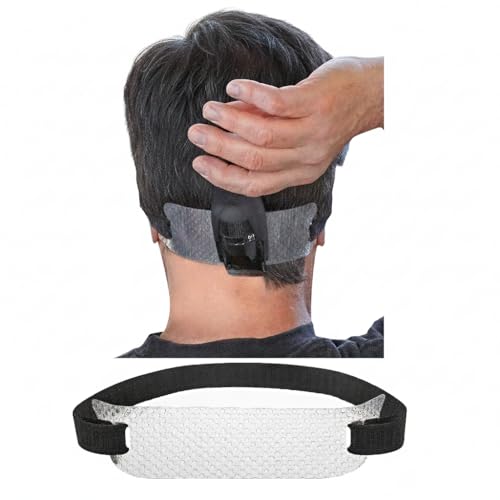
ACHIEVE A CLEAN, DEFINED NECKLINE The Quality Time Neck Hair Guide is your go-to tool for creating and maintaining a sharp, clean neck and hairline. Perfect for a DIY trim or as a guide for your partner to help you get a precise look every time.

【ADJUSTABLE SNAP CLOSURE】: Adjustable buckle closure makes it suitable for any size. The buckle design makes it very easy to use. Everyone can enjoy a comfortable haircut experience.
Maintenance Schedules and Technique Adjustments That Matter
Because foil shavers depend on consistent blade sharpness and best contact between foil and skin, you’ll need to establish a rigorous maintenance schedule to preserve performance. Your daily cleaning routines—removing hair clippings with a brush and rinsing the unit—directly impact blade maintenance and shave quality. Weekly deep cleaning with manufacturer-recommended disinfectants eliminates sebum buildup that dulls cutting efficiency.
Blade maintenance extends beyond cleaning. You’ll apply 1-2 drops of lubricant every 2-3 days to reduce friction and prevent rust, which cuts maintenance issues by 60%. Monthly inspections catch wear signs like holes or tears requiring foil replacement every 12-18 months. Using manufacturer-approved cleaning solutions can reduce skin irritation risks significantly and ensure safe maintenance of your device. For non-waterproof razors, avoid direct water exposure and rely instead on brush and spray cleaning methods to maintain long-term functionality. Drying your foil head thoroughly after cleaning, even with a hairdryer on low, prevents moisture damage and extends device lifespan.
Technique matters equally. Maintain flat, flush contact between foil and skin, leading with the long-hair leveler before the foil for best results. These combined practices eliminate stubble effectively.