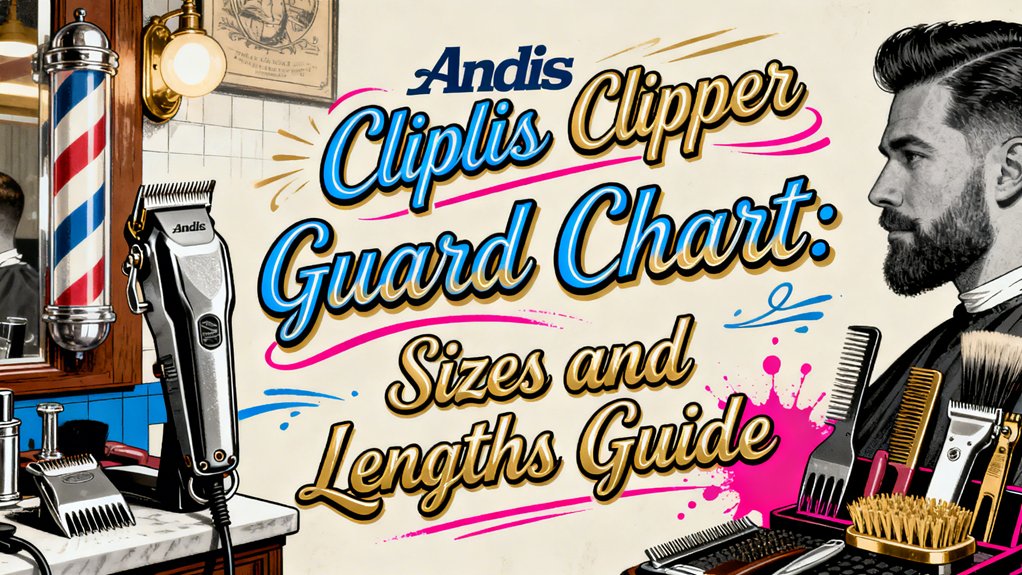
You’ll find Andis clipper guards range from #1 (½”) to 2″ lengths, with popular sizes like #4 (½”), #6 (¾”), and #8 (1″). Color coding—blue #1 and purple #A—helps you identify sizes quickly. These guards snap securely onto #10, #15, or #30 blades for universal compatibility. Hair length varies based on clipping direction: with-grain produces longer cuts than against-grain. Matching the right guard to your dog’s breed and coat needs guarantees professional results. Uncovering which specific guard works best for your grooming goals requires understanding how each size translates to your dog’s particular requirements.
Andis Guard Sizes Explained: 1/2″ to 2″
Understanding Andis clipper guard sizes from ½” to 2″ guarantees you’ll select the correct attachment for your desired hair length and cutting style. You’ll find clipper guard lengths ranging systematically: the #4 guard delivers ½ inch, the #6 achieves ¾ inch, and the #8 reaches 1 inch exactly. For longer styles, you’ve got 1¼ inch, 1½ inch, and 2 inch options available.
Each guard snaps securely over #10, #15, or #30 blades depending on your clipper model. When mastering hair grooming techniques, you’ll appreciate how these precise measurements enable taper styles, buzz cuts, and crew cuts with predictable results. For sensitive areas like body grooming, consider using skin-friendly grooming tools to minimize irritation and irritation during trimming. The taper lever adjusts the distance between cutting and fixed blades to create blending effects during your haircut. For women who prefer alternative grooming methods, electric face shavers offer precision hair removal options for facial and body areas. The universal compatibility across Andis systems means you can confidently match guards to your specific clipping needs without guesswork.

Hardened stainless steel teeth design for durability

ADJUST CUTTING LENGTH: Adjusts the length of the cut to make the haircut simpler. Assist you in creating numerous hairstyles to satisfy your diverse needs. Fits Models-LCL, ML, MLC, US-1
How Guard Length Translates to Hair Length on Your Dog?
Since clipper blade numbers don’t directly correspond to guard sizes, you’ll need to understand how each blade cuts to achieve your desired finish. Hair length variations depend on both blade selection and clipping techniques you employ.
Your clipping direction greatly impacts results. Clipping with grain leaves hair approximately one blade size longer than against-grain cuts. A #7 blade against grain produces 1/8 inch, while the same blade with grain yields #5-equivalent length. To prevent irritation and discomfort in sensitive areas, use gentle light strokes and consider skin-friendly blade designs that minimize cutting risk.
Different blades deliver specific lengths: #4 cuts to 3/8 inch, #10 leaves 1/16 inch, and #15 produces 3/64 inch. Higher-numbered blades cut progressively shorter. Regular maintenance like sharpening and checking for rust or chips helps ensure your blades continue to perform at their best. Products containing carrier oils like jojoba can condition clipper blades and maintain their longevity between sharpenings.
The taper lever further refines length—closed settings shorten cuts, open settings extend them. Adjust these variables based on coat texture, seasonal needs, and breed requirements for ideal grooming results.
Guards vs. Bare Blades: When Each Method Works Best
When you’re deciding between metal detachable blades and plastic guards, you’ll want to evaluate how each method performs under different grooming scenarios. Metal blades excel in cutting efficiency, requiring fewer passes to achieve your desired results through superior sharpness and increased tooth density. They’re ideal for bulk work and fading techniques where speed matters. Plastic guards offer greater forgivingness, making them better suited for learning proper grooming techniques and adjusting lengths mid-session without equipment changes. You’ll appreciate their versatility through lever mechanisms that provide multiple cutting lengths from a single guard. Metal blades also resist warping and cracking, maintaining their precision even with frequent daily use. To keep your metal blades performing optimally, applying clipper-specific oil before or after each use reduces friction and extends blade life. Regular maintenance through cleaning after every 2-3 uses prevents fungal and bacterial growth while keeping blades sharp and properly aligned for optimal cutting performance. For professional barbers prioritizing productivity, metal blades deliver measurable time savings. For beginners or variable styling needs, plastic guards provide the operational flexibility you need.

Razor Sharp In An Instant - Spend more time perfecting those cuts and less time sharpening your trimmer blade. This premium blade modifier sharpens trimmer blades by up to 70% in 1 minute or less.

【Multifunctional】Suitable for common barber blade on the market, can accommodate magnetic guards, detachable clipper blades, grooming blades and buzzer blades, compatible with Andis, Oster, Wahl, Babyliss, etc., ensuring that you can safely and conveniently carry and use your barber tools.

【T-Style Zero-Gap Cutter Head】Adorned with a precision-crafted T-shaped stainless steel cutter head, 4cm wide, this clipper seamlessly blends artistry with function. Its razor-sharp blades glide through hair effortlessly, ensuring a smooth cut without any skin irritation. A protective cover shields the cutter head from wear, allowing for hassle-free cleaning under running water.
Andis Color Codes: Blue #1 and Purple #A Options
Andis clipper guards rely on a color-coding system that helps you quickly identify guard sizes and their corresponding cutting lengths during your grooming work. The blue #1 guard delivers a 1/2″ cut (13mm), while the purple #A guard produces 3/4″ (19mm). This 1/4″ differential gives you graduated fade options for creating seamless changes between lengths.
Both guards feature snap-on attachment designs that work with #10, #15, or #30 blades, requiring no tools for installation or removal. You’ll appreciate the standardized guard color coding across all Andis clipper models—it eliminates confusion when switching between guards mid-session. The purple #A retains 50% more hair than the blue #1, making your guard selection dependent on your desired fade depth and overall style requirements. Since all major brands use the A5 Universal Standard, your blade selection remains consistent across different clipper systems. Professional barbers and home users alike benefit from Andis clippers’ precision design, which rivals premium trimming options in the cordless market. Like safety razors, clipper maintenance involves holding the blade at proper angles to ensure optimal cutting performance. This systematic approach streamlines your workload considerably.
Pick the Perfect Guard for Your Dog’s Breed
How do you select the right blade and guard combination when your client’s breed demands specific grooming standards? You’ll match clipper blade compatibility to breed-specific requirements by consulting detailed grooming protocols. Poodles require #4F to #7F blades for body work, while Terriers need #7F or #8½ blades with guard combs for blending. Sporting Dogs benefit from #5F or #7F blades clipped with the grain to preserve their natural appearance. Bichon Frises demand precision with #3¾ to #5 options depending on desired coat length. For mixed breeds, you’ll work with #5FC to ¾” guard ranges. Always use #10 blades for sanitary prep across all breeds, and #15 blades for feet and pads. Understanding dog breed grooming standards guarantees ideal clipper blade compatibility and professional results. Similar to how dual epilator and shaver heads provide versatility in personal grooming, professional clipper systems offer multiple blade options for different grooming needs. For travel grooming situations, consider portable grooming clippers that maintain performance standards while offering convenience. Regular maintenance with oiling and cleaning keeps blades functioning optimally throughout grooming sessions.

The attachment combs fit all type A5 detachable blades (sizes 10, 15, and 30) ,These attachment combs are designed to fit over standard A5 detachable blades and come in sizes that address the most common grooming needs. also compatible with most Oster ,Wahl and Andis detachable-style clippers.

Universal A5 Compatibility: Fits all standard A5-style detachable blade clippers including sizes 10, 15 and 30; universally compatible with most professional Oster, Wahl, and Andis clippers (Note: Not compatible with 5-in-1 adjustable blades!)

Works for Dog & Cat Grooming: The Wahl Pro Animal Stainless Steel Attachment Comb Kit includes 8 color-coded guide comb pieces and works best with Wahl Competition Series #30 blade
Installing Your Andis Guard: Step-by-Step Setup
Three critical preparation steps’ll guarantee you’re ready to attach your guard safely and securely. First, unplug your clipper and remove any existing attachments. Next, inspect your guard for damage and clean the blade teeth thoroughly. Finally, select the appropriate guard size for your desired cut length.
For proper guard compatibility, align the guard teeth with your clipper blade teeth. Position magnetic guards upside down before insertion, then push down until you hear a click. Slide the guard forward with firm, consistent pressure using three fingers.
Test your clipping techniques on cloth before working on hair. Listen for grinding sounds that indicate misalignment. Double-check that the guard sits flush with zero movement. If resistance occurs, briefly power on the clipper to help the guard seat correctly. After each use, disinfect your blades with 70% isopropyl alcohol to maintain hygiene and extend blade life. Professional barbers often recommend high-torque motors for consistent cutting performance across different guard attachments. Regular maintenance of your clipper blades extends their longevity and ensures optimal cutting performance throughout your grooming sessions. This guarantees peak performance and safety during grooming sessions.

SUPERIOR QUALITY: Crafted with high-quality materials, these magnetic combs are designed to withstand frequent use, ensuring long-lasting performance.

Featuring the original design you love, with 11 tines and longer tips for better hair feeding, the OG Size 0 will ensure your fades are flawless and your tapers tight

Includes OG Size 0 and Size 1 Combs: This dual pack features the original Size 0 and Size 1 magnetic attachment combs, ideal for achieving close, controlled cuts and blending work.
Clean and Sharpen Andis Guards: Maintenance Essentials
Proper maintenance extends your clipper guard’s lifespan and guarantees consistent cutting performance, so you’ll want to establish a cleaning routine immediately after each use. For effective guard cleaning, brush away hair and debris with a blade brush, then dip guards in cleaning solution for ten seconds. Spray disinfectant on the blades, let it sit briefly, and wipe thoroughly before reassembly.
Apply clipper oil to guard blades immediately after cleaning and multiple times daily. Place drops on the front and sides, then run your clipper for three to five seconds to distribute oil evenly. Using manufacturer-recommended clipper oils like Wahl or Andis products specifically formulated for high-speed blades will reduce friction and extend blade life more effectively than general-purpose alternatives. To maintain sharpness, ensure you maintain even pressure during sharpening to avoid wear marks on the blade surface. Regarding blade sharpening, inspect guards weekly for dullness or damage. Replace worn or nicked blades promptly to maintain ideal cutting quality and performance throughout your grooming sessions. Keeping cleaning supplies organized and easily accessible promotes efficient maintenance routines that prevent common issues such as dull blades and accumulated debris.

Blade coolant, disinfectant, lubricant, cleaner and rust pre-treatment expertly packaged into a single, convenient aerosol can

MATERIAL: The Andis animal clip is made of premium plastic and has metal clips inside; The blade is firmly fastened to the trimmer with the help of the metal clip-on plastic comb.
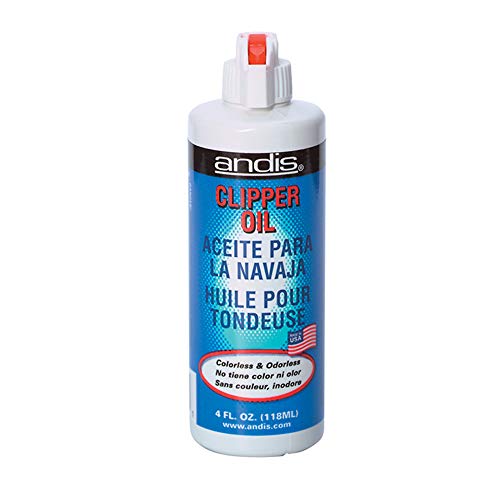
Cutting machine oil to lubricate and clean the blades