You’ll achieve the closest shave possible with a straight razor because a single blade cuts hair precisely at the follicle exit, eliminating the pulling and tugging of multi-blade cartridges. You’ll experience reduced skin irritation, less razor burn, and decreased ingrown hair risk. Your initial investment ranges from $150–$350, but you’ll spend just $0.01 per shave compared to $0.30 for disposables, saving thousands over a decade. Understanding the full scope of advantages requires exploring technique mastery and maintenance essentials.
The Closest Shave: Why Straight Razors Win
When you draw a single, precisely angled blade across your skin, it cuts hair exactly where it exits the follicle—delivering a closeness that multi-blade razors simply can’t match. This precision shaving technique achieves results dermatologists confirm as the closest shave possible among all methods.
Your straight razor’s single, extremely sharp blade eliminates the pulling and tugging multi-blade systems create, reducing ingrown hairs and razor burn. With superior angle control, you’ll adjust pressure in real-time for sensitive areas, enabling technique mastery that yields Baby Bottom Smooth results. Consistency and proficiency with your straight razor are necessary for valid comparisons to other shaving systems.
Proper blade maintenance guarantees consistent performance. Straight razors require regular stropping to maintain their edge and ensure optimal results with each use. Short, deliberate strokes—down first, then up the throat and across—maximize closeness. Preparing your skin with warm water and cleanser helps soften hair and reduce irritation before each shave. By your third shave, you’ll demonstrate proficiency, experiencing stubble-free duration extending to 13 hours, outperforming safety razors at 10 hours.

Premium Stainless Steel & Ergonomic Grip – This stainless steel straight razor ensures durability and smooth performance. The professional straight razor for men has an ergonomic handle for superior control, making every shave seamless and precise.

Soft Hair - Soft but effective in lathering, dense but fast drying.

Professional straight razors for men - High quality barber razor & shaving blades from GTEX brand for clean, close & precise shaves. Obtain 100+ close cut shaves from these cut throat razors for men
Your Skin Benefits More Than You’d Expect
Because straight razors employ a single, precisely angled blade rather than multiple stacked blades, you’ll experience considerably reduced skin irritation compared to cartridge systems. The unique cutting angle minimizes inflammation while the sharp edge glides smoothly across your skin, reducing razor burn and redness.
Beyond irritation reduction, straight razors provide natural exfoliation that promotes skin rejuvenation. The blade lifts and removes dead skin cells, unclogs pores, and reduces oil buildup. This process increases collagen production and improves circulation, resulting in healthier, more vibrant skin. Pre-shave massages and hot towels relax your skin and open pores before the blade makes contact, further enhancing the rejuvenation benefits. Maintaining the proper blade angle during your shave ensures optimal contact with the skin for maximum exfoliation benefits.
Additionally, the single-stroke shave cuts hair directly at the skin surface, markedly lowering your risk of ingrown hairs. Combined with fewer skin cells lost during shaving, you’ll notice clearer skin with fewer infections and bumps, maintaining your skin’s integrity and natural barrier function. Straight razors also significantly reduce the occurrence of bacteria buildup that can lead to irritation and breakouts in the shaved area.
Save Hundreds of Dollars Over a Lifetime
While straight razors require a higher initial investment—typically $150-$350 for a quality blade, strop, and honing supplies—you’ll recoup this cost within months through dramatically reduced ongoing expenses. Your annual maintenance costs drop to just $20 for occasional honing, compared to cartridge razors’ $100-$300 yearly expenditure. This cost comparison reveals significant lifetime savings: you’ll spend approximately $0.01 per shave with a straight razor versus $0.30 with disposables. Over ten years, you’ll save $2,000-$4,000. A well-maintained blade lasts indefinitely, requiring only stropping and periodic sharpening. Without frequent blade replacements or waste disposal costs, your lifetime savings reach $7,427 against disposables. For those seeking alternatives, closed-comb designs offer forgiveness and reduced irritation during the learning curve of transitioning from cartridge razors. Electric shavers like the Braun Series 9 provide another option for users concerned about sensitive skin irritation. Since straight razors create zero waste compared to disposable cartridges, you’ll also benefit from enhanced environmental credentials alongside your financial gains. You’re not merely purchasing a razor—you’re investing in a tool that eliminates recurring expenses permanently.

UPGRADE SHAVING KIT FOR MEN- Starting Your Clean Shave Scented Sweat Orange- Contains Straight Razors Kit with 5pcs replacement blades, 2 pucks Shaving Soaps, 60ml Shaving Cream, Shaving Brush for men, Shaving mug. Those Shaving essentials will provide you the cleaner and smoother shave that reduced bumps and skin irritation. Packed with luxury gift box make it become a perfect gift set for men,husband, boyfriend and fathers on Birthday, valentines`day and fathers` day.

Premium Quality & Balance - Beard Club's Straight Razor for Men boasts a single derby blade with superior balance, ensuring precise control for comfortable, barber-quality shaves at home

Great Value Complete Shaving Kit Contains 8 Shaving Essentials: This men`s shaving kit is your one stop station wet shave set with every pieces you need! INCLUDED: Double Edge Safety shaving Razors for men with 10 replacement blades, Shaving Brush and Bowl, Sandalwood Pre-Shave Oil, Shaving Cream, AfterShave Balm & Shaving Apron Bib. Razor head fits most standard double-edge blades, making replacements easy and affordable.8 Shaving Essentials will bring you the most comfortable experience on your daily shaving
Straight Razors vs. Cartridge and Electric Razors
How do straight razors actually stack up against their modern counterparts? You’ll find significant differences in shaving techniques and blade types across these options.
Straight razors deliver the closest shave available, surpassing cartridge and electric alternatives. Their single, long blade requires skilled technique but produces superior results. Cartridge razors offer convenience with multiple stacked blades, yet they can’t match straight razor closeness and frequently irritate sensitive skin.
Electric shavers provide the easiest learning curve with minimal irritation, though they yield noticeably less close shaves. Regarding maintenance, you’ll need to hone and strop straight razors regularly to maintain their edge, similar to how clipper maintenance requires regular oiling to prevent blade wear. Conversely, cartridge razors use disposable blades requiring no manual sharpening, while electric shavers demand periodic cleaning and occasional parts replacement. For those seeking gentler alternatives, dermaplaning with single-blade razors offers a safer option for sensitive facial skin. The growing trend toward eco-friendly shaving has renewed consumer interest in straight razors as a sustainable alternative to disposable blade systems.
Your choice depends on prioritizing shave quality, maintenance commitment, or ease of use.
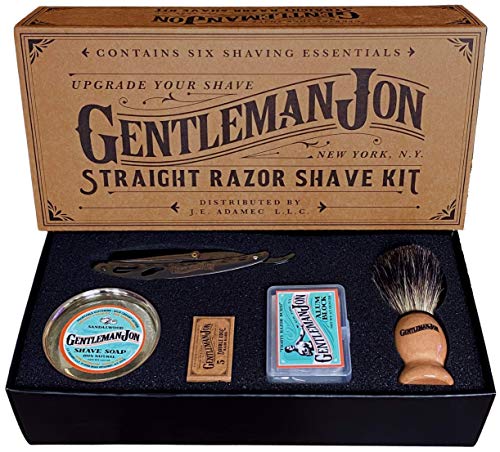
COMPLETE MEN'S SHAVING KIT: The Gentleman Jon Shaving Kit for Men is a comprehensive set that includes a straight razor, badger hair brush, alum block, shave soap, stainless steel bowl, and five razor blades - everything needed for a luxurious, comfortable and smooth wet shave experience. With its compact design, our product is also a suitable travel companion to those who value traditional shaving, ensuring a neat shave even while on the go.

Vintage Straight Razor Set - You will get a high quality straight edge razor and a leather canvas strop belt which can keep your razor sharp. There is also an high quality leather pouch for the razor storage. Best for travel.

【Complete Straight Razor Shaving Kit】Everything needed for a traditional wet shave, including a straight razor, shaving brush and leather strop for everyday grooming or barber-style shaving.
Master the Learning Curve and Own Your Routine
Shifting to a straight razor requires patience and deliberate practice, yet you’ll find the investment worthwhile once you’ve developed fundamental competency. Your technique improvement accelerates through consistent daily practice, with basic skills emerging within your first few shaves despite initial awkwardness.
Master blade control by maintaining a 20-30 degree angle and letting the razor’s weight do the work rather than applying pressure. Focus on the three essential strokes—freehand, reverse freehand, and backhand—executing them in proper sequence. A gradual approach, such as shaving only cheek planes initially, reduces frustration while building confidence. Consulting with experienced barbers or joining online communities can provide valuable guidance to help you avoid common mistakes during your transition.
Regular stropping maintains blade sharpness between uses, adding another skill to your routine. Unlike safety razors that use replaceable blades, straight razors demand this ongoing maintenance commitment to preserve edge quality. Straight razors require minimal passes compared to cartridge alternatives, reducing the trauma and irritation that lead to ingrown hairs. As muscle memory develops, your risk of cuts diminishes considerably, and the ritual becomes second nature.

Razor-Sharp Edges: Keep your blades extra sharp with this leather strop for knife sharpening. Use this leather honing strop for knives, axes, gouges, chisels, plane blades, and chef's knives

* This ergonomic designed Stainless Steel made sliding style straight CUT THROAT razor is very for you

The sharpening stone is suitable for any daily sharpening, such as repairing the knives with big cutting edges, and polishing the knives, the sharpening stone will help you to make the knives more smooth
Maintain Your Blade for Zero-Waste Shaving
Proper maintenance transforms your straight razor into a durable, zero-waste tool that’ll serve you for decades. Blade maintenance requires consistent effort: rinse with hot water after each shave, apply mild soap, and dry thoroughly with a microfiber cloth to prevent rust. Strop before use on leather to align the edge, performing 4-5 strokes per side. Apply camellia or paraffin oil in humid conditions for corrosion protection. Store your razor in a case away from bathroom moisture. For deeper cleaning, soak disassembled parts in warm soapy water and gently scrub with a soft-bristled brush to remove buildup from crevices.
These eco-friendly practices eliminate disposable cartridge waste entirely. Hone annually when stropping no longer maintains sharpness, and a properly maintained blade lasts 2-3 months with daily use. Professional honing ensures precise edge geometry. Regular maintenance extends razor lifespan, allowing your investment to deliver consistent results year after year. Carbon steel blades require more diligent maintenance to prevent rust compared to stainless steel options, but reward you with superior edge sharpness. By committing to these maintenance routines, you will maximize your razor’s lifespan while eliminating environmental waste from conventional shaving products.

Soft Hair - Soft but effective in lathering, dense but fast drying.

Sleek and stylish chrome plating to put a touch of sophistication to any gentleman’s bathroom counter

3 BLADES: 3 blades and a SkinElixir lubrastrip for glide, to deliver a smooth shave, with up to 0% irritation (US Consumer Study Feb 2018)