You’ll rinse your razor’s head under warm water after every shave, then shake off excess moisture and pat it dry with a soft towel. Monthly deep cleaning is essential—disassemble the components and soak them in a vinegar-and-baking-soda solution for 20-30 minutes to dissolve hard water deposits. Next, disinfect with isopropyl alcohol, polish with Flitz, and store it on a dedicated stand in a dry environment. For ideal longevity and performance, there’s quite a bit more technique involved in mastering each step.
Daily Rinse and Dry Routine After Every Shave
Since moisture and debris left on your safety razor will quickly degrade its finish and promote rust, you’ll want to rinse the head immediately after every shave under warm running water. This temperature effectively loosens shaving cream and hair buildup without damaging metal surfaces.
After rinsing thoroughly, gently shake off excess moisture from both the head and handle. Use a clean, soft towel to wipe down all components, paying special attention to where the handle meets the head—trapped water accumulates there easily. Wipe the handle and head with a clean towel, ensuring no water pools at the connection points. For optimal results, consider applying lubricant oil periodically to protect metal surfaces from corrosion.
Allow your razor to air dry completely before storing it. Never leave it in damp environments like your shower, as this invites corrosion. Similar to the importance of proper drying techniques in beard care, full drying prevents moisture from sitting on metal surfaces, preserving your razor’s longevity and maintaining its reliable performance.

1 TOWEL DRIES THE WHOLE CAR: Dry your entire car or truck in just one stroke with this super soft twisted loop microfiber drying towel - no wringing out required! We call it Mega because it absorbs more water than other drying towels, which means no streaks, no smears, and no spots! Just a more efficient and effective drying experience and a clean, shiny vehicle.

Designed By Men, For Men - Elevate your skincare and shaving routine with a Shave Stack face towel! Created by men, for men, these extra-large disposable shaving towels are luxuriously thick, super-absorbent and crafted specifically to give you a fresh and clean shaving experience, every time, without the need for laundry

PERFECT WEIGHT: Premium 1600 GSM twisted-loop microfiber delivers unmatched softness and absorbency — effortlessly lifting water, dust, and dirt without leaving streaks or scratches.
Identify When Your Razor Needs Deep Cleaning
Your daily rinse routine keeps your safety razor functional, but it won’t prevent the gradual buildup that eventually demands deeper maintenance. Watch for buildup indicators like white chalky residue, thick coatings, and dull chrome plating that signal mineral deposits and soap scum accumulation.
Performance signs reveal when you need intervention. If you’re taking more passes to achieve closeness, pressing harder than usual, or experiencing blade tugging, your razor’s efficiency has declined. Reduced shave quality and skin irritation point directly to grime interference on the blade edges. Disassembling the razor for deep cleaning allows you to access and remove stubborn residues that surface-level rinsing cannot eliminate. Similar to how beard trimmers require attention to guard mechanics for optimal performance, safety razors demand regular maintenance to preserve their cutting efficiency. For effective disinfection between deep cleans, 70% isopropyl alcohol can be applied to blade surfaces to eliminate bacteria and germs.
In hard water areas like Calgary, monthly deep cleaning becomes essential. When warm water and basic soap fail to remove stubborn blemishes or minerals won’t dissolve despite routine rinses, you’ve reached the threshold requiring vinegar soaks and intensive cleaning methods.
Disassemble Your Razor for a Thorough Clean
Before you’ll need to take it apart completely, you can reach the stubborn buildup hiding in your razor’s crevices. Start your disassembly steps by unscrewing the handle counterclockwise from the head. Carefully slide the blade out from the blade tabs, then separate the top cap and base plate from other head components.
These essential tools prevent damage during disassembly: avoid metal-to-metal contact that causes scratches. If you’re performing partial disassembly for air drying, loosen the handle slightly rather than fully removing it. Keeping parts organized during this process ensures you can reassemble everything properly and maintain the razor’s condition for long-term use. Proper drying and maintenance of your disassembled components will help extend blade longevity between replacements.
Work deliberately through each component, keeping parts organized as you separate them. A clean razor requires attention to detail, similar to how defining your neckline demands precision when grooming. This methodical approach guarantees you’ll access all areas effectively during cleaning and reassemble everything properly afterward.
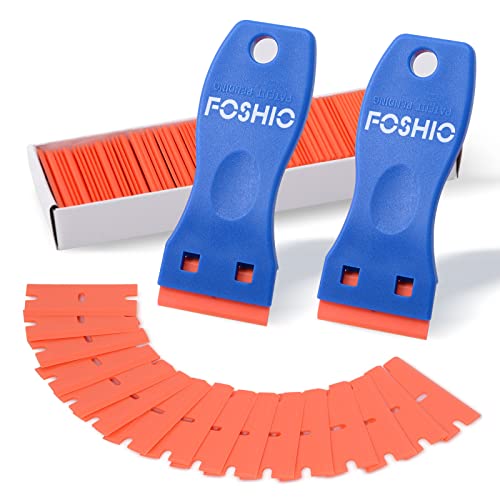
Plastic scraper set include 2pcs plastic scraper and 100pcs double edge plastic razor blades
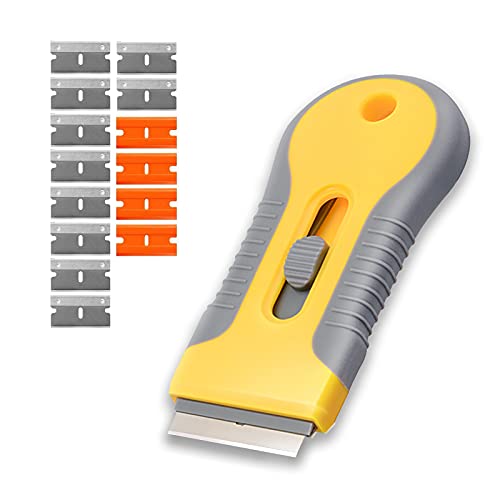
[Scraper with Additional Razor Blades] 1PC razor scraper installed with 1PC carbon steel blade, additionally, the plastic scraper comes with 10PCS individually packed carbon steel blades and 4PCS plastic razor blades.

VERSATILE & DURABLE: This safety cutter is versatile for different cutting tasks. Single edge SK5 razor blades are sharp and durable.
Dissolve Hard Water Deposits With Vinegar
Once you’ve got your razor disassembled and organized, you’ll likely notice mineral deposits coating the surface—especially if you’re dealing with hard water.
Create a cleaning solution by diluting one part white vinegar in four parts warm water. This ratio prevents damage to chrome plating while delivering vinegar benefits for dissolving mineral buildup. Add 2-3 tablespoons of baking soda to trigger a fizzy chemical reaction that aggressively breaks down scale accumulation.
Submerge your razor components for 20-30 minutes. The fizzing action indicates the solution’s actively attacking deposits and rust. Avoid soaking longer than two hours, as extended exposure risks plating damage. For tough mineral deposits that resist vinegar treatment, Maas polish applied sparingly can remove remaining buildup without compromising the razor’s finish. Safety razors feature a protective guard that helps prevent corrosion when properly maintained and cleaned. Regular cleaning maintains the superior hygiene that makes safety razors more effective than multi-blade systems.
After soaking, gently scrub with a soft-bristled toothbrush to remove loosened residue. Rinse thoroughly with distilled water to prevent new mineral deposits, then dry completely before reassembly.

5% ACIDITY: Clear distilled white vinegar with a clean, sharp taste

One 16-fluid-ounce bottle of Distilled White Vinegar

5% ACIDITY: Clear distilled white vinegar with a clean, sharp taste
Disinfect With Isopropyl Alcohol or Barbaside
After you’ve rinsed away the vinegar solution and dried your razor components, disinfection becomes the final critical step in your cleaning routine. You’ll want to employ one of two proven disinfection methods: isopropyl alcohol or Barbaside solution. Dip your disassembled razor parts in 70% isopropyl alcohol to eliminate germs and bacteria effectively. Alternatively, use Barbaside, the professional barber shop sterilizing solution, for superior disinfection. Apply alcohol via cotton swab across blade surfaces horizontally, ensuring full coverage of interior and exterior parts. For cleaning frequency, incorporate this disinfection step after every shave to prevent pathogen buildup. Use plastic or glass containers for soaking—never metal, which risks scratches. Dry thoroughly with microfiber cloth afterward to maintain your razor’s longevity and performance. Regular disinfection with distilled water rinses helps prevent rust formation and extends the lifespan of your vintage Gillette safety razor. Just as with clipper maintenance, keeping your blade surfaces free from trapped debris ensures optimal cutting performance and prevents fungal and bacterial growth. Proper disinfection techniques are particularly important for those with sensitive skin, as they help prevent infections and irritation that could compromise your shaving experience.

32-fluid ounce bottle of first aid antiseptic


CONCENTRATION: 70% Isopropyl Alcohol solution in a generous 32 fluid ounce bottle for effective cleaning and disinfecting needs
Polish Your Razor to Restore Its Shine
With your razor disinfected and thoroughly dried, you’re ready to restore its original luster through polishing. You’ll employ two effective polishing techniques for metal care: manual and power methods.
For manual polishing, shake Flitz polish well, apply it directly to the razor, and scrub using circular motions with a microfiber cloth for ten minutes. Rinsing thoroughly with hot water between applications helps prevent cross-contamination of compounds. Rinsing thoroughly with hot water between applications is essential, similar to how you should confirm cancellation details when managing online subscriptions to avoid unwanted charges.
Alternatively, use a Dremel tool with a buffing wheel for faster results. Apply greaseless compound lightly, employing side-to-side motions across buffing areas. Finish with a light cloth wheel and chromium oxide compound for mirror-like shine.
After either method, wipe away residue completely and inspect your work. Apply Renaissance wax for long-lasting protection, then store your razor dry to maintain its restored finish.

MADE IN THE USA - Proudly made right here in the USA at our Wisconsin headquarters and formulated with cutting-edge German ingredients, Flitz delivers unbeatable quality you can trust. Our brass cleaner & metal polisher is made to last and perform each time

【 WHAT YOU GET】:The polishing compound kit contains 6 different buffering compounds:All Purpose Blue, white diamond, brown tripoli, general green, black emery, red rouge. A great kit for burr-free mirror finish all kinds of projects.This package can meet all your needs.

【Function】These Buffing Polishing Compounds Kit great for achieve a smooth and mirror finish on a widely variety items surfaces, help you handle most kinds of projects.
Keep Your Razor Dry Between Shaves
Moisture is your safety razor’s worst enemy, and preventing rust and corrosion starts the moment you’ve finished shaving. You’ll want to pat your razor completely dry with a clean towel immediately after rinsing, ensuring both blade sides receive attention. Don’t overlook the handle—any trapped water accelerates rust formation.
For effective razor storage, place your razor on a dedicated stand in a dry bathroom cabinet or shelf, positioning it away from steam and humidity. Space items strategically to allow air circulation around all components. You should also disassemble the blade head periodically to air-dry each part independently, preventing moisture accumulation between blade edges. Whether you use a closed comb or open comb razor, the same moisture prevention principles apply to protect your investment. Rinse the blade frequently to maintain cleanliness and prevent debris buildup that can trap moisture. Consider storing your razor in a dedicated stand or case specifically designed to minimize moisture exposure during storage periods. This moisture prevention approach extends your razor’s lifespan considerably while maintaining ideal performance.