You’ll start by washing and drying your hair completely, then gathering clippers with guards, a mirror, and blade oil. Select your guard size based on desired length—typically #2 for traditional buzz cuts. Use upward strokes, working systematically from sides to top with consistent pressure. Master blending techniques by progressively adjusting guard sizes for seamless changes. Finish around ears and neck with precision, then check symmetry using multiple mirrors. The nuances of fade control and advanced techniques await your exploration.
Prepare Hair, Tools, and Scalp Assessment
Before you start clipping, you’ll need to prepare your hair, gather the right tools, and assess your scalp to confirm a safe, even cut. Begin with hair washing to remove dirt, grease, and product buildup that impairs blade performance. Dry your hair completely to its natural state, as moisture creates resistance and causes uneven trimming.
Next, assemble your essential tools: clippers with attachment guards, a hand mirror, vacuum, and blade oil. To maintain optimal clipper performance, apply lubricant oil to your blades according to the manufacturer’s recommendations before each use. Perform a thorough scalp assessment by running your hands across your head to identify bumps, dips, or skin tags. This tactile check prevents snags and irritation during clipping. Document any irregularities you unearth, as most scalps contain minor variations. These preparatory steps confirm smooth clipper gliding and professional results. Before cutting, select an appropriate clipper guard based on the desired hair length to achieve your preferred look.

CORDLESS&CORDED TCMKY Hair Clippers for men can be with cord or cordless which is super convenient for self cutting. USB charging 3Hours One full charge Last up to 200 minutes of use.When the power of the hair cutting kit is used up This hair clippers for men supports plug and play.When charging The charging capacity can be seen from the display.When the power in the display screen is 100% unplug the power cord
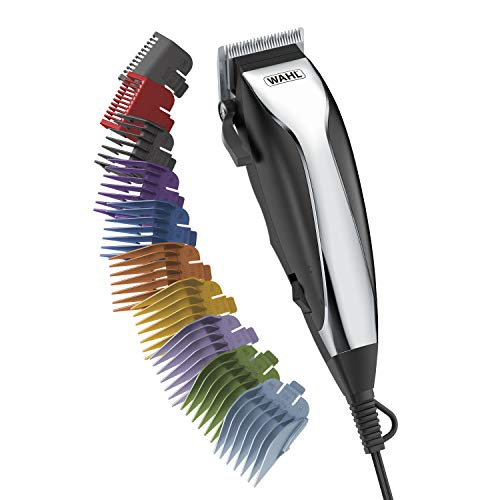
Multi-Cut Hair Clipper - Heavy duty motor for exceptional power and no-snag cutting; features an adjustable taper lever for easy blending and fading. This results in a very strong audible hum, but is completely normal to its operation. Don’t settle for a weak clipper.

It boasts the dual advantages of wired and wireless modes. Equipped with a large‑capacity 1800mAh battery, it requires 3‑5 hours of charging and delivers up to 180 minutes of runtime. It can operate instantly once plugged in when the battery runs low.
Select Your Guard and Learn the Upward Stroke
Once you’ve assessed your scalp, you’ll select a guard size that determines your final hair length—a critical decision that shapes your entire cut. For home cuts, the #2 guard provides a traditional buzz cut, while the #4 guard offers the most popular, balanced option. Consider your skull shape, hair thickness, and seasonal preferences when making your guard selection.
Master the upward stroke technique next. Position your clippers flat against the scalp and push upward systematically in multiple passes from different directions. This stroke technique guarantees uniform length throughout, compensating for the limitations of consumer-grade clippers compared to professional equipment. Start from the sides and work toward the top, maintaining consistent pressure and angle. Upward strokes prevent uneven patches and deliver the polished results you’re seeking. For optimal performance, choose clippers with flexible pivoting blades that adapt to the contours of your head. Remember that lower guard numbers yield closer cuts, so adjust accordingly based on your desired length. The butch cut provides a balanced length that is versatile for all lifestyles and face shapes, making it an optimal choice for first-time buzz cuts at home.
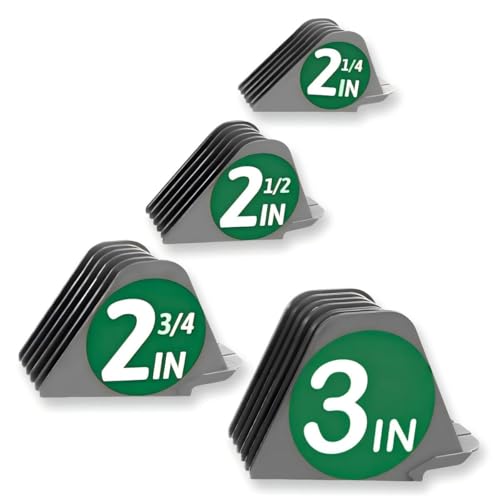
Please check your HAIR CLIPPER'S SIZE/MODEL before purchased.Not fit for PEANUT, POWER PRO TRIMMER, PRO, KM2 and SMALL/MINI HAIR CLIPPER. QPOIBSD Clipper Limit Comb Compatible With WAHL 6102, 2150, 2151, 2171, 2170, 2160, 2110, 21062, 6130, 8591, 8148, 1919, 8504, 6200, 6211, 2240, 2241, 2111. And it also can be applied to clipper with 46*38mm blade

14 Piece Kit: Includes hair clipper guards from 1/2 (1/16") all the way up to 8 (1")

【Complete Set for Versatile Styling】 This clipper guard kit includes 10 colorful guide combs in full sizes (1.5mm, 3mm, 4.5mm, 6mm, 10mm, 13mm, 16mm, 19mm, 22mm, 25mm) to meet a wide range of haircut lengths, from precise trims to longer cuts. It also comes with 2 black ear taper combs (left & right) for clean edging around the ears. The set is equipped with a cleaning brush, blade oil, and a convenient storage bag, making organization and maintenance easy. Multiple size options allow you to achieve buzz cuts, fades, layered trims, and various hair lengths with confidence.
Cut Sides and Back With Systematic Precision
Now that you’ve mastered the upward stroke technique, you’re ready to apply it methodically across your sides and back—the foundation of a clean buzz cut. Begin your back section cutting technique by positioning yourself with a hand mirror reflecting the bathroom mirror for ideal visibility. Move clippers upward from the nape toward the crown, keeping them flat against your head‘s natural contour. Work side to side across the back section in deliberate, overlapping passes to guarantee complete coverage.
Pay special attention to crown swirls where hair grows multidirectionally. Cut against the grain for a smoother, more even appearance. Most people find that guards in the popular versatility range work best for managing these tricky areas. Use your hand mirror to inspect progress throughout the process, adjusting angles as needed to eliminate blind spots. For optimal results, select the appropriate guard number based on your desired buzz cut style before beginning. Employ multiple passes over these areas to ensure even cutting and professional-quality results. This systematic approach prevents uneven patches and assures professional results.

Cordless Convenience – Color Pro Cordless is rechargeable and wireless. Cord/Cordless allows you to use the clipper on battery or when it's charging.

Color Coded Guide Combs – Finding and remembering everyone’s favorite hair length is easier than ever. Corresponding the correct comb to the right cutting length is simple with our easy to see attachment guards

Heavy Duty Motor – Our ultra-power heavy duty hair trimming system easily cuts the thickest hair with 35 percent more power than standard Wahl electromagnetic motor clippers, This results in a very strong audible hum, but is completely normal to its operation. Don’t settle for a weak clipper.
Blend Your Buzz Cut’s Top Section
Creating a seamless blend from your sides and back to the top requires shifting through progressively longer guards while maintaining precise control with lever adjustments. Start mixing guard lengths by altering from your number one to one-and-a-half attachment comb, positioning your fingers one length above the previous guideline. Apply your lever at three-quarters open to knock out hard lines without reaching the top completely.
Close your lever at the beginning of each line for precise blending. Use C-shaped motions working against growth patterns across all directions. Flick upward from the bottom hard line using half guard closed, then gradually open the lever while ascending. For the most polished result, employ ascending and descending fading techniques to create a professional transition between each guard length. Most barbers recommend working within the #2-#4 guard range to achieve a balanced, professional appearance while maintaining clean blending lines. While clippers excel at blending guard lengths, alternatives like single-blade precision tools can achieve similarly sharp results for detailed work. Check your work with a handheld mirror, ensuring uniform coverage and no visible demarcation lines between sections.

High Quality: Constructed from robust ABS material. Flexible and sturdy like the original.

Compatible with Most Wahl Clippers: These replacement clipper guards are designed to fit most full-size Wahl clipper blades (1.8" x 1.5" / 45 mm x 38 mm). Ideal for replacing worn or lost guards and maintaining consistent haircut performance.

Express each creative vision with the five-piece Master Dual Magnetic Attachment Comb Set
Finish Clean Lines Around Ears and Neck
The area around your ears and neck requires meticulous attention to detail to achieve a polished, finished look.
For ear trimming, fold the ear down to expose the hairline clearly. Using the corner of your trimmer, work small sections following the natural ear curve from front to back. Angle scissor tips outward to avoid nicking the ear, and consider using ear trim guards for confident strokes. Keeping your trimmer blade sharp and well-maintained ensures clean lines that distinguish professional finishes from average results.
For neckline cleanup, comb neck hair continuously while trimming. Starting at the middle of the neck, apply light pressure with your trimmer blade to create a straight or rounded line based on your natural hairline. Use the whole trimmer blade for the bottom neck line, tapering toward the beard line without removing excess hair. Proper blade handling techniques prevent accidental nicks and ensure safety throughout the trimming process. After completing your neckline, apply moisturizer to the trimmed area to soothe freshly shaved skin and prevent irritation.
Check symmetry using your earlobe or sideburn as anchors, adjusting for natural asymmetry rather than forcing perfection.

Fade Haircut Tool: Designed for seamless sideburn blending, these universal clipper guards transform home haircutting into a smooth routine. For DIY hair cutting at home or weekly hair grooming, this angled hair clipper guard is an essential self hair cutting tool. The slanted teeth design effortlessly follows natural head contours, simplifying the process for beginners. Equip your hair clippers with guards to manage edges flawlessly. Serving as an effective hair trimmer comb and fade guide for men haircut, it easily replaces standard guides to ensure precision for every session.

Multi-Purpose – Includes 3 attachment heads. A facial hair trimmer head for beard and mustache trimming, a precision detail head for trimming small detail areas around the mustache, chin, goatee, & eyebrow areas, and a rotary trimming head for hygienic trimming of ear and nose hairs.

Color Coded Guide Combs – Finding and remembering your correct beard length cutting guard is easier than ever. Match the color of the guide comb with the color label key on the trimmer to find and remember the correct cutting length.
Fade and Blend With Advanced Clipper Control
Mastering the fade requires establishing clear guidelines and systematically blending between guard lengths to create seamless shifts. You’ll start with lower guards like #0.5 and #1, progressing to higher guards like #1.5 and #2 using clipper techniques that eliminate visible steps. Your fade adjustments depend on constant taper lever manipulation—open it fully for longer blending and close it for shorter cuts. Drop the lever below guidelines to erase lines completely. Work methodically against scalp growth patterns, employing C-shaped motions and scooping techniques that soften shifts. Use the clipper-over-comb technique up to the parietal ridge for seamless blending. Like rotary shavers that follow facial contours, proper clipper technique requires maintaining consistent angles and light pressure against the scalp for optimal results. These techniques mirror the professional grooming standards required in military settings, where neat, professional hairstyles are maintained after basic training. Finish with a no-guard pass and closed lever, then verify your work with multiple mirrors to confirm even gradient coverage throughout.