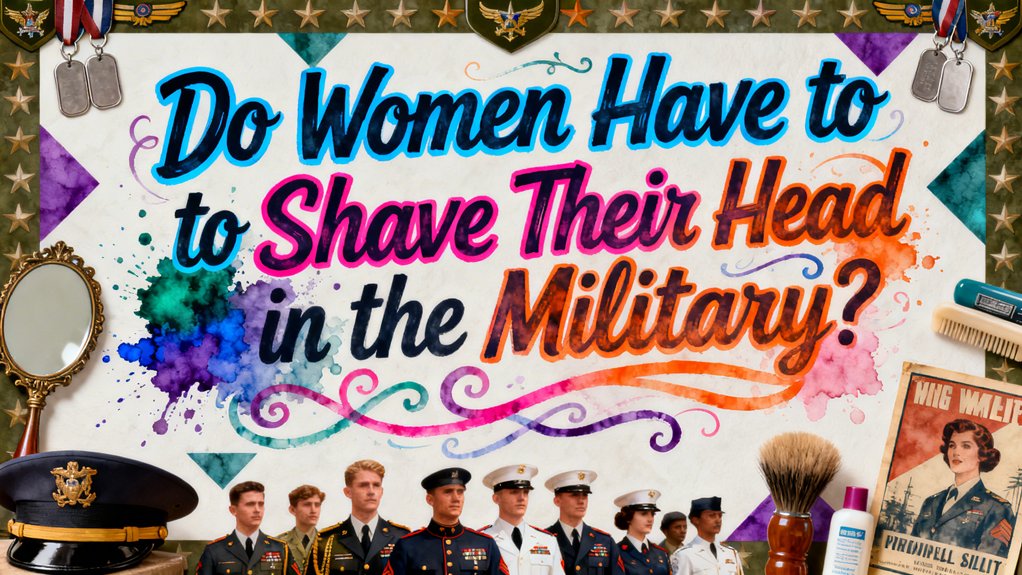
No, you don’t have to shave your head in the military. The U.S. Army’s 2025 directive authorizes fully shaved heads as an optional choice for women servicemembers, but it’s not required. You can maintain natural hair length or choose from approved styles like ponytails, braids, twists, and locs within specified limits. The authorization prioritizes operational effectiveness and helmet fit while accommodating diverse styling preferences. Understanding which hairstyles align with current regulations helps you maintain compliance and professional standards.
No, Women Don’t Have to Shave Their Heads in the Military
Contrary to longstanding assumptions, women servicemembers aren’t required to shave their heads in the military. Current hair regulations for female soldiers offer substantial flexibility. You can maintain your natural hair length or choose to shave your head entirely—it’s your decision. The U.S. Army’s 2025 directive explicitly authorizes fully shaved heads as an optional choice for women, recognizing that grooming standards have evolved markedly. Rather than mandating head shaving, modern policies emphasize uniformity and readiness while accommodating diverse styling preferences. You can wear your hair down if it meets length requirements, style it in approved braids or twists, or opt for a ponytail during combat and PT uniforms. Asymmetrical cuts are prohibited for women, ensuring that approved hairstyles maintain a uniform appearance. Religious and cultural grooming practices, such as maintaining beards for observant individuals, are similarly accommodated within military service. For those who do choose to shave their heads, techniques like applying mild abrasives can help maintain blade sharpness and prevent skin irritation. These progressive hair regulations demonstrate the military’s commitment to inclusivity without compromising professional appearance standards.
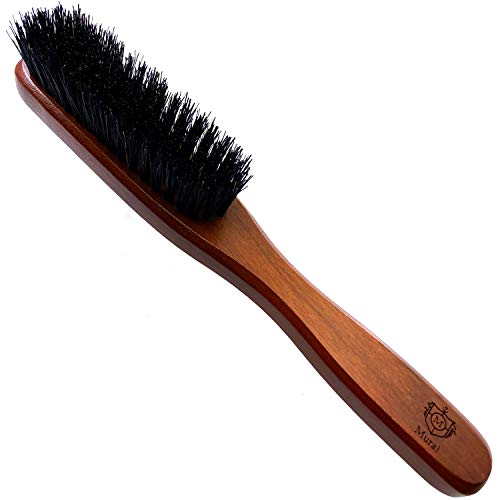
TRAVEL BRUSH DIMENSIONS: 7.5" x 1.2" x 1.2"; Beechwood base made to fit in any purse or bag, the perfect travel size hair brush! Suitable for all hair and beard lengths. Perfect for styling & smoothing.

Roomy and Convenient: With dimensions of 10.4 x 4.3 x 5.9 inches, this travel hygiene kit is big enough to hold all your essentials, like shower gel, face wash, toothbrush, floss, mouth wash, razor etc. The wide opening makes everything easy to access

TWO SIDES, TWO JOBS: A soft boar face smooths, polishes and lays hair flat, while the firm reinforced face pushes through thick, coarse hair and reaches the scalp on short cuts.
Why the Army Permits Shaved Heads as an Option
The Army’s authorization of shaved heads for women reflects a strategic shift in grooming standards that prioritizes operational effectiveness alongside personal choice. You’ll find that this policy addresses practical combat needs while respecting cultural significance and individual preferences.
Shaved heads improve helmet fit and head mobility, enabling quicker movements critical for pilots and firing range personnel. The option eliminates hair maintenance burdens during demanding training cycles, allowing you to focus on mission readiness rather than grooming compliance. Research indicates that shaved heads are rated as more dominant, which can reinforce the confidence and authority expected in military leadership roles.
The 2021 policy changes emerged from soldier feedback, particularly regarding health concerns like scalp irritation from tight buns. Many soldiers prefer trimming or shaving to minimize friction and irritation that can compromise comfort during extended operations. You can now choose styles supporting your performance without compromising professionalism. By permitting this option, the Army acknowledges that operational effectiveness doesn’t require uniformity in appearance, only in standards and discipline. Under the updated regulations effective October 15, 2025, only natural hair colors are permitted for all soldiers, ensuring consistency across grooming choices while maintaining the professional military appearance.
Five Hair Styles Authorized Under Current Army Standards
Since the Army updated its grooming policy, you’ll find five primary hairstyles that meet current standards for female soldiers. Ponytail regulations permit single braided or unbraided styles, though you’re limited to six inches from your collar’s top. You can wear braids, twists, locs, or cornrows if you space them uniformly and keep them no wider than two inches. Buns offer another option, provided you position them centered on your head’s back with a maximum three-inch extension from your scalp. The short sides with long top style allows up to two inches on top with smooth blending into shorter sides. Finally, shaved heads remain fully authorized with no minimum hair length required, giving you complete flexibility in your grooming choices. For those maintaining shorter styles, waterproof grooming tools can simplify upkeep and maintenance in field conditions, with options like waterproof electric razors designed for durability and reliable performance. These standards were developed through consensus on alignment with warfighting priorities and input from diverse Army leadership to eliminate ambiguity in expectations.

4-DIRECTION FLOATING ULTRA-ADVANCED SHAVING HEAD: The 3D rotary shaver head follows every contour of your face to remain in close contact with the skin for a fast shave that's also gentle on the skin

3-in-1 Grooming Solution: One versatile electric shaver combines shaving, nose trimming, and sideburn grooming, eliminating the need for multiple grooming tools and making daily care and travel more convenient. Tip: For longer beards, trim first, then shave stubble for a smoother, more comfortable experience.

Braun Series 3 3010s Men's Electric Shaver with Protective Cap and Smart Plug (for automatic 100-240 voltage adjustment)
Step-by-Step: How to Style Your Hair for Compliance
Once you’ve selected your authorized hairstyle, you’ll need to follow specific positioning and length guidelines to guarantee full compliance with current Army standards. Begin with proper hair preparation by thoroughly washing and conditioning your hair to confirm a neat appearance. Gather your styling tools—including clips, elastics, and brushes—to create your chosen style. Using a beard trimmer guard or similar precision tool can help you achieve clean, uniform edges along your hairline and neck. For optimal results, consider tools with ceramic blades that prevent nicks and tugging while maintaining skin safety during grooming.
For ponytails, center the base at the back of your head, positioning it horizontally in line with your ear tops when viewed from the side. Keep ponytails to six inches maximum from your collar. If you’re wearing braids or twists, maintain uniform width of no more than two inches and limit length to six inches from your collar. These new standards are effective October 15, 2025, so ensure your styling aligns with the current directives. Confirm any hair touching your neck is closely cut or shaved. Check that your style doesn’t extend beyond your collar’s lower edge while standing upright.

Safe and Efficient Trimming: PRITECH razors for men uses ceramic blades with built-in protection. On the surface where the blade contacts the skin, we have implemented a chamfered design, ensuring that it never cuts, pulls, or irritates the skin, and guarantees efficient hair trimming. This body trimmer for men equipped with 3 adjustable comb attachments and 5 lengths (1.5mm, 3mm, 6mm, 9mm, 12mm), it meets your diverse trimming requirements

Body, Pubic, Groin&Bikini- OLOV trimmers were designed for below-the-waist grooming but work great on your not so private parts too

𝗕𝘂𝗶𝗹𝘁 𝗳𝗼𝗿 𝗠𝗲𝗻’𝘀 𝗕𝗼𝗱𝘆 & 𝗚𝗿𝗼𝗶𝗻 𝗚𝗿𝗼𝗼𝗺𝗶𝗻𝗴 - Designed as a body trimmer for men, this 2-in-1 grooming kit helps trim body hair, groin hair, pubic hair, chest, underarms, beard, nose and ear hair with one compact tool. A practical choice for everyday manscaping and full-body grooming
What Changed in 2025: New Hair Rules Explained
Following four years of relaxed grooming standards, the Army’s twenty twenty-five hair regulations represent a significant tightening of policies established in twenty twenty-one. You’ll notice the most substantial shift involves ponytail restrictions—previously allowed in all uniforms with lengths extending to your shoulder blade, they’re now prohibited entirely in dress uniforms and limited to six inches from your collar’s top in combat settings.
Your military grooming standards have evolved considerably. Braided ponytails, once permissible across uniforms, are completely banned from dress uniforms. The hair historical context reveals this reversal reflects leadership’s decision to prioritize stricter enforcement after four years of flexibility. Women are also permitted to have shaved heads as an alternative styling option under the new regulations. For those considering this option, methods like laser hair removal offer longer-lasting results compared to traditional shaving approaches, and shaved heads can provide improved hygiene benefits by reducing sweat and bacteria buildup in the scalp area. These changes take effect immediately but allow you thirty days before enforcement begins, giving you time to adjust your styling approach accordingly.
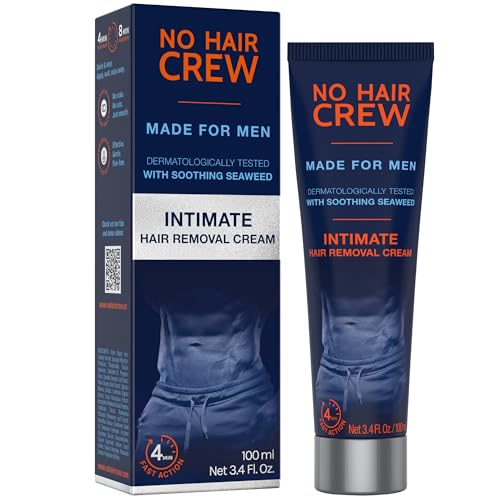
EFFECTIVE & SAFE FOR DIFFERENT BODY TYPES: Thin hair will need less time then coarse and thick hair. Experiment to find the right manscaping time for each body part! Recommended for men, but can be used by women.

12 oz NAIR MEN HAIR REMOVER BODY CREAM; works fast while you shower for blade-free, hair-free skin that stays smooth days longer than shaving by reducing hair regrowth

Hair Violations: What Happens Next
If you violate the Army’s updated hair regulations, you’ll face serious consequences ranging from administrative action to formal military charges. The hair policy violations trigger punitive measures under AR 670-1, which can include adverse administrative action documented in your service record.
More serious infractions may result in charges under the Uniform Code of Military Justice (UCMJ). These discipline consequences reflect the Army’s commitment to enforcing grooming standards uniformly across all soldiers, regardless of race. Soldiers who fail to comply with the grooming standards may face non-judicial punishment as outlined in the updated regulations. Hair textures vary naturally among individuals, and pubic hair textures can range from curly to straight regardless of grooming practices. After basic training, soldiers must maintain neat, professional hairstyles that align with current branch standards to avoid violations.
Your chain of command initiates the enforcement process upon identifying violations. The severity of punishment depends on the violation’s nature and your military history. Understanding these consequences underscores the importance of maintaining compliant hairstyles that meet current regulatory standards.
Key Rules at a Glance: Quick Reference
Because military grooming standards involve numerous specific requirements across different service branches, you’ll benefit from understanding the essential regulations that govern your appearance. Hair maintenance demands natural colors only, with no extreme or faddish designs permitted. For styling tips, remember that ponytails are restricted to combat and physical fitness uniforms, extending maximum six inches from your collar. Braids, twists, and locs must remain uniformly styled, measuring no wider than two inches and extending no longer than six inches from your collar. You’re limited to two braids or one ponytail. These updated standards reflect feedback-driven policy changes that incorporated recommendations from female soldiers to enhance operational effectiveness. Nails require clear polish only, maintaining quarter-inch maximum length with rounded or square shapes. When maintaining facial and body hair grooming, use specialized grooming devices designed for sensitive areas to ensure compliance with appearance standards, and consider exfoliating before grooming to reduce irritation and razor burn on sensitive skin. Makeup must match your natural complexion conservatively, while stud earrings remain limited to one per earlobe with quarter-inch diameter maximum.