You’ll want a round-point razor with a half-hollow grind for forgiving learning curves. The Dovo Best Quality 100 or Gold Dollar 208 offer shave-ready blades without steep price tags. Stainless steel demands less maintenance than carbon steel, though it requires frequent honing. Pair your razor with a quality badger brush, leather strop, and alum block. These fundamentals protect your skin while you master technique—but understanding each component’s role transforms your entire shaving experience.
Why Blade Point Matters for Beginner Straight Razors
When you’re learning to shave with a straight razor, the blade point you choose directly impacts your safety and learning curve. The blade point types determine how forgiving your razor will be during technique development. Round points offer the safest introduction because their semi-circular profile protects your skin from nicks and cuts while accommodating sudden angle changes that beginners inevitably make. This forgiving design minimizes mistakes during your learning phase.
Square points, conversely, demand advanced skill and present higher injury risks through their sharp, unforgiving edges. French points bridge safety and precision, making them suitable once you’ve mastered fundamentals. The Dutch point, featuring a semi-circular profile similar to round points, is specifically designed for beginners to experts, providing an ideal balance between protection and control. Understanding these distinctions guarantees you select a razor matching your experience level, prioritizing beginner safety while building confidence and control necessary for proper straight razor technique. For those transitioning from cartridge razors, exploring safety razor options can provide valuable context on how different blade designs impact your shaving experience. Many beginners find that starting with milder razors reduces irritation while delivering the close shaves they expect from a quality blade.

Professional straight razors for men - High quality barber razor & shaving blades from GTEX brand for clean, close & precise shaves. Obtain 100+ close cut shaves from these cut throat razors for men

Durable Stainless Steel – Utopia Care Razor is composed of sturdy stainless steel for reinforced durability and reliability for professional and domestic use

Premium Stainless Steel & Ergonomic Grip – This stainless steel straight razor ensures durability and smooth performance. The professional straight razor for men has an ergonomic handle for superior control, making every shave seamless and precise.
Full vs. Half-Hollow: Which Grind Forgives Learning Mistakes
Because blade flexibility directly influences how your razor responds to technique inconsistencies, understanding grind differences becomes essential to selecting a beginner-friendly straight razor. Half hollow grinds offer superior forgiveness for learning mistakes. Their thicker profile resists turning during hand movements, reducing unintended angles that cause cuts. The reduced flexibility means less blade feedback, which actually helps new users by minimizing error amplification.
Full hollow grinds, while delivering superior shave experience in experienced hands, demand precise technique. Their pronounced flexibility and thinner edges respond dramatically to angle variations, punishing inconsistencies. Regular maintenance through stropping and honing keeps any razor’s edge in optimal condition as you develop your skills. Similar to how barbers use multiple passes with adjusted taper levers to achieve smooth blending in clipper work, straight razor technique also benefits from repeated, deliberate passes as you refine your approach.
For your shave experience as a beginner, half hollow’s stability trumps full hollow’s performance potential. This grind difference directly addresses your learning curve, providing steadier control while you develop proper technique. Once mastered, you’ll appreciate why skilled shavers shift to full hollow’s precision capabilities. Applying alcohol-free moisturizer after your shave helps calm and hydrate the skin as you build your straight razor skills.
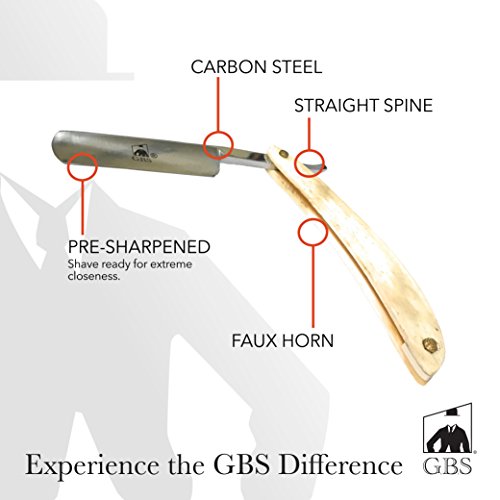
✅ Premium Carbon Steel Blade Engineered for precision and durability, the ultra-sharp carbon steel blade delivers a clean, close shave every time — perfect for professional barbers or at-home grooming.

100 blades for use in Barber Razors and Shavettes that accept 1/2 a Double Edge Blade!

Vintage Straight Razor Set - You will get a high quality straight edge razor and a leather canvas strop belt which can keep your razor sharp. There is also an high quality leather pouch for the razor storage. Best for travel.
Carbon Steel or Stainless: Which Requires Less Maintenance?
Now that you’ve selected a half-hollow grind for its forgiving nature, you’ll want to contemplate the material itself—carbon steel or stainless steel—since your choice dramatically affects how much upkeep your razor demands. Carbon steel maintenance requires vigilance: you’ll need to rinse, dry, and oil your blade after every use to prevent rust penetration and permanent damage. Stainless steel advantages shine through its corrosion resistance and minimal care requirements. You’ll avoid daily oiling and benefit from extended edge retention. However, stainless demands more frequent honing to achieve keen sharpness. For beginners seeking convenience, stainless steel offers lower overall maintenance, much like how dermatologists recommend single-blade safety razors for reducing irritation and simplifying the shaving process. Like electric razors with integrated trimmers that balance cutting power and comfort, straight razors benefit from understanding your maintenance tolerance before committing to a particular steel type. Yet if you’re willing to invest time in carbon steel maintenance, you’ll achieve superior sharpness that rewards your diligence. Regular maintenance with honing and stropping contributes significantly to longevity and performance regardless of which steel type you ultimately select.

Premium Stainless Steel & Ergonomic Grip – This stainless steel straight razor ensures durability and smooth performance. The professional straight razor for men has an ergonomic handle for superior control, making every shave seamless and precise.
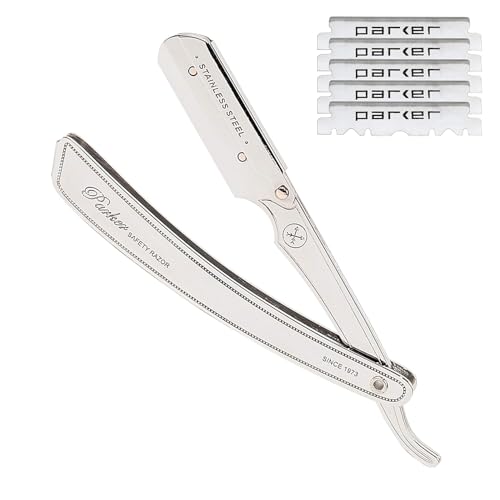
HEAVY-DUTY STAINLESS STEEL STRAIGHT RAZOR – Built for professionals and discerning wet shavers, the Parker SRX is crafted entirely from solid, heavy-duty stainless steel. No mystery metals or plastic parts—just premium-grade steel for durability, balance, and unbeatable performance in every shave.

Premium Stainless Steel & Ergonomic Grip – This stainless steel straight razor ensures durability and smooth performance. The professional straight razor for men has an ergonomic handle for superior control, making every shave seamless and precise.
The 4 Best Razors for First-Time Shavers (and Why Each Works)
You’ll find four standout razors that consistently deliver for beginners, each excelling in distinct ways. The Dovo Best Quality 100 offers factory shave-readiness and forgiving hollow grind construction, though its $120 price tag challenges budget-conscious shavers. The Gold Dollar 208 delivers comparable quality at one-third the cost, making it ideal for testing your commitment. For higher fit and finish, the Dovo Special provides enhanced aesthetics with carbon steel performance. The Naked Armor Solomon Kit supplies everything needed—razor, brush, strop, and soap—eliminating separate purchases. Straight razors were innovative in replacing earlier shaving tools and remain superior to disposable blades because disposable blades sacrifice shave quality for convenience. For women interested in facial hair removal, options like electric face shavers offer gentler alternatives for sensitive areas. Proper blade alignment and maintenance are essential for achieving consistent shaving results, similar to how clipper blade alignment ensures smooth cuts without irritation.
When selecting razor types, prioritize shave-ready blades and round points for beginner tips on safety. Your 5/8-inch to 6/8-inch blade width guarantees the best control while you develop proper technique and angle maintenance skills.
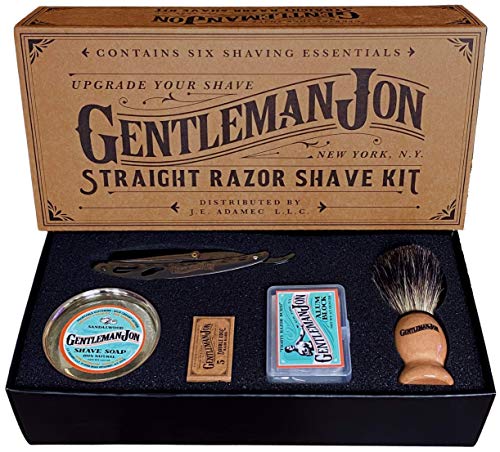
COMPLETE MEN'S SHAVING KIT: The Gentleman Jon Shaving Kit for Men is a comprehensive set that includes a straight razor, badger hair brush, alum block, shave soap, stainless steel bowl, and five razor blades - everything needed for a luxurious, comfortable and smooth wet shave experience. With its compact design, our product is also a suitable travel companion to those who value traditional shaving, ensuring a neat shave even while on the go.

Premium Valentines Day Gifts for Him and Her – Utopia Care Razor is composed of premium stainless steel to enhance its durability and reliability for professional and domestic use as well.

COMPLETE MEN'S SHAVING KIT: The Gentleman Jon Shaving Kit for Men is a comprehensive set that includes a safety razor, badger hair brush, alum block, shave soap, stainless steel bowl, and five razor blades - everything needed for a luxurious, comfortable and smooth wet shave experience. With its compact design, our product is also a suitable travel companion to those who value traditional shaving, ensuring a neat shave even while on the go.
Avoid These 5 Beginner Shaving Mistakes
Why do most first-time straight razor shavers experience irritation and cuts? You’re likely committing one of five critical mistakes. First, you’re applying excessive shaving pressure when the blade’s weight alone cuts hair effectively. Second, your lather consistency isn’t adequate—insufficient lubrication from poor wetting or cream application reduces glide and causes discomfort. Third, you’re neglecting proper stropping before use, which realigns the edge and prevents razor burn. Fourth, you’re cutting too close with improper blade angles, risking nicks on sensitive areas like your jawline. Finally, you’re using incorrect technique by skipping the with-grain pass or stroking forward instead of trailing backward. Maintaining a 30-degree blade angle throughout your shave will significantly improve your control and reduce the likelihood of cuts. To further improve your results, consider using a magnifying glass to inspect your razor edge for any damage or dullness before each shave. For those with sensitive skin, choosing mild safety razors designed with reduced blade gaps can also help minimize irritation and ingrown hairs. Master these fundamentals, and you’ll eliminate most beginner complications while achieving a superior shave.
The Starter Kit You Actually Need (and Why Each Piece Matters)
Eliminating those five beginner mistakes requires more than technique alone—you’ll need the right tools working in concert. A thorough starter kit guarantees you’ve got every essential tool properly matched to your skill level. You’ll want a 5/8 or 6/8 inch round point razor with full hollow grind construction for peak control. Pair this with quality shaving cream, a badger brush, and a leather strop for maintenance. Your aftershave arsenal should include an alum block for antiseptic treatment and minor bleeding control. For travel or storage, consider investing in a protective travel case to safeguard your razor investment during transit. The starter kit importance lies in its integrated approach—each component supports proper technique development. When selecting your first straight razor, consider factors like weight, balance, and handle length to ensure comfortable handling during your learning curve. These essential tools eliminate guesswork, reduce costly mistakes, and accelerate your proficiency with straight razor shaving from day one. Stropping before each shave keeps your razor’s edge sharp enough to glide smoothly across facial hair without dragging or catching.
Stropping Before Every Shave: Your First 30 Days
How does stropping fit into your daily routine? You’ll perform 25-50 round trips before each shave, starting with 25 laps on the canvas side, then 40-50 on the leather. This maintenance routine realigns edge burrs, maintaining your blade’s sharpness considerably longer between full sharpenings.
During your first 30 days, stropping benefits extend beyond edge preservation. You’ll develop precise muscle memory while building the technique foundation necessary for consistent results. The daily practice polishes your edge for peak performance, ensuring smooth, close shaves without nicks. Always strop before shaving to achieve the sharpest edge possible for your grooming routine. Like using the proper guard and technique with clippers, stropping demands attention to form and deliberate practice. For those with sensitive skin, gentler stropping techniques help maintain blade edge while minimizing irritation during shaving.
Begin slowly as a beginner, increasing speed with practice. You’ll notice stropping prepares your blade perfectly before each shave. Once you’ve mastered the routine, fewer strokes suffice, making this essential maintenance ritual efficient and effective.