You won’t automatically get your head shaved in prison—it depends on which facility you’re in and what state’s system you’re entering. The Federal Bureau of Prisons doesn’t mandate head shaving, but some states like South Carolina enforce it during intake for security and hygiene reasons. You’ve got legal protections under religious freedom laws, and courts have ruled against blanket grooming policies that ignore your beliefs. Understanding your specific facility’s policies and your rights can make a real difference in how you’re treated.
Federal vs. State Head-Shaving Policies
Whether you’ll face mandatory head shaving in prison depends entirely on which system holds you—federal or state. The Federal Bureau of Prisons doesn’t mandate head shaving. You’ll choose your hair length and style as long as you meet cleanliness and hygiene standards outlined in 28 CFR Part 551 Subpart A. State prisons operate under completely different rules. They set independent grooming standards without federal oversight. Some states like South Carolina enforce strict policies—heads shaved at intake with hair length limited to one inch maximum during incarceration. Other states, like New York, abandoned head-shaving mandates after courts ruled them unconstitutional. Proper grooming practices, such as those involving skin exfoliation and preparation, help maintain hygiene standards that correctional facilities prioritize. Legal challenges continue to emerge as inmates assert religious freedom concerns regarding grooming policies that conflict with their beliefs. Research indicates that hygiene and grooming standards remain central justifications for institutional policies across correctional facilities. Your grooming standards depend entirely on your facility’s location and individual policies.
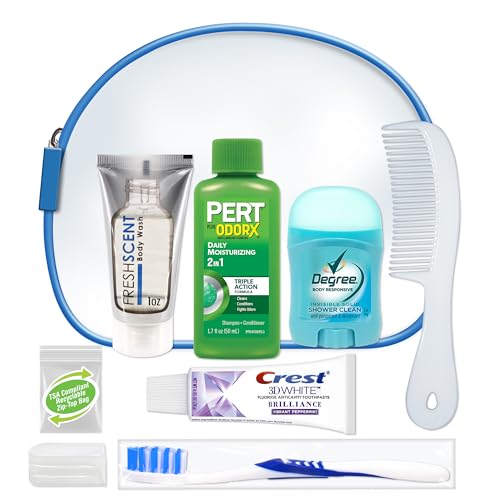
INSIDE THE KIT: 2-in-1 shampoo, stick deodorant, toothpaste, body wash, toothbrush, comb and more, nine pieces in a zippered bag

Precision Grooming Toolkit: The kit includes nail clippers, hair comb, lint brush, tweezers, nail file, and a neckline/sideburn trimmer attachment. Packed in a leather travel case with accessories, powered by a battery for efficient on-the-go grooming.

INSIDE THE KIT: shampoo, conditioner, lotion, soap, deodorant, toothpaste, toothbrush and a cotton washcloth. 10 pieces, 1 oz bottles
What Happens: Head Shaving During Prison Intake?
Once you’re admitted to a state prison that enforces head-shaving mandates, you’ll encounter this requirement during your initial intake process. The shaving typically happens after you’ve arrived but before medical and psychological evaluations begin.
This procedure serves dual purposes: hygiene and inmate psychology. Facilities like Kirkland Reception and Evaluation Center in South Carolina use it to prepare you mentally for prison realities while maintaining sanitary standards. You’ll receive clippers or razors, and staff will cut your hair to state-mandated lengths—often no longer than one inch. Proper preparation of the skin, such as keeping it dry, helps minimize irritation during the shaving process, particularly when using sharp blades designed for sensitive areas. Professional barbering techniques, such as working against the hair grain, can also reduce irritation and ensure even, uniform results during the procedure.
If you resist, correctional officers follow strict use-of-force protocols. They’ll document everything, offer you a final compliance chance on video, and conduct the procedure in a private, fully videotaped location if necessary. However, no federal law mandates head shaving for all prisoners across the United States, meaning policies vary significantly by state jurisdiction.
Why Prisons Require Head Shaving: Security and Conformity
Behind every head-shaving mandate you’ll encounter sits a calculated security rationale. Prison officials implement these policies to eliminate contraband hiding spots—razors, drugs, and SIM cards disappear when you’ve got nowhere to conceal them. Short hair also prevents quick disguises during escape attempts and security breaches.
Beyond conformity serves institutional control. Uniform appearances reduce tensions over status symbols and foster equality among inmates. You’re stripped of individual expression through grooming standards, which compounds the psychological effects of incarceration. This enforced uniformity signals loss of autonomy and personal identity. Reduced hair coverage also facilitates quick identification of hygiene issues and security concerns by staff. To maintain the clippers and razors used for institutional shaving, staff must regularly perform stropping techniques to keep blade edges sharp and safe. Proper maintenance of clippers used for this shaving requires understanding blade sharpening techniques to ensure the tools remain effective and safe for institutional use.
The shaving requirement isn’t arbitrary. It’s a multifaceted approach combining practical security measures with psychological preparation for the reality of confinement. You’re experiencing systemic control from your first day inside.

Cordless Convenience – Color Pro Cordless is rechargeable and wireless. Cord/Cordless allows you to use the clipper on battery or when it's charging.

Hair Clipper:Heavy-duty gear for proper powerful cut, with stable and steady control. The R shaped rounded edge design prevents from accidentally hurting skin.

Color Coded Guide Combs – Finding and remembering everyone’s favorite hair length is easier than ever. Corresponding the correct comb to the right cutting length is simple with our easy to see attachment guards
Official Exemptions: Gender, Race, and Religion
Prison administrations can’t enforce grooming policies uniformly across all inmates, and you need to know where those lines get drawn. Federal law protects your religious expression through RLUIPA, which prohibits regulations imposing “substantial burdens” on sincere faith practices. If you’re Muslim, you can maintain a beard for religious reasons—the Supreme Court’s *Holt v. Hobbs* decision established this protection. Rastafarians similarly have legal grounds to keep dreadlocks as central religious tenets. Courts have consistently ruled that prisons can’t force you to shave based on religion, overturning blanket grooming policies. A federal court in Colorado upheld this principle when it reversed a district court dismissal in a case involving an incarcerated Muslim whose beard was forcibly shaved despite the prison’s own policy allowing religious exceptions. Many incarcerated individuals report that maintaining their grooming practices provides psychological benefits and reduces skin irritation from frequent forced shaving. Professional-grade beard trimming equipment used in some facilities demonstrates that prisons increasingly recognize the importance of allowing inmates controlled grooming options rather than enforcing blanket shaving mandates. You don’t need universal religious support for your practice either; individual sincere beliefs qualify for hair freedom protections. Document your religious convictions and cite relevant case law when asserting your rights.
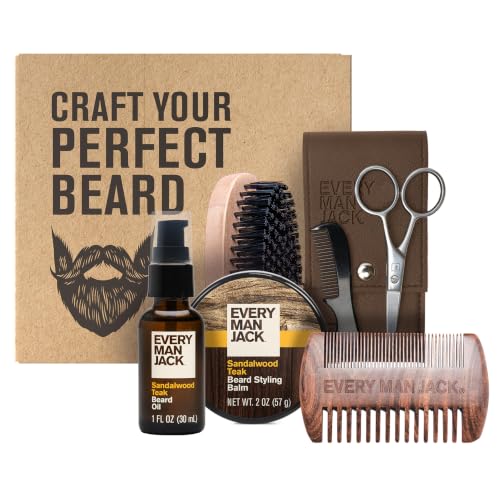
Complete Beard Kit: One box holds five pieces, a beard oil, a beard balm, a vegan beard brush, a beard comb and stainless steel scissors. A full beard maintenance kit for men, for work days and weekends outside

PREMIUM QUALITY: Our Beard and Mustache Scissors are made of Premium Quality German Steel and durable. Sharp Blades of our Mustaches scissors work well with any type of facial hairs thick or thin. Its high-quality material is rustproof and can last for a lifetime.

Perfect Gift for Men: Creating a neat beard line will tidy up the look of the beard immensely. Get a perfect trim anytime at your own home — no need to spend more money on barbershops! Makes for great gifts for dad. Perfect fathers day gifts from daughter or wife.
Court Rulings That Changed Prison Hair Policies
You’ve got legal precedent working in your favor now. Courts across the country have dismantled blanket hair restrictions in prison grooming policies. In Holt v. Hobbs, the Supreme Court unanimously rejected Arkansas’s beard ban, ruling security concerns didn’t justify blanket prohibitions. The Fifth Circuit similarly found Louisiana’s dreadlock policy violated RLUIPA’s least-restrictive-means standard. Ohio’s own decision to permit religious hair exemptions undermined the state’s security arguments entirely. Pennsylvania recognized dreadlocks as legitimate religious practice for Hebrew Israelite inmates. These rulings establish that your facility must provide religious accommodations rather than enforce one-size-fits-all hair restrictions. Professional clipper shaving techniques like the clipper-over-comb technique are often used in correctional facilities, but such methods must now comply with religious accommodation requirements. Premium clipper options like Wahl balding clippers are trusted by professionals for their durability and close-cutting capability. The case of Damon Landor, a Rastafarian whose head was forcibly shaved despite court-approved religious accommodation, is currently before the Supreme Court and could further strengthen protections for incarcerated individuals’ religious grooming practices. You can challenge policies that deny exemptions without substantial evidence they’re necessary for security or safety.
Protecting Your Right to Hair in Prison
Now that courts have established your legal footing, it’s time to know exactly what protections apply to you. You can maintain your hair identity and personal expression within reasonable limits. Most jurisdictions won’t force you to cut your hair if you keep it clean and neat. You’re entitled to hair care services that meet health standards. If your facility requires short hair for safety—like food service work—they’ll provide alternatives or accommodations. Document any grooming restrictions that seem punitive rather than security-based. Challenge discriminatory policies, especially those targeting specific genders. The Warden must provide hair care services to all inmates as part of their obligation to maintain facility health standards. If you do maintain a shaved head, remember that regular exfoliation and daily moisturization are important for keeping your scalp healthy and preventing irritation. For those interested in maintaining beards or longer hair, consider discussing adjustable grooming options with facility staff to ensure compliance with health standards. Know that wigs or hairpieces require medical justification and Warden approval. Your appearance shouldn’t be weaponized as secondary punishment. Assert these rights firmly.