
You should replace your razor blade every 5-7 shaves for peak performance and skin health. However, your replacement schedule depends on shaving frequency and hair texture. Daily shavers need new blades every 1-2 weeks, while those shaving twice weekly can extend to 4-6 weeks. Dull blades cause razor burn, ingrown hairs, and bacterial accumulation that increases infection risk. Signs include tugging, uneven results, and persistent redness. Proper maintenance—rinsing, air-drying, and cool storage—extends blade longevity. Understanding your specific habits assures you’ll find the ideal replacement interval for your needs.
Signs Your Blade Is Dull Before It Ruins Your Skin
Tugging and pulling during your shave signal a dull blade that’s no longer cutting hair cleanly—instead, it’s yanking at the follicle. You’ll notice this uncomfortable sensation most prominently against your beard grain, requiring excessive force to move the blade across skin.
Recognize these dull blade indicators: uneven shave results with visible stubble, persistent redness, and razor burn appearing post-shave. The blade’s compromised edge increases friction, disrupting your skin barrier and inviting bacterial infection through accumulated micro-cuts.
Additional warning signs include multiple passes needed over identical areas and visible nicks or corrosion on the blade itself. Rust deposits harbor bacteria, elevating folliculitis and ingrown hair risks. Pre-shave warm water or hot towels can reduce skin irritation by softening hair before you shave with a dull blade. Electric razors with intelligent technology can also minimize irritation by adapting to beard density and reducing the number of passes needed.
Implement effective razor care tips by rinsing thoroughly after each use and storing in dry conditions to prevent corrosion and bacterial growth. Replace your blade promptly when you detect these symptoms—before compromised edges damage your skin.

Model Number: ASTRA01

REFILLS FIT ALL all Fusion5 and ProGlide RAZOR HANDLES (excluding GilletteLabs)

REPLACEMENT BLADES ONLY -- KNIFE IS NOT INCLUDED
The 5-7 Shave Rule: When Most People Need a New Razor
Most dermatologists and major razor manufacturers recommend replacing your blade every 5-7 shaves to maintain ideal sharpness and minimize skin irritation. The American Academy of Dermatologists endorses this guideline as the best replacement interval for disposable and cartridge razors.
Your replacement frequency depends greatly on blade quality. Premium blades may extend slightly beyond this range with proper care, potentially yielding an extra couple of shaves. However, lower-quality blades deteriorate faster, requiring more frequent changes. Safety razors with replaceable blades offer a cost-effective alternative that allows you to maintain optimal sharpness without the expense of cartridge systems.
Several variables influence how quickly your blade dulls. Thicker beard hair accelerates dulling, while your shaving technique and pressure application affect longevity. Shower storage conditions considerably reduce blade lifespan through rust and bacterial accumulation. Proper cleaning and storage practices can significantly extend the life of your razor and improve your overall shaving experience.
Tracking your shave count guarantees you maintain top performance and prevent skin irritation before dullness becomes problematic.

HARRY'S RAZORS FOR MEN: Includes 14 razor blade refills, designed for a close, comfortable shave; Only compatible with Harry's Original handles; Designed for your face, and not recommended for head shaving

Includes six Amazon Basics 5 blade razor refill cartridges

SHAVE: These men's razor refills feature 5 blades each
Why Gillette’s Replacement Recommendation Doesn’t Apply to You
While Gillette’s standard 5-7 shave replacement interval provides a useful baseline, it doesn’t account for the significant variables that determine your individual blade lifespan. Your custom replacement intervals depend on factors Gillette’s generalized guidance overlooks. Individual shaving habits—including shaving frequency, beard density, and skin sensitivity—substantially influence blade degradation rates. Users with coarse facial hair require more frequent replacements than those with fine hair. Similarly, your shaving technique, water hardness, and skin conditions affect blade performance. Daily shavers exhaust blades faster than those shaving twice weekly. Dermatologically sensitive skin may necessitate more frequent changes to prevent irritation. Rather than adhering rigidly to manufacturer recommendations, you’ll benefit from monitoring your blades’ actual performance and adjusting replacement schedules accordingly based on your unique shaving profile. Drying and oiling your blades between uses can enhance blade longevity and extend the time between replacements, offering a practical method to maximize the lifespan of your cartridges or safety razor blades. For those using straight razors, regular stropping with quality leather strops maintains edge alignment and can significantly extend blade life between professional honing services. For electric razors, replacing foils and cutters every 12-18 months helps maintain optimal shaving performance and prevents blade degradation that impacts your shaving experience.

IN THE BOX PLUS – Includes six replacement guide combs (1/2/3/4/5/6 mm), one body comb, one protective cap, and a clear acrylic organizer stand.
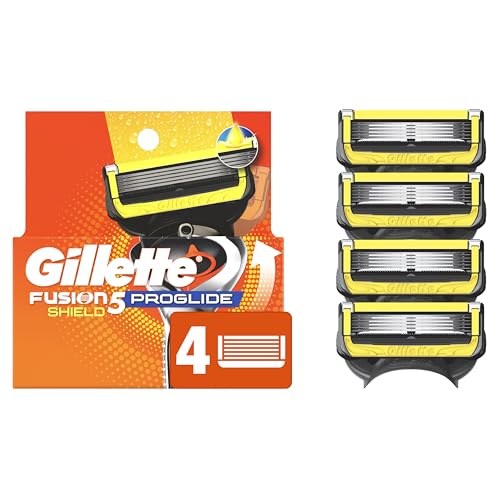
LUBRICATION BEFORE AND AFTER the razor blades helping shield from irritation while you shave. 2X Lubrication for Ultimate Comfort

UPGRADED PROGLIDE BLADES LASTING 3X LONGER*: 5 ultra-sharp razor blades for ultimate closeness (*Vs Fusion5)
Your Shaving Frequency Determines Your Replacement Schedule
Your blade replacement schedule should align directly with how often you shave, since usage frequency is the primary driver of blade dulling. Daily shavers require blade changes every 5-7 shaves or 1-2 weeks, as recommended by the American Academy of Dermatologists. If you shave every other day, extend your replacement schedule to every 2-3 weeks. Those shaving twice weekly can maintain blades for 4-6 weeks before replacement becomes necessary. This correlation exists because each shaving stroke creates microscopic wear on blade edges. More frequent use accelerates this deterioration, while less frequent shaving preserves blade integrity longer. Understanding your personal shaving frequency allows you to optimize your replacement schedule, preventing premature dulling while avoiding unnecessary expenses. For specialized grooming areas like armpits, consider using electric razors designed for contoured areas to ensure consistent performance and hygiene. Dull blades can harbor bacteria, increasing the risk of infections and skin irritation that compromise your shaving experience. Safety razors offer superior hygiene through easy cleaning and frequent blade changes, ensuring your grooming routine remains sanitary and effective.

The authentic genuine Philips OneBlade blades
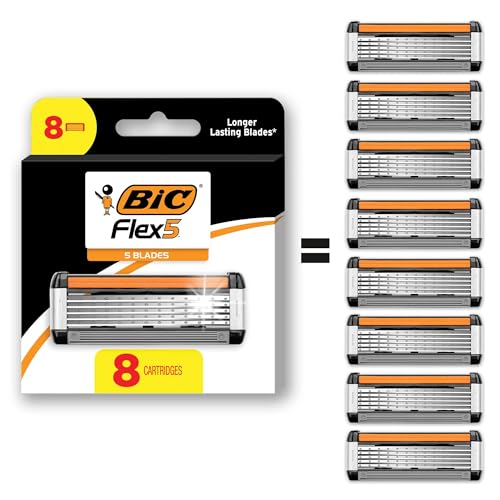
WHAT'S INCLUDED: One 8-count pack of BIC Flex 5 Razor Cartridge Refills for Men; handle sold separately

COMPATIBLE DESIGN: These razor blade refills are designed to fit Mach3 razors, providing a seamless replacement solution for your daily grooming routine.
Hair Texture and Skin Sensitivity Speed Blade Dulling
Beyond your shaving frequency, two individual factors dramatically accelerate blade dulling: the texture of your hair and your skin’s sensitivity level. Coarser hair creates greater stress on blade edges, intensifying chipping through lateral forces during the cutting process. When hair bends against the blade, it generates microcracks that expand into visible chips, particularly at weak points in the steel’s microstructure.
Your skin sensitivity serves as an early warning system for blade deterioration. Dull blades drag across skin with rough edges, causing nicks and pronounced redness. Individuals with sensitive skin experience increased irritation levels before blade dulling becomes obvious to those with resilient skin. This friction-related irritation manifests proportionally with chip formation, prompting earlier blade replacement when you notice razor burn or missing hair patches during shaving. For those with sensitive skin, choosing razors with gentle, close performance can help minimize irritation as blades age. Electric shavers like the Braun Series 9 Pro provide foil technology that reduces contact friction and protects skin from the effects of blade wear. Scientists have discovered that nanostructured alloys could significantly improve blade durability by creating more uniform microstructures that better resist the perpendicular shear forces generated during cutting.
What Happens If You Use a Dull Razor Too Long
Understanding blade deterioration’s warning signs matters far less than recognizing what actually happens when you ignore them. Prolonged dull razor use triggers cascading dermatological complications you’ll want to avoid.
Dull blades scrape your skin’s top layer, causing painful redness and inflammation. You’re simultaneously at heightened risk for ingrown hairs, as uneven cutting forces hair to fold back into follicles—particularly problematic if you’re Black, where pseudofolliculitis barbae occurs more frequently. Proper cleaning and maintenance can extend blade life significantly.
Beyond skin inflammation, razor deterioration creates hazardous conditions. Accumulated grime on dull blades harbors bacteria that enter damaged follicles, potentially causing folliculitis or deeper cellulitis. Electric shavers cut hair at or above the skin surface to eliminate razor burn, nicks, and ingrown hairs that result from traditional blade tugging. For those with sensitive skin, using a safety razor with protective guards may help minimize these risks. You’ll experience increased nicks and cuts since dull razors pull rather than slice cleanly.
Bacterial infections represent your most serious concern, potentially progressing to systemic complications if untreated. Replace your razor regularly to prevent these preventable health issues.
Extend Your Razor’s Life: 4 Storage and Maintenance Habits
Proper maintenance dramatically extends razor longevity and prevents the bacterial accumulation and corrosion that accelerate blade deterioration. You’ll maximize your razor’s lifespan by implementing four critical storage techniques and maintenance tips.
First, rinse blades thoroughly under warm water immediately after use, removing hair and skin cells. Second, air dry completely before storage—moisture promotes rust and bacterial growth. Third, store your razor in cool, dry areas outside the bathroom, using upright stands or magnetic hooks that keep blades elevated and exposed to air circulation. Avoid enclosed drawers and humid shower caddies that trap moisture. For disassembled parts, allow them to air dry properly to prevent moisture-related rust and ensure all components dry thoroughly.
Fourth, apply protective mineral oil or specialized razor saver oil to metal components post-drying. This creates a rust-blocking barrier. Weekly alcohol soaks for ten minutes eliminate residual bacteria. For optimal results, consider shaving after a hot shower when your facial hair is softest and most receptive to the blade. These evidence-based practices substantially reduce replacement frequency. Replace blades every 5-10 shaves depending on your hair thickness and the quality of your razor to maintain optimal shaving performance.
Daily Shavers vs. Occasional Users: Your Schedule at a Glance
Your shaving frequency directly determines how quickly your blades dull, regardless of how meticulously you maintain them. Daily shavers should replace blades every 1-2 weeks, as frequent use accelerates blade degradation through repeated friction and bacterial accumulation. The American Academy of Dermatology recommends replacing razors after 5-7 shaves for peak performance and hygiene.
Occasional users face different replacement myths suggesting less frequent changes are necessary. However, twice-weekly shavers should replace blades every 4-6 weeks to prevent bacterial buildup and dullness. Hair thickness and skin sensitivity further influence your daily habits; coarser hair clogs blades faster, while sensitive skin requires earlier replacements after just 3-5 shaves. Models like the Braun Series 9 Pro+ are specifically designed to handle coarse beards and sensitive skin more effectively, reducing the frequency of replacement needs for users with these concerns. Monitor for pulling sensations or irritation, indicating immediate replacement regardless of your typical schedule. Holding your safety razor at the proper angle and using minimal pressure can extend blade life slightly, though regular replacement remains essential. The lubricating strip’s fading color serves as a visual reminder that your blade needs replacing without requiring you to count individual shaves.


100 "Derby Premium" Single Edge Razor Blades for straight razor
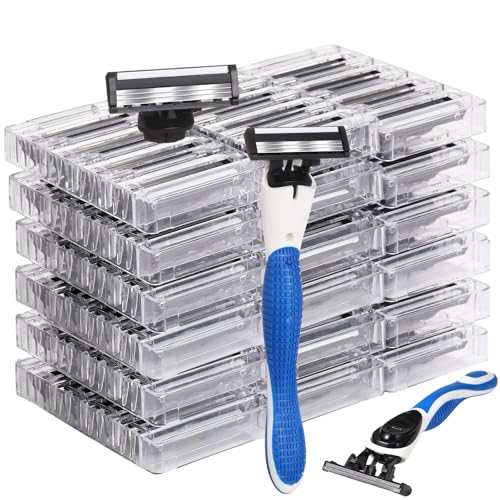
What's Included: you will receive a 50 piece shaving kit for men, including 2 razor handles and 48 razor blade refills with matching protective caps, clean and hygienic, easy to replace
Keep Your Razor Clean Between Replacements
Maintaining blade cleanliness between replacements is essential for extending razor performance and preventing bacterial infections. You should rinse your blade after every swipe to remove shaving cream, gel, and hair debris that accumulate rapidly. Implement effective cleaning techniques by using soft brushes to dislodge particles from blade grooves, then thoroughly rinse under running water. For deeper hygiene practices, soak your razor in a Barbicide bath following manufacturer instructions or use mild soap solutions. Store your razor in a clean, dry location to prevent rust and bacterial growth. According to the American Academy of Dermatology, you should change your razor every 5-7 shaves to minimize irritation and bacteria spread. These protocols reduce bacteria spread, minimize skin irritation, and prevent infections from developing in cuts or pores. While safety razors require more frequent blade replacements due to their design, straight razors feature a single lifelong blade that demands proper stropping and honing maintenance instead. Double edge safety razors offer cost-effective long-term value with significantly cheaper replacement blades compared to cartridge refills, making regular blade changes more economically sustainable. Consistent maintenance directly correlates with extended blade longevity and ideal shaving results.