To shave your back thighs effectively, you’ll need proper preparation and positioning. Start by soaking your legs in warm water for 3–5 minutes, then exfoliate to remove dead skin. Apply a quality lubricant and keep your skin stretched taut. Use a multi-blade razor or body groomer with an angled design, shaving downward with hair growth using slow strokes. After shaving, rinse with cold water and apply alcohol-free cooling gel. For best results and smoother outcomes, understanding additional techniques proves invaluable.
Prepare Your Skin and Hair for Easy Shaving
Before you shave the back of your thighs, you’ll need to soften your hair and hydrate your skin to minimize irritation and achieve a closer shave. Start by soaking your legs in a warm bath for 3-5 minutes or taking a warm shower for at least 10 minutes to facilitate hair softening and skin hydration. The warmth opens your hair cuticles and allows moisture penetration, reducing nicks and cuts during shaving.
Next, exfoliate using a loofah or gentle scrub to remove dead skin cells, which prevents ingrown hairs and enables smoother razor glide. Apply an exfoliating body scrub in circular motions from heels to thighs. After exfoliation, verify your skin remains fully hydrated before applying lubricant. This preparation creates an ideal surface for safe, effective shaving. To further prevent irritation during shaving, keep your skin stretched tight while using light strokes with your razor. Lubrication is essential to prevent inflammation and irritation during the shaving process. For optimal results, use purpose-built lubricants designed specifically for skin care rather than household alternatives.
Choose the Right Shaving Tools for Hard-to-Reach Areas
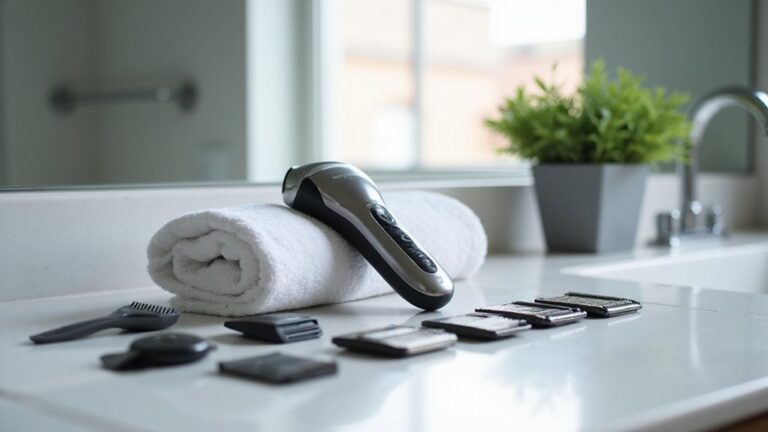
Now that you’ve prepped your skin, selecting the right tool makes all the difference when shaving the back of your thighs. You’ll find that body groomers with angled designs and interchangeable heads—like the Mangroomer Ultimate Pro—excel at accessing posterior leg areas. Multi-blade razors featuring pivoting heads adapt effectively to thigh contours, reducing control strain during grooming techniques.
For precision work, consider safety razors with thin heads, such as the Blackland Vector or RazoRock Lupo, which provide superior maneuverability in confined spaces. The thin head design of these safety razors ensures you can navigate difficult anatomical curves with greater ease. Waterproof-rated groomers enable shower use, facilitating easier thigh access while hair remains hydrated and softened. For optimal performance with your chosen groomer, regular maintenance including lubricating with oil or spray will keep your device functioning effectively throughout extended grooming sessions.
Adjustable razor types allow you to customize aggression levels based on your skin’s tolerance. A sharper defined line created by proper technique helps maintain clean grooming results on posterior leg areas. Prioritize ergonomic grips and angled designs—these features directly enhance reach and stability, minimizing injury risk during detailed grooming techniques on anatomically challenging regions.

LONG ADJUSTABLE HANDLE: Features a 28-inch extendable handle that lets you easily reach every area of your back for a thorough, pain-free shave. ALL-DIRECTIONAL FLEXIBLE...
Position Yourself for Better Shaving Control
For standing balance, position your feet shoulder-width apart and use wall support to extend your reach. Bend one leg while straightening the other, allowing you to access the back thigh while maintaining stability. Face away from the shower stream to keep skin taut and visible.
Seated flexibility offers an alternative approach. Sit on a shower bench with legs extended to flatten back thigh skin, or prop one foot on a low stool to expose the area effectively. Lean forward for improved downward visibility. Moistening skin before sitting down will help ease the cutting process and ensure a smoother shave. Washing your face before shaving with warm water prepares your skin and softens facial hair for optimal results. For best results, ensure your skin is completely dry before shaving to avoid uneven results.
Leg elevation techniques complement both positions. Lift one leg onto the shower ledge or raise your heel against the wall to stretch the hamstring and tighten skin, enhancing accessibility and control during shaving strokes.
Master the Shaving Technique for Smooth Results
Achieving smooth results on your back thighs requires a methodical approach that prioritizes proper preparation and controlled technique. You’ll want to shave with hair growth direction using slow, steady strokes while maintaining gentle pressure. Rinse your razor after every stroke to clear accumulated gel and hair debris.
For ideal results, go over each section twice to guarantee complete coverage. Pull skin taut around curves to prevent nicks, and shave downward first to reduce irritation and ingrown hairs. You should start with the grain, then shave against it only if needed after re-lathering with fresh shaving products.
Your specific skin types may require adjusted pressure and frequency. Pay particular attention to bonier or tricky thigh areas where contours create challenges. For curved body areas like the back thighs, rotary shavers are particularly effective at conforming to skin contours and reducing irritation. Using a mirror for better visibility will help you navigate the hard-to-see areas of your back thighs effectively. Maintaining a clean, sharp blade guarantees smooth, professional results, so rinse your razor regularly to remove hair and debris that can impair performance.
Cool Down and Hydrate Your Skin After Shaving
After you’ve completed your shaving routine, your skin requires immediate cooling and hydration to minimize inflammation and prevent common post-shave complications like razor burn and ingrown hairs. Begin by rinsing your legs thoroughly with cold water to constrict pores and reduce irritation. Pat your skin dry gently rather than rubbing, which can exacerbate sensitivity.
Next, apply alcohol-free cooling gels like aloe vera immediately after drying. These products deliver a soothing effect on irritated areas while preventing redness and bumps. Follow with fragrance-free soothing creams containing ceramides, hyaluronic acid, niacinamide, or vitamin E. These ingredients lock in moisture and combat post-shave itchiness. Lightweight, non-greasy moisturizers work best for post-shave skin care, especially those formulated with hyaluronic acid to maximize hydration without heaviness. Beyond shaver selection and post-shave products, proper technique and quality balms and astringents are essential for achieving a pain-free shave and preventing razor bumps. For enhanced results, consider incorporating shea butter body soap into your routine during off-shave days. Consistent hydration on both shave days and off days maintains skin smoothness and resilience, creating an ideal barrier against irritation.
Handle Missed Spots and Difficult Angles
Once you’ve hydrated your skin, you’ll want to conduct a thorough spot-check because even experienced shavers miss patches on the back thighs. Employ spot checking techniques by rinsing with cold water to reveal remaining stubble, then examine your legs under bright lighting at multiple angles. Use tactile feedback by feeling your skin with your hands to detect rough patches.
For handling angles effectively, bend your leg to tighten the skin around knees and joints, reducing laceration risk. Maintain a 45-degree razor angle for ideal control. Start from your ankle and work upward systematically. Adjust your body position to access the back thigh curves properly. Regularly rinsing the razor between repositioning ensures you maintain optimal shaving effectiveness.
When re-shaving missed spots, reapply shaving foam and use minimal pressure to prevent irritation. Similar to beard grooming techniques, using controlled strokes with your razor helps avoid harsh lines and ensures smooth results. Rinse your razor between strokes to eliminate buildup. For sensitive skin areas, consider using electric razors for sensitive skin to reduce irritation and ingrown hairs during the shaving process.

SkinProtect Technology: Achieve a clean, gentle shave with 5D pivot contour and AntiCorrosion Shaving System

Multi-Area & Hypoallergenic Shaving: Experience a smooth and painless shave with the Orchrose 2-in-1 Electric Razor, designed for multiple body areas including bikini line, face, legs, arms, and underarms. Operating at 10,000 RPM, it trims hair quickly and efficiently without pulling or tugging, leaving skin soft and smooth for effortless daily grooming at home or on the go.

NO PULLING. NO PINCHING. NO CUTS. Gives a razor-smooth finish every time. Our skin-friendly electric shaver for women features precision ceramic blades with the fast-moving cutter trims hair at 100x per second, while R-shaped rounded tips and a protective guard ensure gentle contact with your skin—wrapped in soft, warm-touch silicone for a gentle, comforting feel. Whether you're using it as a intimate razor for women pubic hair or a facial hair remover for women, it's designed to leave zero irritation behind. Just smooth, happy skin from your face to below the belt.
Prevent and Treat Ingrown Hairs and Razor Bumps
While back thigh shaving creates an ideal environment for ingrown hairs and razor bumps—particularly if you’ve got curly or coarse hair—you can greatly reduce their occurrence through proper technique and preventive care.
Before shaving, exfoliate with a gentle scrub to remove dead skin cells that trap emerging hairs. Shave in the direction of hair growth rather than against it, as this minimizes follicle trauma. Shaving in the direction of hair growth is less irritating than pulling against your natural hair patterns. Apply salicylic acid products post-shave to prevent clogged pores. Replace your razor blades every 18 months to ensure they remain sharp and reduce the risk of sharp, jagged ends that can curl back into the skin. If you develop razor bumps, gently exfoliate with a warm washcloth and apply benzoyl peroxide for spot treatment of ingrown hair. For individuals with sensitive skin, consider using a razor designed for sensitive skin to further minimize irritation and reduce bump formation. Rinse with cool water and apply a damp cloth immediately after shaving. For persistent issues, consider consulting a dermatologist to prevent scarring.

Designed for men and women who struggle with razor bumps, ingrown hairs, and post-shave irritation after daily shaving or waxing, our treatment delivers instant relief and prevents future breakouts for smooth, confident skin.

For Smoother, Softer Skin: Smooth things over with our anti-bump & ingrown roller, a gentle, hydrating formula that reduces ingrown hairs, prevents razor bumps and burn, exfoliates and removes impurities, balances skin’s pH and soothes and evens complexion for all skin types

Ingrown Hairs? - So out with our smoothing treatment. This easy-glide roller helps visibly clear and prevent ingrowns and bumps from waxing, shaving, and grooming with zero mess—silicone-free, fragrance-free, alcohol-free, and cruelty-free.
Explore Waxing for Month-Long Results
If you’re seeking an alternative to frequent shaving, waxing offers markedly extended results by removing hair from the root rather than cutting it at the surface. You’ll experience 3-6 weeks of smooth skin, markedly outperforming shaving’s temporary effects.
The waxing benefits extend beyond longevity. With repeated sessions, your regrowth becomes progressively finer and softer as follicles weaken. You’ll notice reduced hair density and a fuzz-like texture replacing coarse stubble. Regular waxing also stimulates lymphatic drainage, which supports your immune system and contributes to overall skin health.
For long term results, consistent waxing delivers additional advantages. The process exfoliates dead skin cells, unclogs pores, and stimulates blood circulation—enhancing skin tone evenness on thighs and legs. This promotes healthier skin growth while reducing irritation compared to razor burn. Many people report experiencing increased confidence when maintaining smooth skin through regular waxing sessions.
Economically, waxing proves cost-effective over time, eliminating frequent razor replacements and daily maintenance routines.

☆ FAST & SHOCKINGLY PAIN FREE: 9.8 out of 10 people find nasal waxing far less painful than plucking, and much more effective.

WE'RE FAMOUS! Award-Winning Brand featured on CBS News, ABC, NBC, and Cosmopolitan, and viral on your favorite social media platforms.

Finally! A hair remover that leaves no doubt ... your hair will be effectively removed on first application.
Consider Laser Removal for Semi-Permanent Smoothness
For a more permanent solution to thigh hair, laser removal offers superior long-term results compared to traditional shaving and waxing methods. You’ll achieve 75% hair reduction within six months using rotational laser approaches, with 74% of patients experiencing 75-100% clearance after three treatments.
Treatment longevity is substantial—87.9% of patients maintain results at 11.5-year follow-up. You’ll typically require six to eight sessions for best thigh results, though lighter hair may necessitate 12+ treatments. Deeper follicles on thighs demand higher energy levels or additional passes. The long-pulsed 755 nm alexandrite laser has demonstrated proven safety and efficacy in long-term clinical assessments.
Laser advantages include minimal adverse effects, with transient reactions resolving within days. You’ll experience only slight discomfort during treatment. For those seeking semi-permanent alternatives, electrolysis via epilators also offers follicle reduction through radio frequency technology. For budget-conscious consumers, cordless electric shavers provide an affordable interim option between laser treatments. Beyond upfront costs, you’ll save significant time and effort long-term compared to recurring shaving or waxing.

Effective IPL Hair Removal: Delivering 5J/cm² energy at 600nm wavelength deep into hair follicles to effectively disrupt growth. Enjoy smooth, hair-free skin with far longer-lasting results than shaving or waxing

【Effective IPL Hair Removal】They zap away unwanted hairs at their roots, which significantly slows down regrowth for smoother skin. With 5J/cm² high energy and a 600nm wavelength, the device delivers light deeper into the hair follicles, effectively damaging them to reduce hair growth over time. This offers longer-lasting results compared to shaving or waxing.

AT-HOME IPL HAIR REMOVAL: Braun IPL hair removal is an at home laser hair removal alternative for women and men, with permanent visible hair reduction and up to 2 years free from hair*
Get a Partner’s Help for Hard-to-Reach Areas
Though laser removal provides long-term results, you’ll still need effective methods for maintaining smooth back thighs between treatments or if you prefer traditional shaving. Enlisting a partner greatly improves accessibility to difficult back thigh contours. Establish clear communication techniques before beginning—discuss pressure levels, stroke direction, and comfort signals to prevent accidents. Ideal partner positioning requires you to angle your body away, allowing your partner direct visibility of the back thigh area. Maintain skin tension by holding areas taut while your partner executes long, steady strokes in hair growth direction. Ascertain you remain still and stable throughout the process. Your partner should rinse the blade after each stroke and reapply shaving cream before making additional passes, reducing irritation and achieving superior results compared to solo attempts. Regular blade maintenance through oiling your clippers will help keep your tools in optimal condition for smooth shaving results. Before your partner begins shaving, ensure your legs are well-hydrated skin to make hair easier to cut and prevent irritation.