To use an eyebrow trimmer effectively, you’ll start by combing your brows upward and evaluating your natural shape and hair growth direction. Choose a quality trimmer with stainless steel components, then trim against hair growth along the arch’s top and with natural growth on the bottom. Use slow, controlled motions in small sections, keeping skin taut to prevent nicks. Immediately clean your trimmer afterward to maintain performance. Understanding protective techniques and recovery methods will greatly enhance your results.
Prepare Your Workspace and Eyebrows
Before you begin trimming, you’ll need to gather five essential tools: a magnifying mirror for accuracy, a spoolie brush to reveal stray hairs, small precise scissors to target individual hairs without overcutting, tweezers for post-trimming definition, and a brow pencil to map your desired shape and prevent over-trimming.
Workspace organization is critical for efficient eyebrow grooming. Ascertain bright, even lighting—preferably natural light—to reveal every hair clearly and prevent trimming mistakes. Arrange your tools on a flat surface within easy reach, eliminating clutter that might interrupt your workflow.
Cleanse your face thoroughly to remove makeup and improve visibility. A warm shower or damp cloth softens hairs for easier manipulation. Clip back surrounding hair away from your face to establish an unobstructed view of your brows. Apply a soothing lotion or gel to the eyebrow area before beginning your trimming session for optimal comfort. For precise eyebrow grooming, consider using precision trimmers designed for facial hair like the Philips Norelco OneBlade 360, which offers excellent control for detailed work. This methodical setup typically requires five to fifteen minutes.
Assess Your Brow Shape and Growth Pattern
How do you know what shape’ll work best for your features? Start with brow shape analysis by examining your bottom line—identify whether you’ve got round, straight, or angular brows. Round shapes soften features; straight ones suit angular faces; angular brows offer versatility.
Next, conduct growth pattern observation. Study your natural hair direction and density across three zones: head, arch, and tail. Notice where your arch naturally peaks and how your tail tapers. Thick front sections versus thin tails indicate existing structure you’ll work with. Slight asymmetry between brows is completely normal and should be preserved during trimming.
Compare your findings to your face shape. Oval faces need angled brows; round faces benefit from arches; square faces require softening curves. Understanding your current brow architecture prevents over-trimming and guarantees your cuts enhance rather than compromise your natural features. Like precision shaving tools, eyebrow trimmers work best when you maintain proper blade angle to achieve clean, controlled cuts. Look for models with titanium-coated heads for durability and precision when shaping your brows.
Know Which Trimmer Works Best for You
Selecting the right eyebrow trimmer depends on balancing three core factors: trimmer type, blade quality, and your specific needs.
Electric trimmers deliver speed and convenience with adjustable length settings, making them ideal if you’re managing multiple brow areas efficiently. Manual trimmers demand patience and skill but offer superior precision for detailed sculpting. Consider blade composition—stainless steel coated with titanium guarantees durability and safety while minimizing irritation.
Evaluate adjustable heads carefully. Two-position or pivoting designs enhance visibility and accuracy during trimming. Hypoallergenic rounded blades protect sensitive skin from nicks and irritation. For those seeking ergonomic precision, Tweezerman’s scissors and brush combine comfort with ultra-sharp cutting edges for detailed work.
Assess portability based on your lifestyle. Battery-powered options like Lithium Ion models suit frequent travelers, while USB-rechargeable designs provide flexibility. For the closest shave-like results on facial hair, consider models featuring dual foil systems that deliver professional-grade performance. Regular maintenance of brows is essential for an always polished look. Brand reputation matters—Wahl, Remington, Philips, and Panasonic consistently deliver quality performance. Match these elements to your brow needs for ideal results.

【Skin-Friendly and Painless Personal Trimmers】Our eyebrow razor trimmer is hypoallergenic and very gentle on your skin, without pulling or damaging pores. The dermaplaning tool has excellent sharpness and provides you with a painless and safe shaving experience. Get the best care for your face. Our professional eyebrow razor works excellent and is ideal for both men and women

2 in 1 Facial Hair Remover and Eyebrow Trimmer for Women: This hair removal device is effective for removing peach fuzz and fine hairs around the eyebrows, chin, and upper lip. With a single glide, it gently on the skin while effectively removing unwanted hair on both the face and eyebrow.

Safe & Painless Precision Trimming Upgraded R-type obtuse angle blade(0.12mm thin)trims precisely without skin contact. Protects from scratches, redness & irritation—safe for sensitive skin.
Learn the Three Core Trimming Motions
Once you’ve chosen your trimmer and assembled your tools, mastering the fundamental motions will determine your trimming success. You’ll employ three distinct trimming techniques for effective brow maintenance.
First, trim against hair growth along the top arch using gentle downward pressure. This motion creates sharp, defined edges. Second, trim with natural growth direction on the bottom and sides for a softer, more natural appearance. Use upward-to-downward strokes while combing hairs upward to identify excess length.
Third, employ directional trimming along the growth pattern for overall tidying. Hold skin taut throughout all motions to prevent accidental nicks. For best results with eyebrow trimming, similar to shaving techniques, always work with completely dry hair to ensure precision. Always trim your eyebrows when they are completely dry to ensure even, precise results and avoid the uneven trimming that occurs with damp hair. After each section, brush your brows into their final shape and inspect symmetry in the mirror. Avoid over-trimming by working conservatively with small amounts. Proper blade oiling and cleaning between sections will maintain your trimmer’s performance and ensure clean cuts throughout the grooming process.
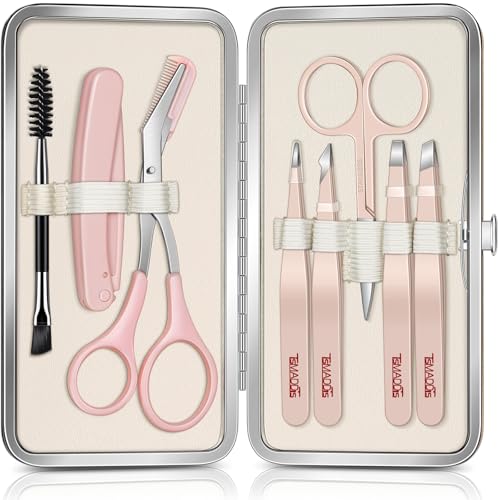
8 in 1 Eyebrow Kit: Our tweezers set comes with 4pcs eyebrow tweezers for women(Pointed, flat, slant&angled tweezers), 1pcs eyebrow trimmer, 1pcs eyebrow scissor, 1pcs eyebrow razor and 1pcs double side eyebrow brush. Essential Hair plucking daily beauty tools for women, perfect for shaping eyebrows, removing fine hairs, and more

Eyebrow Trimmer Kit: Our eyebrow kit comes with 2pcs eyebrow scissors, 4pcs eyebrow tweezers for women(Pointed, flat, slant&angled tweezers), 1pcs eyebrow razor and 1pcs double side eyebrow brush. Essential eyebrow kit and grooming kit for men and women, perfect for shaping eyebrows, removing fine hairs, and more

8 in 1 Eyebrow Kit: Our tweezers set comes with 4pcs eyebrow tweezers for women(Pointed, flat, slant&angled tweezers), 1pcs eyebrow trimmer, 1pcs eyebrow scissor, 1pcs eyebrow razor and 1pcs double side eyebrow brush. Essential Hair plucking daily beauty tools for women, perfect for shaping eyebrows, removing fine hairs, and more
Trim Stray Hairs With Precision
With proper preparation and technique, you’ll isolate and remove stray hairs that extend beyond your brow’s natural boundaries. After your initial sectional trimming, use tweezers to target individual hairs falling outside the desired shape. This precision work benefits aesthetics by creating clean, defined edges that enhance your facial features.
Brush your brows downward to reveal underside strays you might’ve missed during upward trimming. Examine each section carefully under bright lighting, removing only hairs that deviate from your natural contour. Fine-tooth combs raked upward stretch longer hairs, exposing additional stray growth. For best results, small scissors work better than tweezers for removing longer hairs that extend beyond your brow line. Consider using a safety razor with a single blade for those with sensitive skin around the brow area who need gentle precision. Many grooming experts recommend protective guards to prevent accidental cuts while trimming delicate facial hair.
Sweep a makeup brush across your face to eliminate cut debris. Perform a final visual inspection before considering your grooming frequency—typically every two to three weeks maintains excellent results without over-maintenance.

Expertly trim and shape brows. The Brow Shaping Scissors & Brush feature ultra-thin blades that are custom designed to trim brow hair. Brow shaping brush included.

Pack of 2: 2 scissors in 1 set; comprising of 1 curved scissors and 1 rounded scissors. Sharp cutting edges offer an effortless trimming and cutting experience without pulling your hair. Ideal to trim hair on delicate parts like nose, ear, face and eyebrows.

Premium Stainless Steel Construction: Crafted from high-grade stainless steel, these embroidery scissors offer exceptional durability and a polished, corrosion-resistant finish. Built for professionals and hobbyists alike, these sharp scissors ensure long-lasting performance. Whether for stitch cutting or detailed trimming, the scissors sharp quality remains intact even with frequent use.
Verify Symmetry and Balance
After you’ve removed stray hairs and cleaned away debris, you’ll need to assess whether both brows align evenly across your face. Use brow symmetry techniques by stepping back and viewing your face straight-on in the mirror. Compare both brows side-by-side, checking that arch heights, lengths, and thickness match proportionally.
Your balance verification methods should include examining how your brows frame your face according to Golden Ratio principles. If one brow sits higher, use your mapping guidelines to make targeted corrections. Verify symmetry enhances your facial harmony by ensuring both brows maintain equal lift and definition. Consider incorporating personal growth strategies to develop consistency in your grooming routine over time.
Perform these checks frequently throughout your trimming process rather than making final adjustments afterward. This methodical approach prevents over-trimming and maintains ideal balance across your entire brow structure. To minimize skin irritation during the verification process, ensure you’re using proper preparation techniques before assessing your results. Recognize that natural variations in facial features may mean your brows will never be perfectly identical, and that slight asymmetries are normal and acceptable.
Protect Sensitive Eye Areas
Because the eyebrow region sits dangerously close to your eyes and delicate facial skin, you’ll need to establish protective measures before trimming. Keep the trimmer away from your eyes and eyelashes at all times, as proximity to this sensitive area raises risks of irritation, burns, and eye injury.
For sensitive skin, apply talcum powder before use to create a protective barrier. Hold the trimmer at a slight angle to your skin for improved control and reduced nick risks. Never insert the trimmer deeply; limit application to surface trimming only. Ensure the trimmer is fully charged before beginning to maintain consistent blade performance and safety. For facial grooming on sensitive areas, consider using tools with skin-safe blades designed to prevent cuts while maintaining precision. Regular maintenance, such as replacing trimmer heads every 18 months, ensures optimal performance and hygiene.
Use proper eye shields and conservative settings when working near eyebrows. Start with longer blade settings to avoid excessive hair removal. Move the trimmer against your hair grain without applying pressure. Pull your skin taut with one hand while trimming to guarantee a smoother, safer glide.
Avoid Over-Trimming: Common Mistakes
One of the most frequent errors in eyebrow maintenance involves removing too much hair, which can permanently alter your brow’s appearance and structure. Common eyebrow mistakes stem from misjudging how much to trim.
Over trimming signs include choppy, stringy hairs and uneven patches. You’ll notice your brows appear thinner than intended, with a flat, hanging quality. Coarse regrowth texture emerges as follicles attempt to regenerate. Brush your brows upward before trimming to ensure you only remove hairs that extend beyond your natural brow line, and trim in small, gentle sections to maintain the natural curves of your brows.
Avoid trimming throughout the entire length. Instead, target only stray hairs extending beyond your natural brow line. Remove minimal amounts gradually, reassessing frequently. Never attempt to force symmetry by over-compensating between sides. Like razors, eyebrow trimmers benefit from proper blade maintenance to ensure clean cuts without tugging or pulling. Regular cleaning and maintenance of your trimming tools, similar to blade maintenance techniques, will ensure your trimmer works effectively without causing unnecessary damage.
Step back from magnified mirrors periodically. Close-up views distort perspective, encouraging excessive removal. This methodical approach preserves your brow’s natural density and prevents the damaged, sparse appearance resulting from aggressive trimming.
Clean Your Trimmer After Every Use
Maintaining your trimmer’s cleanliness directly supports the careful trimming practices you’ve just learned. Proper trimmer maintenance guarantees peak performance and extends your device’s lifespan.
You should clean your trimmer immediately after each use. Start by brushing accumulated hair from the cutting unit while it’s switched off. For stubborn buildup, use a soft-bristled toothbrush on the blades.
If your trimmer’s washable, rinse the head under cool running water without initially removing it. Then turn the head 1cm counter-clockwise to detach it for thorough cleaning. Shake excess water away and allow it to dry completely. For deeper cleaning, soak the head in a vinegar and water solution to remove stubborn residue and disinfect the blades.
These cleaning techniques prevent hair accumulation that compromises cutting precision. Regular maintenance prevents fungal and bacterial growth that can cause skin irritation. Apply one or two drops of mineral oil to the cutting teeth post-rinse, then briefly activate the trimmer to distribute the lubricant evenly. Store your trimmer in a cool, dry location.

5 in 1 Set: This eyebrow kit contains one eyebrow scissors with comb, one long eyebrow razor, one short eyebrow razor, one spoolie brush and one cleaning brush for all your beautiful eyebrow and eyelash needs!

All-in-One Complete Grooming Kit: This 17-piece professional set is your ultimate solution for precise brow shaping and personal care. It includes 4 types of stainless steel tweezers (Slant, Pointed, Beak, Flat), eyebrow scissors with comb, a curved eyebrow trimmer, an eyebrow razor, nose hair scissors, a nail clipper, and an earpick. One compact facial kit fulfills all your grooming needs .

Dual-function design: This eyebrow trimming scissors comes with a built-in comb,allowing for easy trimming while combing,eliminating complicated steps and making it simple to achieve your ideal brow shape.
What to Do If You Over-Trim
Accidents happen—even with careful technique, you might remove more hair than intended. First, stop trimming immediately and assess the damage by brushing your brows upward with a spoolie. Apply soothing gel if irritation exists from blade contact.
While you wait for regrowth techniques to take effect, employ styling tips to minimize visibility. Use eyebrow pencil to fill sparse sections and apply brow pomade to hold remaining hairs in place. Tinted brow mascara creates volume illusion effectively. For precise application during the regrowth period, consider using a trimmer with protective fins to prevent further irritation.
Accelerate regrowth by massaging the area daily with castor oil and consuming biotin supplements. Maintain proper hydration and protein intake to support hair health. Avoid touching the trimmed area to prevent setbacks. Remember that eyebrows do not grow back thicker after trimming, so resist the urge to over-compensate with aggressive regrowth tactics. The texture and density of your brows depend on factors similar to how surface texture affects physical properties, such as drag that slows movement. Wait four to six weeks before considering professional interventions like microblading or tinting.