To use a trimmer effectively, you’ll start by evaluating your hair’s condition and gathering professional-grade tools like Japanese steel scissors and a carbon comb. Master the neutral grip—index finger in the first groove, middle in the second, ring in the third, thumb on top—for stability. Use wrist motion instead of arm movement to reduce fatigue. Trim against hair growth, starting with longer guard lengths to prevent mistakes. Check your progress regularly and maintain clean blades throughout. Understanding proper technique, maintenance, and troubleshooting will transform your results.
Prepare Your Hair and Gather the Right Equipment
Before you pick up shears, you’ll need to assess your hair’s current condition and gather professional-grade tools designed specifically for cutting. Start by examining your hair dry to evaluate texture, weight, and split ends—this determines your cutting techniques and how much length you’ll remove.
Invest in professional styling shears rather than kitchen or craft scissors, which damage hair. A carbon comb reduces static and maintains control during cutting. Wide-toothed sections help with parting and guide creation. Using sharp scissors made from Japanese steel can help avoid damage and further split ends.
Next, prepare your environment. Set up adequate lighting and mirrors for clear visibility. Position a hand vacuum or broom nearby to manage clippings. Wear a button-down shirt to prevent trimmings from getting caught in clothing. For optimal results, regularly maintain your tools and recognize signs of dullness such as tugging or pulling during cutting, which indicates when replacement or professional sharpening is needed. Regular maintenance prevents blade dulling and ensures your cutting tools perform at their best. Understanding your specific hair types before beginning guarantees you’ll select appropriate cutting techniques for the best results.

【Premium Material 】 ULG haircut scissors are made of 100% 440C Japanese stainless steel, and hand sharpened to be razor sharp. Easy to do a clean cut, hair trimming, or layering. Will not damage or split hair ends.

Ultimate Home Hair Cutting Precision: Features a specialized one-blade micro-serrated design that securely grips every strand, completely eliminating the hair-slippage and uneven lines common with standard razor-edge shears.

Premium Quality Craftsmanship: Crafted from top-tier High-Carbon stainless steel which stay sharp longer than regular steel models, our Rust-Free professional hair scissors boast unrivaled durability and sharpness. With resilient blades and an elegant design, they ensure a superior cutting experience that lasts.
Get the Right Grip for Steady, Even Cuts
Your grip fundamentally determines cutting precision and control, so mastering the proper hand positioning is essential before you begin trimming.
The neutral grip offers foundational stability. Position your index finger on the first groove for precision, rest your middle finger under the second groove, and secure the third groove with your ring finger. Your thumb presses the top surface for stroke efficiency. This grip techniques enables tapering and blending on head sides without requiring arm motion. Avoid fatigue by moving your wrist rather than relying on full arm movements during extended trimming sessions.
For directional adjustments, switch your finger placement based on the area you’re working. Use two fingers gripping one side with your thumb on top for balanced pressure during precise maneuvers. The index finger stabilization method works excellently for front lining—position your index finger on the head, place the trimmer following that finger positioning, then execute a pull-down motion. For sensitive areas like intimate grooming, ensure you use specialized grooming tools designed to avoid skin irritation and maintain control. Electric shavers with floating foil technology provide superior comfort and precision for delicate skin areas. Practice these grip techniques until they become instinctive before trimming live hair.

SpotGlide Blade Technology: Unlike others in the industry, MANSPOT's SpotGlide Blade Technology features a wider 40mm ceramic blade designed to cover more area in fewer passes, reducing friction and irritation in sensitive areas including the groin. Rounded tip guards and a hypoallergenic steel and ceramic blade combination help minimize nicks and discomfort for a clean, comfortable result, no razor burn, no regrets.

【Versatile Trimming Tool】 Made of high-quality stainless steel, this cordless Ear and Nose Hair Trimmer can effectively and comfortably remove unwanted hair from your nose, ears, eyebrows, beard, and face. One-button design is easy to use and suitable for men and women. Let you show the most confident side anytime, anywhere.

【Versatile Trimming Tool】 Made of high-quality stainless steel, this cordless Ear and Nose Hair Trimmer can effectively and comfortably remove unwanted hair from your nose, ears, eyebrows, beard, and face. One-button design is easy to use and suitable for men and women. Let you show the most confident side anytime, anywhere.
Trim Sides, Top, and Edges Step-by-Step
Once you’ve mastered your grip, you’re ready to tackle the three essential trimming zones: sides, top, and edges.
Start by outlining your lawn’s perimeter with quick passes, positioning your mower’s side discharge to blow grass back onto the lawn. Stand on concrete for better visibility during this initial phase. Next, trim the top by going straight across to even out uneven growth, keeping your trimmer head horizontal throughout.
For edge finishing, flip your trimmer to make the string vertical and perpendicular to the ground. Use only the tip of your string to avoid creating trenches, and make multiple light passes on thick growth rather than one deep cut. Consider using precision tools for clean lines to achieve professional-looking results. Maintaining a level head on the trimmer ensures consistent and professional results throughout the edging process. For best results, choose trimmers with whisper-quiet operation that allow you to work without disturbing your surroundings.
Finally, blow grass from the edges side-to-side and push fallen clippings back into the lawn. These trimming techniques guarantee polished, sharp borders all season.
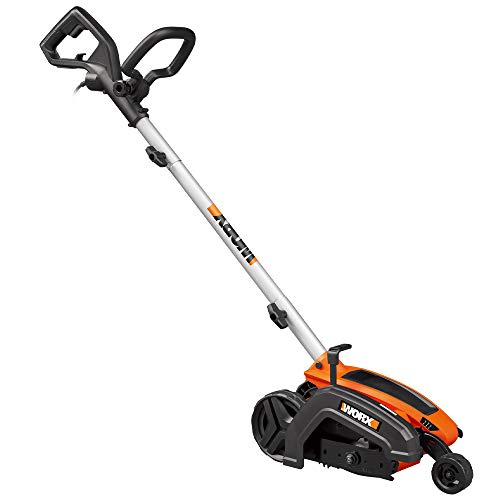
POWER LIKE THE PROS: The 12 Amp motor spins the 7.5” blade fast and deep at 4700 revolutions per minute, giving you professional-looking lines and edges.

Tempered Spring Steel Blade for Precise Edging: The CKLT Edger Lawn Tool features a high-quality serrated spring steel blade, setting it apart from conventional tools. Known for its exceptional strength and flexibility, spring steel resists deformation and maintains its sharpness even under challenging conditions

2 in1 Trimmer Edger with wheeled edge guide - just rotate to convert from trimmer to wheeled edger
Check Alignment and Blend Transitions for a Polished Look
Achieving a polished lawn requires more than proper trimming technique—you’ll need to verify that your mower’s deck and blades are properly aligned. Your alignment techniques should include checking side-to-side deck levelness and front-to-back pitch. Measure blade heights on both sides using a tape measure; they should match perfectly. Adjust lift links as needed until the deck sits level.
For front-to-back pitch, position the front blade 1/8 to 1/4 inch lower than the rear. This angle reduces drag and promotes cleaner cuts. Utilizing a balancing cone provides a stable base for accurate measurement of blade balance during your adjustment process. Your blend techniques involve observing cutting patterns across the entire lawn after adjustments. Look for uneven strips or scalping. Make fine tweaks to bolts and retest until you achieve consistent height throughout. Proper alignment and blending eliminate visible changes between trimmed sections. For body grooming, similar precision matters—devices like the Philips Norelco Body Groomer 7000 use adjustable combs and foil heads to ensure consistent, nick-free results across all trimmed areas. Just as razor burn can result from improper technique with manual tools, inconsistent mower blade alignment can damage grass and create an unpolished appearance.

COMPATIBLE MOWER MODEL: The 5" Deck Gauge Wheels fit for Husqvarna, fit for Craftsman, fit for MTD, fit for AYP, fit for Cub Cadet, fit for John Deere most 42", 46'', 48'', 50", 52'' and 54" Decks. And please check the size before ordering
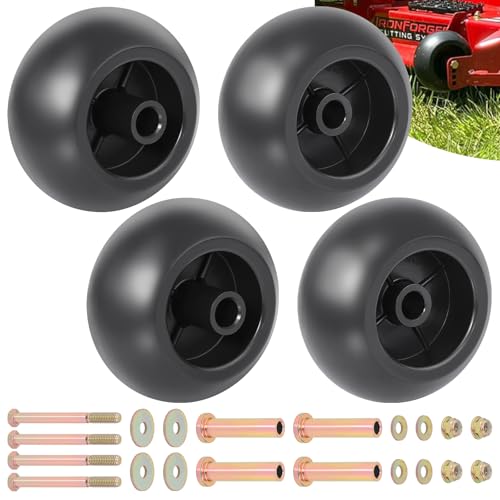
ITEM QUANTITY: Package including 4 deck wheels, 4 bolts, 4 bolt bushings, 8 metal gaskets(2 different style), 4 lock nuts. Bore: 5/8 ", Diameter: 5", Height: 2.67", Hub: 2-1/2 ", Bolt Length: 4.2", Tread: Smooth

Diagnose Common Problems and Clean Your Clippers
Several issues can compromise your trimmer’s performance, but most stem from power problems, overheating, blade deterioration, or mechanical wear that you’ll need to address systematically.
For troubleshooting clippers, start by inspecting your power cord for damage and testing alternate outlets. If you’re using a cordless model, fully charge the battery and replace it if it won’t hold power. Check that your switch is in the on position and reset any overload protection device.
Address overheating by cleaning clogged blades and ensuring your cooling fan isn’t obstructed. Verify your power source matches your trimmer’s voltage requirements. Apply clipper oil before and after use to reduce friction and heat buildup in the motor and blade mechanisms.
Implement maintenance tips by regularly brushing debris from blades, removing jammed hair, and replacing dull blades. Tighten loose screws causing noise or vibration. Lubricate moving parts with provided oil after cleaning to maintain smooth operation and extend your trimmer’s lifespan. For multi-user households, follow proper disinfection procedures between people to ensure hygiene and prevent cross-contamination. Much like how hot water softens hair for shaving, keeping your blades clean ensures optimal cutting performance.

Professional-Grade for High-Speed Commercial Hedge Trimmers: Specifically engineered to meet the demands of professional landscapers, ensuring optimal lubrication and reduced blade wear in heavy-duty, high-speed trimming applications.
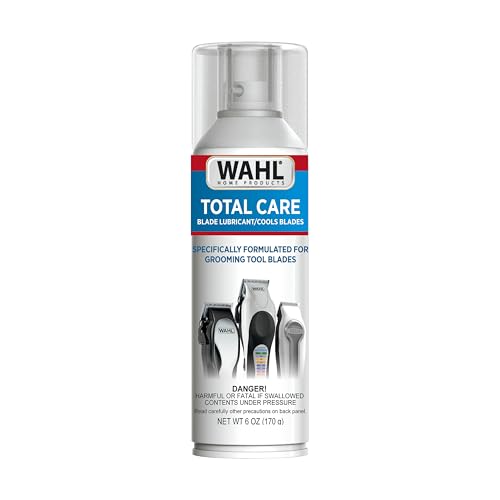
Prolongs Blade Life: Keeps hair clipper and beard trimmer blades lubricated, reducing wear and tear with regular use, extending the lifespan of your clippers and keeping them in top condition.

Rust Prevention – Prevents rust from forming & helps extend the life of the clipper & blades; can also reduce the likelihood of blades becoming dull