You’ll find that the overwhelming majority of Islamic scholars classify complete beard shaving as haram based on authentic hadith evidence and centuries of jurisprudential consensus. The Prophet Muhammad commanded Muslims to grow full beards, and early jurists unanimously rejected shaving as permissible. However, there’s an important distinction: trimming and maintaining your beard at fist-length remains acceptable across all four major schools of Islamic thought. Understanding the nuances between these practices reveals deeper theological principles underlying this obligation.
What Do the Four Schools Say About Beard Shaving?
Because Islamic jurisprudence developed through four major schools of thought, you’ll find nuanced positions on beard maintenance that reflect both scholarly consensus and legitimate disagreement. Hanafi views permit trimming to a fistful length, considering longer beards recommended rather than obligatory. Maliki opinions adopt stricter standards, deeming shaving unlawful without medical necessity and classifying trimming below a fistful as blameworthy. Shafi’i stance represents the most lenient approach, regarding shaving as merely disliked rather than unlawful, though scholars still recommend full beards. Hanbali perspective mandates keeping your beard while permitting trimming to fistful length, treating shorter cuts as impermissible. Despite variations, all four schools condemn trimming below a fistful, and the majority forbid complete shaving. Beard keeping is viewed across these traditions as prudent guidance from Prophetic teachings, reflecting the integration of personal religious conviction with scholarly consensus. You’ll recognize these differences reflect valid scholarly reasoning rather than contradictions. Research on grooming practices shows that body grooming habits vary significantly across cultures and religious traditions, with motivations ranging from hygiene to personal preference. Many practitioners find that switching to safety razors for beard maintenance offers closer shaves with less skin irritation when trimming is permitted.

CLEAN BEARD LINE: Achieve professional barber straight hairline and clean mustache angles at home with our Vertex beard razors. These reusable men razors are made with straight blades to provide low resistance and detailed shaving for your facial hairs & Hairline Straightener.

COMPLETE MEN'S SHAVING KIT: The Gentleman Jon Shaving Kit for Men is a comprehensive set that includes a safety razor, badger hair brush, alum block, shave soap, stainless steel bowl, and five razor blades - everything needed for a luxurious, comfortable and smooth wet shave experience. With its compact design, our product is also a suitable travel companion to those who value traditional shaving, ensuring a neat shave even while on the go.

Get the ultimate grooming experience with the Line-Up Razor, proudly made in Korea.
The Hadith Evidence on Beard Shaving Rules
To understand Islam’s position on beard maintenance, you’ll find compelling guidance in the prophetic traditions that form the foundation of Islamic jurisprudence. Multiple hadith interpretations establish that the Prophet commanded Muslims to grow full beards while trimming moustaches, distinguishing believers from polytheists and Magians. The hadith from Ibn Umar and Zayd ibn Arqam emphasize this distinction through beard symbolism, representing Islamic identity and masculine virtue. Ibn Hibban reports the Prophet trimmed his beard from bottom and sides, establishing permissible maintenance without complete removal. Vitally, no authentic reports document the Prophet or early Imams shaving beards entirely, suggesting such action contradicts Islamic practice. These traditions collectively demonstrate that while grooming remains acceptable, shazing beards entirely violates prophetic commands and scholarly consensus. For those seeking to maintain their beards according to Islamic guidelines, portable travel shavers designed for trimming and grooming can assist in proper beard care during journeys. Proper beard maintenance requires regular oiling of grooming tools to ensure they function effectively and reduce friction during trimming. The sīrah al-mutasharri’ah, or continuous practice of religious individuals maintaining beards from the Prophet’s time to the present day, reinforces the religious significance of this custom and its derivation from divine commandments.
Why Most Scholars Call Shaving Haram?
Multiple converging factors explain why the overwhelming majority of Islamic scholars classify beard shaving as haram rather than merely discouraged. First, you’ll find scholarly objections rooted in authentic hadith evidence that explicitly commands beard preservation. Second, the historical context reveals that early jurists across all four major schools—Hanafi, Maliki, Shafi’i, and Hanbali—unanimously rejected shaving as impermissible. Third, scholars like Ibn Taymiyyah and Ibn Hazm documented that no classical jurist permitted this practice based on reliable narrations. Fourth, the intensity of scholarly rebuke against shavers demonstrates they viewed this as serious disobedience rather than minor discourage. Finally, the consistent transmission of this prohibition from the Prophet through the Sahabah to subsequent generations established binding consensus that elevated shaving’s status from makruh to haram. The beard is regarded as a sign of manhood and represents adherence to the innate nature of man as created by Allah, which further reinforces why scholars treated its removal with such severity across Islamic jurisprudence. Maintaining proper beard hygiene through regular cleaning and maintenance ensures that facial hair remains in accordance with Islamic principles while preserving its natural appearance, and those seeking to groom their beards effectively may consider using electric shavers designed for coarse facial hair to keep the beard neat without removing it entirely.
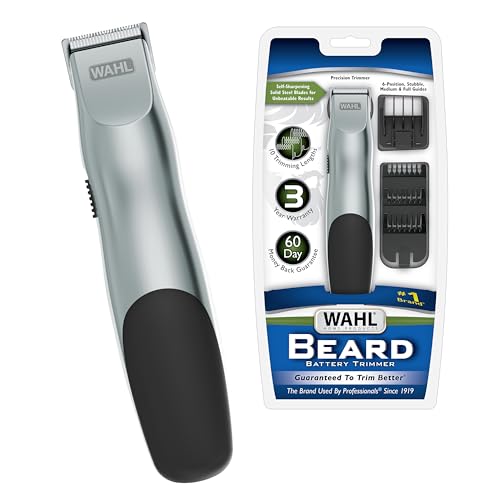
Precision Ground Blades – Our high-carbon precision-ground blades stay sharp longer, use in conjunction with our six-position beard regulator for multiple beard trimming lengths; Our beard guards vary in length from stubble to short and clean, to thick and even

3-in-1 Men's Grooming Kit: This beard trimmer kit comes with 3 heads (beard, sideburns, nose hair) and multiple guard combs ranging from 1mm to 19mm, including ear guides, to effortlessly handle all facial, head, and body hair trimming needs. Everything stores neatly in the included travel pouch, which also contains a cleaning brush, lubricating oil, and a Type-C charging cable.

𝗔𝗹𝗹-𝗶𝗻-𝗢𝗻𝗲 𝗕𝗲𝗮𝗿𝗱 𝗧𝗿𝗶𝗺𝗺𝗲𝗿 𝗳𝗼𝗿 𝗠𝗲𝙣 - Our Electric Beard Trimmer Kit is the ultimate Men’s Grooming Kit, featuring multiple precision heads for beard, mustache, hair, nose, ear, and body. This all-in-one Beard Shaving Set keeps you perfectly groomed at home or on the go
Where Consensus Breaks: Trimming Versus Complete Shaving?
While Islamic scholars overwhelmingly condemn complete beard shaving as haram, they’ve carved out a critical distinction that permits trimming and maintenance. You can safely trim your beard using established trimming techniques—removing excess length from the sides and bottom while preserving overall growth. The Prophet himself maintained his thick beard through grooming rather than elimination.
This consensus recognizes that maintaining a fist-length beard represents acceptable practice. You’re permitted to remove stray hairs, shape the cheeks, and address unkemptness without incurring shaving consequences. For those seeking efficient grooming tools, electric razors for legs and other precision grooming devices are available to assist with careful hair removal. You can also explore subscription grooming services to ensure consistent access to proper trimming equipment. The scholarly distinction hinges on intent and outcome: shaving removes the entire beard entirely, mutilating your appearance and resembling non-believers. Trimming, conversely, preserves the beard’s essential character while allowing practical care. Shaving with the intent to oppose the sunna or imitate non-Muslims is considered unlawful, which underscores the importance of maintaining proper grooming standards. Understanding this critical boundary protects you from sin while maintaining proper grooming standards.

4-DIRECTION FLOATING ULTRA-ADVANCED SHAVING HEAD: The 3D rotary shaver head follows every contour of your face to remain in close contact with the skin for a fast shave that's also gentle on the skin

Multifunctional Shaving Kit for Head to Body: This is a high quality all in one machine that includes 7 trimmer heads, 10 hair combs and a base. Covers all hair cutting tasks, from hair, face, beard, nose, ear, body, pubic area. This is professional men's grooming kit and gifts for him.

Stainless Steel Blades – Our high-carbon precision-ground blades stay sharp longer, use in conjunction with our six-position beard regulator for multiple face trimming lengths; our beard guards vary from stubble to short & clean, to thick & even
How Shia Jurisprudence Differs on Beard Trimming
Shia jurisprudence establishes markedly stricter boundaries around beard modification than the broader Sunni consensus, distinguishing between permissible trimming and prohibited shaving with considerable precision. Within Shia trimming guidelines, you must maintain a visibly recognizable beard length—typically measured by a closed fist. You’re permitted to trim your mustache, shave your cheeks and neck, and even adopt a goatee style. However, you cannot shave your chin beard if conventionally recognized. The Shia beard philosophy roots itself in theological principle: your beard represents an Allah-granted adornment for males, making its preservation incumbent upon you. Trimming prevents dishevelment without constituting mutilation, whereas complete shaving violates divine creation. Modern grooming tools like precision trimming blades can help maintain beard length according to Islamic standards while achieving clean lines. To ensure your tools perform optimally during beard maintenance, regular cleaning and applying clipper oil before grooming sessions will prevent pulling and maintain smooth cutting. This nuanced approach reflects Shia emphasis on maintaining both spiritual obligation and practical hygiene standards simultaneously. Both Shiah and Sunni scholars unite in their agreement that shaving the beard remains unlawful according to Islamic jurisprudence, reinforcing the shared conviction across these traditions.
When Employment Conflicts With Beard Obligations
Because Islamic jurisprudence permits deviation from prohibited actions only under genuine necessity, employment situations that threaten job loss create a recognized exception to the beard obligation. When you face employment challenges requiring beard removal, Islamic scholars acknowledge this as valid grounds for compromise. However, you should exhaust alternative solutions first—exploring specialized equipment like gas masks for hazardous work or emphasizing professional grooming standards that complement facial hair. You’ll find that employer attitudes toward beards vary greatly across industries; some organizations actually view beard maintenance as evidence of ethical dedication. Before you resort to shaving, you should prepare thoroughly for interviews, highlighting qualifications and presentation to minimize focus on your religious practices. Professional barbers often recommend professional grooming tools with adjustable precision for maintaining facial hair according to religious requirements. For sensitive skin areas, consider using body groomers with adjustable guards designed specifically for safe grooming rather than standard razors. Necessity must involve life-threatening situations rather than mere job acquisition pressures, as defined by Islamic legal tradition. This approach often succeeds without sacrificing your faith obligations.

Personalized Cutting and Sculpting: The precision beard trimmer for men has an adjustable dial with 19 settings to get the exact look you want; the included comb attachment raises flattened hairs for clean cutting

Precise & effortless styling: Braun’s All-in-One Trimmer Kit, Series 5, lets you effortlessly trim your beard, hair, ears, nose and body

Rechargeable Beard Trimmer - Groomsman is a rechargeable unit that allows for up to 60 minutes of run time on a single charge and features a contoured ergonomic handle with soft-grip pads as well as a bonus nose trimmer
Contemporary Scholars and the Obligation Question
Having explored the practical accommodations Islamic jurisprudence permits when employment threatens your livelihood, you’ll find that scholars across centuries haven’t reached uniform conclusions about whether beard-keeping constitutes an obligation or a recommended practice. Contemporary views reveal significant scholarly debate. Prominent modern jurists like Yusuf Al-Qaradawi, Sheikh Ali Gomaa, and Malaysia’s Mufti of Federal Territory classify beard-keeping as sunnah rather than obligatory. The MUIS Fatwa Committee interprets prophetic teachings as encouragement rather than binding command. However, this permissive stance doesn’t represent consensus. The majority position, grounded in classical jurisprudence, maintains that shaving contradicts prophetic instruction. Classical scholars across the Hanafi, Maliki, Shafii, and Hanbali schools have articulated consensus on prohibition against any alteration of the beard through shaving, plucking, or trimming. For those seeking practical grooming tools, modern electric shavers like cordless electric shavers offer efficient trimming options for maintaining personal hygiene. It’s worth noting that the perception of beards becoming thicker after shaving is actually an optical illusion caused by blunt tips, not a biological change in hair growth. You should recognize that while contemporary scholars offer flexibility, traditional Islamic scholarship mainly considers beard-keeping obligatory or at minimum strongly discouraged to abandon.
How to Maintain Your Beard Step by Step
Once you’ve committed to keeping your beard in accordance with Islamic teaching, you’ll need to establish an extensive maintenance routine that preserves both its spiritual significance and physical health.
Begin with proper beard hygiene by shampooing one or two times weekly using specialized beard shampoo to remove debris while preserving natural oils. Rinse thoroughly after workouts or perspiration, but avoid daily washing, which strips essential moisture. A consistent hygiene routine applied regularly will yield the best results for your beard’s overall health.
Next, implement consistent oil application immediately after showering. Massage beard oil into both facial hair and underlying skin for ideal hydration and softness. Follow with beard balm to maintain shape and structure. Consider using tools with sharp motors to trim your beard without causing damage to individual hairs. For sensitive facial skin, specialized grooming tools designed for sensitive areas can help prevent irritation while maintaining your beard’s appearance.
Finally, brush daily with soft bristles to distribute oils evenly and thicken your beard. Trim regularly according to Sunnah principles while maintaining appropriate length, ensuring your beard remains groomed and spiritually compliant. Vitamins in beard oil prevent dryness and stiffness while promoting a soft, shiny texture.

【The Ultimate Beard Grooming & Care Kit】Achieve a smooth, shiny, impeccably trimmed and styled beard with XIKEZAN's most complete 10 piece set. Designed for all beard types—long, short, thick, thin, coarse or tangled—this premium grooming set has everything you need for precise trimming and flawless daily care. Packed in a luxury gift box,it includes beard wash,conditioner,sweet orange & sandalwood beard oil,balm,comb,brush,scissors,travel storage bag and e-book.

Cedar & Sandalwood Beard Oils & Balm: Enjoy distinct aromas with our Cedar Beard Oil’s woodsy scent and Sandalwood Beard Oil’s warm fragrance. Our natural Sandalwood Balm styles, hydrates, and nourishes for perfect control and a non-greasy finish. Indulge in ultimate beard care
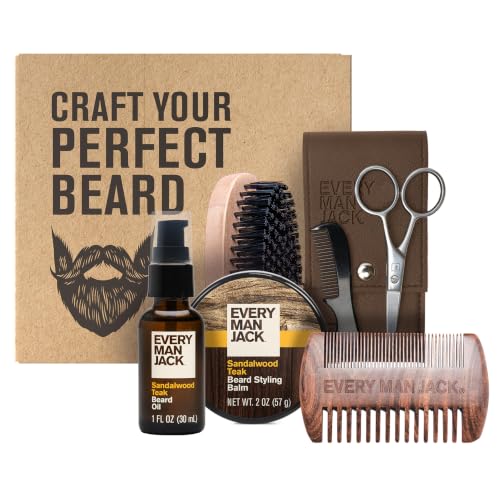
Complete Beard Kit: One box holds five pieces, a beard oil, a beard balm, a vegan beard brush, a beard comb and stainless steel scissors. A full beard maintenance kit for men, for work days and weekends outside