Straight hair’s your easiest choice because its uniform texture gives you clear visibility and requires only controlled, precision techniques to avoid mistakes. You’ll find that wavy, curly, and coily textures demand specialized equipment, stronger motors, and advanced blending skills to prevent frizz and maintain definition. Fine hair needs ceramic blades and low-vibration motors, while thick hair requires high-torque power. Understanding how moisture affects different motor types will help you select the right clipper setup for your specific hair texture.
Straight Hair: The Easiest Texture to Cut
If you’re starting out with clipper work, straight hair‘s uniform texture makes it your best training ground. You’ll notice mistakes immediately since hair lays flat against the scalp, revealing uneven lines that demand controlled clipper techniques. This visibility actually works in your favor—you’ll quickly learn precision.
Master the clipper-over-comb technique with an upward rocking motion to prevent harsh lines. Use fading clippers with lever adjustments for seamless tapering, and blend at 45-degree angles for smooth shifts. For texture control, employ wide blades that generate even force across straight hair. Sectioning with elastics prevents choppy results while dividing into layers handles volume effectively. Your comb serves as a reliable reference point, creating perfectly straight lines. Just as skin-loving ingredients enhance shaving results, quality tools enhance your clipper technique and overall cutting performance. This straightforward hair type accelerates your skill development considerably. Keeping fingers parallel to the floor ensures you maintain consistent angles throughout the cutting process and achieve the square-shaped results that define professional clipper work. Similar to how foil shavers require minimal pressure to allow the tool to do the work effectively, clippers perform best when you let them operate without forcing them against the hair.

Premium Hair Razor Comb for Professional Results - Achieve salon-quality cuts with our premium hair razor comb; designed for precise styling, thinning, and texturizing; outperforms standard razor combs in durability and performance; ideal for both professionals and at-home users

Ultra-Sharp Zero Gap Blades: With our incredibly sharp blades, this trimmer cuts crisp hairlines effortlessly, like a hot knife through butter; It delivers a barber-grade experience, giving a clean and comfortable result every time, whether used at home or in a salon; These super sharp zero gap blades will change your game;

X SOFT SKIN SAFE BLADE — Deep tooth DLC-coated cutting blade designed for precision lineups, beard shaping, and skin fades. Zero-gapped T-blade delivers crisp, clean lines on all hair types while staying gentle on sensitive skin
Wavy Hair: Why It Demands More Skill and Equipment
Wavy hair strips away straight hair’s forgiving simplicity and demands you rethink your entire approach. You’ll need specialized scissors and texturizing tools to manage frizz control effectively while preserving wave definition. Wet cutting lets you visualize the shape before waves form, then you adjust technique as hair dries naturally. Layers are essential—they remove weight that gravity fights against, enhancing volume and definition without excess bulk. You’re working against hydrogen bond responsiveness that makes waves stretch out between wash days, losing tightness. Texturizing and precision layering prevent that weighed-down, undefined appearance. This isn’t curly-hair technique adapted downward; it’s a distinct methodology requiring wavy-specific expertise. Your equipment choices and cutting angles directly impact whether waves clump beautifully or collapse into shapeless frizz. Like choosing the right grooming tool such as one with superior articulation for precision work, selecting proper clippers designed for wavy textures ensures optimal results. A good haircut is vital for wavy hair since poor cuts are easily noticeable, making the difference between defined waves and a disappointing result. Just as electric razors require proper maintenance and care to maintain their effectiveness over time, wavy hair demands consistent attention to cutting technique to preserve wave definition and prevent deterioration between salon visits.

6.5 Inches Professional hair thinning scissors for family use.

High Quality: Youniker hair scissors are made of stainless steel. Our stainless steel textured scissor, You can trim the hair without damaging or splitting it with ease.

Premium Material - Made from 100% Japanese stainless steel hair thinning scissor with precise thinning blades and hand-sharpened thinning edges to evenly trim hair with ease.
Curly Hair: Stronger Motors and Precision Technique
Curly hair’s density demands a fundamental shift in your clipper selection and cutting technique. You’ll need robust motors that maintain smooth operation without snagging or loud grinding—signs of inadequate power or clipper maintenance issues. Professional models like the Pro Lowepro FX handle curly tapers effectively. For curly hair cutting, cordless clippers with strong magnetic motors provide the consistent power needed to work through dense curls without bogging down.
Your cutting techniques must account for curl shrinkage. Wet hair thoroughly before clipping, then start with a #3 guard and work methodically through sectioned areas using straight upward motions. Pull curls at 90 degrees from the scalp to predict dry length—curly hair recoils up to 50%. Regular trims every 3 to 6 weeks help maintain the health and shape of your curls throughout the year.
After initial clipper passes, employ scissor-over-comb blending from back to front, softening guidelines before erasing them completely. Finish with a trimmer for clean hairline definition, which provides precision similar to what foil shavers offer for detailed grooming work. Regular clipper maintenance guarantees consistent results throughout the tapered cut.

Cordless Convenience – Color Pro Cordless is rechargeable and wireless. Cord/Cordless allows you to use the clipper on battery or when it's charging.
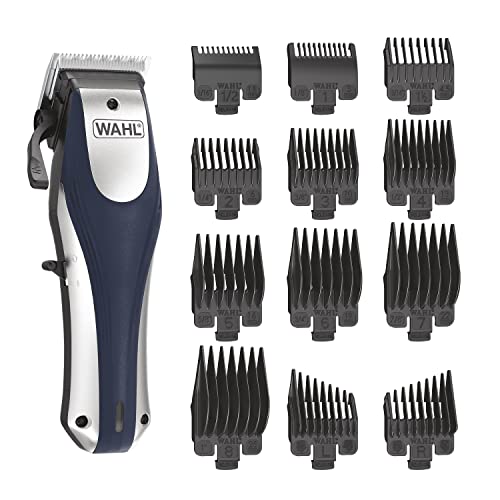
Cordless Operation – The power of a corded hair clipper with the convenience of a cordless; to use simply plug the clipper into charge and unplug when ready to use with cordless convenience

💇♂️Professional Hair Clipper and Trimmer Set-- The large hair clipper can be used to shave both hair and beard, while the small trimmer is equipped with a T-shaped blade for zero-gap trimming of sideburns and edges around the ears. You can easily get the haircut you want at home, just like in a hair barbershop
Coily Hair: The Most Challenging Texture for Clippers
When you’re working with coily hair, you’re tackling the most demanding texture for clipper work—one that’ll test your technical skill and patience. Coily hair’s extreme shrinkage and fragile cortex make clippers risky; you’ll struggle to predict final length and risk breakage at coil bend points. The multiple growth directions compound clipper challenges, creating uneven results. Instead of clippers, you’ll achieve better outcomes using cutting techniques like twist cutting on dry hair, which preserves coil integrity. If you must use clippers, work on completely dry strands to assess true shrinkage and texture. Consider using tools like an extendable handle clipper to reach difficult areas safely and maintain control throughout the process. Prioritize moisture retention afterward through deep conditioning, since clipper work stresses coily hair further and regular conditioning is essential to preserve moisture and promote hair health. Understanding how genetics and hormone levels influence hair texture can help you better anticipate how your coily hair will respond to different cutting methods. Your best strategy? Reserve clippers for fades only, never bulk removal on coily textures.
Fine vs. Thick Hair: Which Clippers Cut Better
Fine hair demands ceramic blades with closer spacing and low-vibration motors that prevent pulling. You’ll want precision adjustable lengths via levers or combs, enabling sharp cutting angles without scalp irritation. Your cutting techniques should emphasize gentle passes rather than forcing the clipper through strands. Lightweight designs enhance comfort during extended cutting sessions and reduce hand fatigue. Using single sharp blades instead of multi-blade systems can further reduce skin irritation and tugging on delicate strands. Conservative approaches work best with fine hair, as rushing through cuts increases the risk of visible mistakes that are harder to correct.
Coarse hair requires high-torque motors (7200+ RPM) with stainless steel or titanium-coated blades that handle multiple strands simultaneously. Clipper features like taper blades with beveled shapes aid your scooping motion during fades. You’ll need 5,000-7,000 motor strokes minimum to avoid multiple passes, reducing client discomfort. Expect hotter blades—build in cooling breaks to maintain blade sharpness and performance throughout your session. Blending techniques such as using the taper lever or clipper-over-comb methods help create seamless transitions between different guard lengths on coarse hair.

The upgraded version improves compatibility. Package includes: 3PCS Ceramic Stagger Tooth Blades

Diamond-Like Carbon Blades for Superior Sharpness & Smoothness – Engineered for barber-level results, the VGRPRO professional hair clippers equipped the DLC blades, provide ultra-sharp, ultra-smooth hair cutting. This clippers can handles full haircuts, and tidying sideburns or necklines, while the zero-gapped precision trimmer (0.1MM) excels at beard, eyebrow and manscaping trimming.

Hair Clipper:Heavy-duty gear for proper powerful cut, with stable and steady control. The R shaped rounded edge design prevents from accidentally hurting skin.
Pick the Right Motor for Your Hair
Your blade choice matters less than the motor driving it. Different motor types deliver distinct advantages depending on your hair texture.
If you’re cutting fine hair, magnetic motors offer reliable cutting efficiency with smooth operation and minimal maintenance needs. For thick hair, pivot motors provide twice the power with whisper-quiet noise levels, while rotary motors balance high speed and torque for versatility across all hair types.
Vector motors adapt in real time to hair resistance, maintaining consistent cutting efficiency throughout your session. Brushless motors reduce friction, operating more smoothly with less noise than traditional designs. The DLC hybrid taper/fade blade found in premium clippers enhances the motor’s ability to deliver zero-gap precision regardless of motor type. For those with irritation-prone skin, selecting a motor paired with quality blade design becomes even more critical to minimize discomfort during use. After each use, maintain your clippers by disinfecting blades with 70% isopropyl alcohol and applying clipper oil to ensure optimal performance and hygiene.
Consider your primary clientele. Fine-haired clients benefit from magnetic or brushless options. Thick-haired clients demand pivot or rotary motors. Your cutting efficiency improves dramatically when motor power matches hair texture, while maintenance needs remain minimal across modern designs.
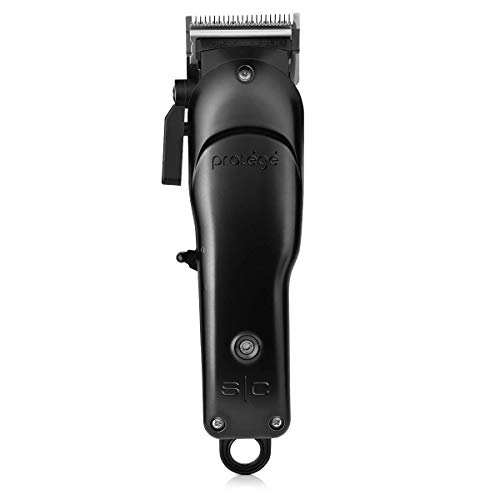
SUPERCHARGED ROTARY MOTOR runs at 7,000 rpms and powerful enough to cut through any hair type in a single pass

Brushless Motor 10000 RPM: Professional cordless hair clipper powered by an external rotor brushless motor. Delivers 10000 RPM cutting speed with low noise under 72dB. Smooth cutting with no hair pulling. Ideal for men and barbers.

Precision Fading: Corded professional hair clippers engineered for on-scalp tapering and fading, ideal for clipper over comb work on all hair types
How Moisture Affects Different Clipper Motors
Because moisture fundamentally alters how clippers perform, understanding motor behavior in wet conditions is essential for maintaining cutting quality and equipment longevity.
You’ll find that different motors handle moisture effects distinctly. Pivot motors excel with wet hair due to high torque and low friction heat generation, making them your best choice for damp conditions. Magnetic motors, however, struggle greatly—they’re designed for dry hair and lack the torque to handle wet load without stalling or overheating.
Rotary motors offer versatility, delivering both speed and torque for wet or dry use. If you’re cutting wet hair regularly, prioritize brushless designs that resist heat buildup in humid environments. Regular application of white mineral oil helps maintain blade performance and prevents moisture-related corrosion. For travel grooming or shower use, consider compact, shower-friendly models that combine portability with water resistance. Additionally, look for IPX7 waterproof ratings to protect against corrosion and motor failure from moisture ingress. Manufacturer guidelines emphasize the importance of keeping clippers dry to prevent long-term damage to internal components and maintain optimal performance.