
You’ll master professional hair cutting by understanding four essential tools. Clippers with rotary or magnetic motors handle bulk removal and fades efficiently. Trimmers deliver precise edging with narrow T-blades for detailed work. Shears provide finishing touches with convex blades for ultra-sharp cuts. Razors offer closest skin-level results for clean sculpting. Pair these with color-coded guards, quality combs, and proper maintenance routines to elevate your craft. Understanding each tool’s specific strengths will transform your cutting technique.
Building Your First Barber Kit: Where to Start
Whether you’re starting your barbering career or expanding your toolkit, you’ll need to prioritize essential accessories and shears selection that deliver professional results without breaking your budget.
Begin with quality clippers and trimmers, which form your foundation for most cuts. Invest in reputable brands like Wahl or Andis at budget-friendly prices rather than premium models initially. Your shears selection should include versatile all-purpose shears for general cutting and thinning shears for texture work. Different motor types in clippers, such as rotary motors for consistent power and pivot motors for torque on thick hair, will affect cutting performance and your overall investment.
Add cutting combs, fade brushes, and clipper combs for sectioning and blending precision. For professional travel or mobile barbering, consider compact cordless options like the Panasonic ER-GB42 which offers impressive runtime and portability. Stock essential accessories including shaving gel, Barbicide disinfectant, clipper oil, and neck strips for hygiene and professionalism. Remember that disinfectant sprays like Clippercide should be used to clean clippers after each use to maintain proper sanitation standards.
Budget under $500 for starter kits containing these core tools. Prioritize barber chairs and stations afterward, ensuring your equipment supports efficient, sanitary service delivery.
Professional Hair Clippers: The Power Behind Every Cut
Once you’ve assembled your starter kit with quality clippers and trimmers, you’ll want to understand what separates professional-grade models from basic alternatives. Clipper technology relies on three primary motor types: rotary motors deliver superior durability for thick hair, magnetic motors provide lighter, quieter precision work, and digital brushless motors offer advanced speed with extended durability. Motor efficiency directly impacts your cutting performance and client satisfaction. High-speed rotary motors at 7200 SPM effortlessly cut dense hair without snagging, while super-torque motors maintain powerful performance throughout extended sessions. Professional barbers often choose clippers with flexible pivoting blades for superior comfort and close shaving results during extended use. For detailed grooming solutions, many professionals also integrate detachable beard trimmers into their toolkit for versatility across different styling needs. Titanium-coated DLC blades and ceramic options enhance your clipper’s capabilities, staying cooler during long workdays. Regular blade maintenance through daily oiling prevents rust and ensures consistent sharpness for optimal results. Zero-gap adjustment capability enables clean fades and sharp line-ups, essential for professional results. These technological advances transform your efficiency and precision greatly.

Hair Clipper:Heavy-duty gear for proper powerful cut, with stable and steady control. The R shaped rounded edge design prevents from accidentally hurting skin.

Multipurpose Trimmer - Perfect for facial hair detailing with the detail & rotary heads; great for any area needing light hair removal such as nose, ear, brow, sideburn, toes, & touch-ups on the neckline
Clippers, Trimmers, and Shavers: Know the Difference
Understanding the distinctions between clippers, trimmers, and shavers will dramatically improve your barbering precision and efficiency. You’ll find that clippers excel at bulk removal through wider blades and high-speed motors reaching 7200 SPM, making them ideal for fades. Trimmers, conversely, employ narrow T-blades for detailed edging and line-ups, offering superior control for intricate designs. You should master trimmer techniques by adjusting interchangeable levers to customize cutting depth accurately. Top trimmers like the Bevel Pro feature magnetic guards and LED displays for enhanced precision when creating detailed designs.
Shavers deliver the closest skin-level cuts for clean finishes and facial sculpting. While clipper maintenance guarantees consistent performance through regular blade cleaning and motor care, each tool serves distinct purposes. To maintain optimal clipper performance, you should clean clippers after every 2-3 uses to prevent blade dulling and ensure sharp, properly aligned blades. Professional barbers often choose cordless clippers for their convenience and flexibility during extended grooming sessions. You’ll achieve professional results by selecting the appropriate instrument—clippers for foundation work, trimmers for detail, and shavers for definition.

Cordless Convenience – Color Pro Cordless is rechargeable and wireless. Cord/Cordless allows you to use the clipper on battery or when it's charging.

💇♂️Professional Hair Clipper and Trimmer Set-- The large hair clipper can be used to shave both hair and beard, while the small trimmer is equipped with a T-shaped blade for zero-gap trimming of sideburns and edges around the ears. You can easily get the haircut you want at home, just like in a hair barbershop
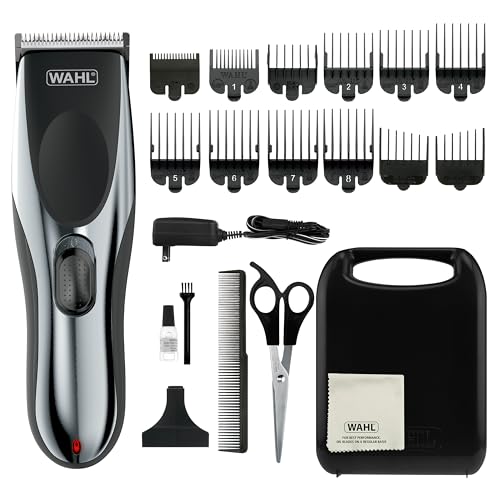
Long Run Time - These clippers feature convenient cord/cordless use options with 60 minutes of cordless run time. Long-lasting easy-to-clean stainless-steel precision blades enable no-snag cutting.
Shears and Razors for Finishing Details
Precision shears and razors represent the final frontier of barbering craftsmanship, where you’ll shift from foundation work to camera-ready finishes. You’ll select from multiple shear types based on blade design: convex blades deliver ultra-sharp cuts for slide and point work, while beveled edges provide durability for repeated detailing. Detail shears at 5.5″ excel at texturizing short hair with lightweight control, whereas longer options handle fringe and beard architecture.
Your razor techniques employ hollow-ground convex designs that minimize hair shaft damage while creating softer, natural-looking edges. Titanium coating enhances sharpness retention during finishing touches on textured hairlines. Curved variants aid angled cuts for seamless transitions. For professional detailing work like neckline shaping and beard contouring, many barbers rely on precision beard trimmers with adjustable settings to achieve clean, defined lines. The high-speed magnetic motor found in professional-grade trimmers like the Andis T-Outliner delivers the consistent power needed for precise line work throughout extended grooming sessions. Combined with ergonomic offset handles and swivel thumb designs, these tools reduce wrist strain while maintaining the precision control necessary for professional results. German stainless steel construction, like that found in professional-grade shears manufactured in Solingen, ensures engineered durability that extends the lifespan of your cutting tools through meticulously tested performance standards.

【Premium Material 】 ULG haircut scissors are made of 100% 440C Japanese stainless steel, and hand sharpened to be razor sharp. Easy to do a clean cut, hair trimming, or layering. Will not damage or split hair ends.

[PREMIUM STAINLESS STEEL] - Our Hair scissors professional are meticulously crafted from high-quality stainless steel, ensuring exceptional durability and resilience. Engineered for daily use, our shears for hair cutting stand up to the demands of professional hairstyling, making them a reliable and long-lasting addition to your kit.

High Quality: Youniker hair scissors are made of stainless steel. Our stainless steel textured scissor, You can trim the hair without damaging or splitting it with ease.
Attachment Combs and Guards: Control Your Cutting Length
As you’ve mastered the precision of shears and razors, clipper guards become your next essential tool for achieving consistent, controlled lengths throughout the cut. These plastic or metal combs snap securely onto clipper blades, maintaining uniform distance from the scalp while you work.
Color-coded numbering systems simplify clipper selection during your service. Lower numbers like #1 and #2 deliver short buzz cuts at 1/8 and 1/4 inches respectively, while higher guard lengths—#6 and #8—provide longer cuts up to one inch. Understanding guard lengths enables you to create seamless shifts between different sections. Brands may have slight variations in guard measurements, so always confirm the exact length with your specific clipper model. For style-specific recommendations, refer to standard sizes like #3 for crew cuts or #4-5 for longer tapered styles.
Before cutting, align each guard with your blade and push until it clicks firmly into place. Always verify security to guarantee uniformity. Different blade types like taper blades are compatible with specific guard systems for optimal performance. Use clean clippers for ideal performance, and employ the taper lever to adjust lengths by 1/16 inch increments when needed.

14 Piece Kit: Includes hair clipper guards from 1/2 (1/16") all the way up to 8 (1")

High Quality: Constructed from robust ABS material. Flexible and sturdy like the original.

Universal Compatibility: Designed to fit a wide range of Wahl and Surker full-size hair clippers with blade sizes of 1.5" x 1.75" (compatible with blade widths ranging from 1.62" to 1.75"). Note: Not compatible with Wahl Peanut Trimmer
Combs, Clips, and Brushes: The Small Tools That Matter
While clipper guards establish your baseline lengths, combs, clips, and brushes refine those foundations into polished, professional results. Your comb selection directly impacts cutting precision and client comfort. Cutting combs feature fine teeth for accurate sectioning, while blending and taper combs combine wide and narrow teeth for seamless shifts. Barber combs‘ tapered design executes clean lines and fades effectively. Tail combs’ thin handles facilitate detailed parting and foil placement during color work.
Brush types serve equally critical functions. Wide-tooth brushes detangle thick hair without pulling, while vent brushes accelerate drying through blow-dryer airflow. Thinning brushes provide gentle scalp massage during product distribution. Professional brushes incorporate anti-static properties reducing frizz. Heat-resistant and chemical-resistant materials guarantee durability across all applications, protecting both tools and hair during every service. Just as sensitive skin requires gentle tools like single blade razors in grooming, barber tools must be selected with client comfort in mind. For optimal beard grooming results, comb your beard against growth direction to align hairs before trimming, similar to how barbers prepare hair for precise cutting. Investing in professional-grade brushes ensures consistent performance throughout the workday as barbers use them frequently in salon settings.
Cordless or Corded: Which Powers Your Shop?
Cordless convenience offers advanced brushless motors delivering 6000-7000 RPM with runtimes up to 4 hours, eliminating cord clutter in busy shops. LED battery indicators prevent mid-cut power loss, while quiet motors under 70 decibels create pleasant environments. Models like the StyleCraft Saber II provide titanium blades and 3-hour batteries for fade work. Professional barbers widely favor cordless options like the Wahl Professional 5 Star Senior, which can handle around 50,000 total haircuts throughout its lifespan. These cordless trimmers offer similar versatility to grooming tools that handle multiple trimming attachments, allowing barbers to switch between different cutting tasks seamlessly.
Corded reliability maintains constant 7200 SPM performance throughout peak hours without recharging interruptions. The Andis Master Black Edition delivers consistent power for thick, coarse hair using extra-wide T-blades. Proper technique with corded clippers, such as brushing from ends to roots, helps distribute power evenly across the hair for optimal cutting results.
Consider hybrid options like the Andis Senior, combining 80+ minute cordless runtime with corded backup, giving you flexibility for any professional scenario.
Wahl, Andis, and BaBylissPro: Brands Worth Your Money
You’ve settled on whether cordless or corded fits your shop’s rhythm—now you’ll want to narrow down which manufacturer delivers the performance you need. Three brands dominate professional barbering: Wahl specializes in precision fading with their F32 FADEOUT blade technology, making them ideal for seamless skin fades. Andis offers reliability through their Master Black Edition’s 7200 SPM rotary motor and the ReVite’s balanced pro-level power. BaBylissPro distinguishes itself with high-torque digital innovation and luxury positioning through their GoldFX+ line. All three brands maintain consistent performance across different hair types, ensuring your clippers perform reliably whether you’re working with coarse, fine, or textured hair. Your brand comparison hinges on your specific needs—whether you’re prioritizing fade expertise, raw cutting power, or cordless convenience with advanced clipper technologies. Each manufacturer excels within their specialty, ensuring your investment aligns with your barbershop’s operational demands.

Color Coded Guide Combs – Finding and remembering everyone’s favorite hair length is easier than ever. Corresponding the correct comb to the right cutting length is simple with our easy to see attachment guards

PRO TESTED, CREATED FOR ALL - Our Novah barber kit has been tested in some of the best barbershops around the world to do what they do best. Our barber clippers professional sets are being used worldwide to give zero gap cuts to the men who walk the walk. We have brought our most trusted professional cordless hair clippers to now be available to all

Heavy Duty Motor – Our ultra-power heavy duty hair trimming system easily cuts the thickest hair with 35 percent more power than standard Wahl electromagnetic motor clippers, This results in a very strong audible hum, but is completely normal to its operation. Don’t settle for a weak clipper.
Keep Your Tools Sharp: Essential Maintenance Steps
Just as the right clipper brand sets your shop apart, proper maintenance guarantees those tools perform at their peak for years to come. You’ll extend blade longevity by establishing consistent cleaning frequency—disinfect after each client, then perform weekly deep cleanings where you disassemble and soak blades in professional solution. Apply 1-3 drops of clipper oil to blades after every use, running them briefly to distribute lubricant evenly. For optimal sanitation between clients, spray 70% isopropyl alcohol directly onto blade teeth and undersides until visibly wet, then allow approximately 1 minute of contact time before air-drying. Following CDC guidelines for disinfection contact time ensures you meet professional hygiene standards. Inspect blades monthly for dullness, misalignment, or oxidation. You can sharpen dull blades with a honing stone or replace them at $25-50 every 6-12 months depending on usage intensity. Regular maintenance documented through a management system ensures you stay compliant with health regulations and keep organized records of all cleaning procedures. This disciplined approach prevents overheating, breakage, and costly replacements while maintaining cutting precision.
Budget Barber Kits Under $500, $1,000, and Beyond
Three distinct investment tiers define barber startup costs, each offering progressively advanced equipment that scales with your ambitions and clientele demands. You’ll find entry-level kits under $500 featuring cordless clippers, trimmers, professional shears, and budget friendly accessories like capes and combs. Mid-tier options reaching $1,000 expand your arsenal with foil shavers, straight razors, hair dryers, and essential care items including disinfectants and neck strips. Beyond $1,000, you’re investing in premium brands like Caliber Pro clippers, Feather Plier straight razors, and ergonomic shears designed for maximum precision. Each tier addresses specific operational needs—beginner kits emphasize core functionality, intermediate sets introduce specialty tools, while professional-grade equipment supports advanced techniques and enhanced client experiences. Adjustable blade clippers offer the control necessary to execute precise fades and detailed beard work across all investment tiers. For barbers who travel between locations or work mobile services, travel electric razors provide portable grooming solutions that maintain professional standards without requiring full stationary setups. Precision trimming tools with ergonomic handles ensure comfort during extended use and reduce fatigue for barbers working throughout the day.