You’ll start by evaluating your scalp’s health and hydrating it thoroughly before trimming with electric clippers. Select a razor suited to your skin sensitivity—safety razors offer close shaves with minimal irritation. Apply shaving cream evenly, let it sit briefly for hair softening, then shave in sections using light strokes with the grain. Rinse with cool water, pat dry gently, and apply alcohol-free witch hazel and moisturizer to prevent irritation. Don’t forget SPF 30+ protection on your newly shaved scalp. This foundation guarantees smooth results, though mastering each step’s nuances will elevate your technique considerably.
Assess Your Scalp and Prepare for Shaving
Before you pick up a razor, you’ll need to evaluate your scalp’s current condition and establish a preparation routine that supports healthy shaving. Start with a scalp assessment using magnification to examine hair density, pore size, and overall scalp health. Perform porosity testing to determine your scalp’s moisture retention capacity, which directly impacts shaving readiness. Professional scalp camera analysis can magnify your scalp at 600% magnification to provide detailed insights into your specific scalp condition.
Consult with a professional about existing concerns like itching, dryness, or flaking. Research spas offering scalp-specific treatments and arrive early to complete intake forms. Hydrate thoroughly by drinking ample water beforehand, then steam your scalp for 2-3 minutes to prepare it for exfoliation. Apply a hot towel infused with essential oils to enhance absorption and create favorable conditions for a smooth shave. After steaming, disinfect your tools by applying 70% isopropyl alcohol to your razor or clipper blades to eliminate bacteria before contact with your skin. For optimal results, use a small brush to gently remove any loose debris from your scalp before shaving.
Select the Right Razor for Head Shaving
Choosing the right razor is critical because it directly impacts shave quality, skin irritation, and your overall grooming experience. You’ll find three main razor types suited for head shaving: manual cartridge razors, safety razors, and electric head shavers.
Manual cartridge razors like the Gillette Mach3 offer affordability and smooth results, though replacement costs accumulate. Safety razors such as the Leaf Razor provide closer shaves with exceptional blade quality and minimal irritation. Electric shavers like the Remington RX5 deliver convenience with pivoting blades that contour your scalp effectively. For those seeking compact and portable options, electric beard trimmers like the Panasonic ER-GB42 offer whisper-quiet operation and precise cutting capabilities suitable for head grooming. Premium electric razors like the Braun Series 9 Pro Plus excel at delivering the closest shave with superior cutting power and sharper blades designed to minimize rapid regrowth.
Consider your skin sensitivity, shaving frequency, and budget. If you prioritize closeness, the HeadBlade Moto’s dual-axis suspension excels. For sensitive skin, the OneBlade Element reduces ingrown hairs. A pivoting head is particularly helpful for adapting to head contours and improving consistency in shaving. Evaluate blade quality and ergonomics to match your specific needs.

Sharp men’s electric shaver blades: Panasonic Arc 5 electric shavers for men with five ultra-sharp precision honed 30° Nanotech blades and ultra-thin Arc foil follow facial contours for a quick, close and comfortable shave; charging time : 1 hour

FAST, SMOOTH HEAD SHAVE IN MINUTES: Shave your entire head in under 2 minutes with 5 Dual Track rotary blades designed for maximum coverage and fewer passes. Get a fast, even, barbershop-smooth result at home.

The electric shaver head has a simple and elegant appearance.
Trim Your Hair Before Wet Shaving
Electric clippers or trimmers should be your first tool when you’re preparing to shave your head, as they’ll establish a smooth, manageable base that your razor can work with effectively. Choose clipper types suited to your hair length—powerful models work best for longer hair, while mini clippers excel at quick reductions. Popular options like Wahl balding clippers are trusted by professional barbers for their durability and close-cutting capability. For precision edging and detailing after your initial trim, professional edge trimmers like the Wahl Detailer or Andis T Outliner can help refine your lines and create clean definition around your hairline.
Begin by trimming to the shortest manageable length, working in sections: sides first, then back and top. Use sweeping motions following your head’s contours, moving downward with hair growth. For sides, keep clippers close to your scalp and change direction against the grain if needed.
On your back, work upward toward the crown using touch to verify evenness. These trimming techniques create an ideal foundation, allowing your wet shave to deliver superior results without unnecessary passes. Ensure a well-lit area for better visibility when assessing your progress during the trimming process.

Cordless Convenience – Color Pro Cordless is rechargeable and wireless. Cord/Cordless allows you to use the clipper on battery or when it's charging.

CORDLESS and CORDED Hair trimmer can be with cord or cordless which is super convenient for self cutting. Universal charging.One full charge Last up to 200 minutes of use.When the power of the hair clipper is used up.This hair trimmer supports plug and play.When charging. The five indicators light up in the form of running lights from bottom to top. When the five indicators become normally on.the power is full. At this time.The charging wire can be pulled out.

💇♂️Professional Hair Clipper and Trimmer Set-- The large hair clipper can be used to shave both hair and beard, while the small trimmer is equipped with a T-shaped blade for zero-gap trimming of sideburns and edges around the ears. You can easily get the haircut you want at home, just like in a hair barbershop
Apply Shaving Cream and Let It Sit
With your hair trimmed to a manageable base, you’re ready to prepare your scalp for the razor. Apply shaving cream using either direct hand spreading or a damp brush lathering technique. Work the product across your entire scalp with circular motions, guaranteeing even coverage from your hairline to the back of your head. Add small amounts of water to achieve ideal lather consistency—a rich, creamy texture that provides superior lubrication. Use two-pump spray intervals to build your lather to the desired thickness. For electric razors, opt for thin, clear gels rather than thick foaming products to prevent clogging and ensure compatibility with your device. Allow the cream to sit briefly on your skin, enabling proper product absorption into your pores and softening remaining facial hair. Proper lathering ensures smoother glide and reduces irritation during the shaving process. This waiting period guarantees your scalp receives maximum protection and conditioning before you begin shaving. Using controlled strokes with light pressure will help you achieve an even, irritation-free shave across all areas of your head.

Aveeno Therapeutic Shave Gel: Sensitive skin shaving cream formulated with oat and vitamin E; soothes skin and provides a close, smooth shave with less irritation; 7 oz

REFRESH AND REVIVE: Packed with curated ingredients including honey and bee pollen to satisfy the most stringent of skincare needs, our shave cream boasts a light, fresh, fragrance and an even lighter, yet effective feel. It ensures your razor glides effortlessly and evenly while leaving nothing but touchably soft and moisturized skin behind.
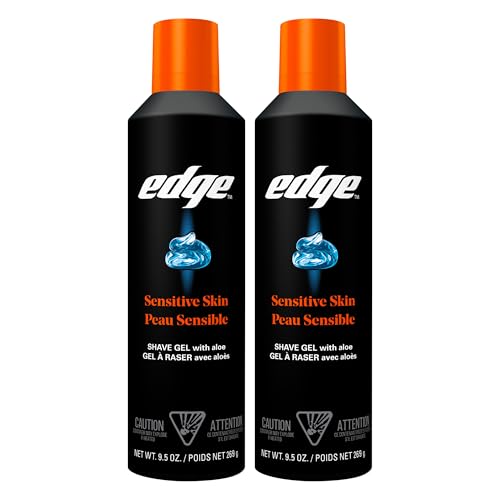
SENSITIVE SKIN PROTECTION: With Edge sensitive skin shaving cream for men, enjoy protection from nicks and cuts thanks to its effective formulation
Shave Your Head in Sections With Proper Technique
Now that your scalp’s properly prepped with lather, you’ll divide your head into manageable sections to guarantee even coverage and minimize the risk of missed spots or nicks. Begin at the top and work downward systematically, progressing from front to back on each side. Your sectional approach assures organized coverage and allows concentrated focus on one area before advancing.
Start with the with-the-grain pass using light strokes and minimal pressure. The razor does the work—don’t force it. Rinse your blade frequently to maintain sharpness and remove hair buildup. Warm water is ideal for rinsing to keep your scalp soft and comfortable throughout the process. After completing initial sections, check for missed spots by running your hands over the scalp. Save thicker areas like the back of your head for last, stretching skin taut for better blade glide. Reapply cream as needed for targeted touch-ups. For a closer shave, you can optionally perform a second pass against the grain after completing your initial pass with the grain. Fine-tuning tricky areas like behind your ears by feeling for stubble ensures you catch any remaining hair in hard-to-reach spots.
Rinse, Protect, and Moisturize Your Shaved Scalp
Once you’ve completed your final pass, splash your scalp with cool water to close the pores and remove lingering shaving cream, hair residue, and soap buildup. Pat your scalp dry gently with a soft towel—avoid rubbing, which irritates freshly shaved skin.
Your aftercare routines begin immediately. Apply alcohol-free witch hazel or pure aloe vera to minimize redness and inflammation. These product recommendations calm sensitive skin without additional drying. Gentle technique and proper aftercare are essential, as aggressive pressure during shaving can push skin tissue into blade perforations and cause razor burn irritation. For best results, use salicylic acid pads weekly to keep pores clear and prevent ingrown hairs from developing. Just as with eyebrow grooming, keeping skin taut during the shaving process helps prevent nicks and uneven results.
Next, massage a lightweight mattifying moisturizer across your scalp. This locks in hydration while controlling excess shine throughout the day. Finally, apply SPF 30 or higher to protect vulnerable scalp tissue from UV damage.
Consistent post-shave care prevents razor burn, ingrown hairs, and flaking while maintaining a smooth, healthy appearance.