You’ll get superior results by matching your razor to your needs. Choose a closed comb if you’re new to wet shaving, have sensitive skin, or shave daily—it’s forgiving and minimizes irritation. Pick an open comb if you’ve got thick, coarse hair and shave infrequently; it delivers closer shaves with fewer passes. Your skill level matters too. Closed combs demand less precision, while open combs require controlled technique. Understanding these distinctions will help you pick your ideal razor.
How Open Comb and Closed Comb Razors Work
While both open comb and closed comb safety razors accomplish the same basic task—removing facial hair efficiently—they achieve this through fundamentally different mechanical designs.
With an open comb razor, you’re relying on the shaving mechanism‘s exposed teeth to guide longer hairs directly into the blade. The gaps between teeth allow lather and debris to flow freely, preventing clogging during your passes. You’ll need to manually stretch your skin to optimize results. To further protect your skin, consider exfoliating before shaving to remove dead skin cells and prevent ingrown hairs.
Conversely, a closed comb razor features a solid safety bar that automatically tightens and flattens your skin before blade contact. This hair guidance system positions facial hair at a consistent angle, delivering a milder, more controlled shave. The bar’s solid structure traps lather, requiring more frequent rinsing between passes. Closed comb razors are particularly effective at reducing razor burn and skin irritation compared to multi-blade systems. Despite their different designs, both types can deliver a close shave, allowing users to select based on personal preference rather than shaving effectiveness.
Aggressiveness: Why It Matters for Your Shave
Now that you understand how open comb and closed comb razors function mechanically, you’ll want to grasp how aggressiveness—the degree of blade exposure—shapes your actual shaving experience. Aggressiveness directly impacts shaving efficiency and results. Higher blade exposure cuts longer, thicker hair more effectively, reducing passes needed for coarse beards. Conversely, lower exposure provides smoother, more consistent contact with less irritation risk.
Your choice hinges on beard characteristics. Open comb razors suit thick, fast-growing hair but require practiced technique. Closed comb designs forgive beginner mistakes while protecting sensitive skin. However, aggressive designs accelerate blade dulling—open combs last roughly two uses versus five to seven for closed combs. To extend the lifespan of your razor blades, regular maintenance through proper blade sharpening techniques can help restore edge performance. For travelers and those on the go, portable grooming options can complement your safety razor routine for convenience. Closed comb safety razors are generally considered the more popular option among shavers of all experience levels. Balancing aggressiveness with your skill level and beard type guarantees ideal results while minimizing injury potential.
Which Gives You a Closer Shave: Open or Closed Comb?
Because open comb razors expose more blade surface to your facial hair, they’ll consistently deliver a closer shave than their closed comb counterparts. The enhanced blade exposure positions your whiskers directly against the cutting edge, maximizing shave precision on the first pass.
With an open comb design, you’ll need fewer passes to achieve closeness comparable to straight razors. This efficiency proves especially valuable when tackling coarser or longer stubble beyond two days’ growth. The teeth guide your hair effectively without folding, preventing the clogging that hampers closed comb performance. The open structure minimizes clogging by allowing lather and debris to pass through more freely than traditional safety bar designs. For those seeking mess-free grooming experiences, vacuum trimmer technology can also help manage hair collection during facial hair maintenance. Similar to how proper positioning and technique improves lawn care results, your body positioning and hand angle significantly impact shaving effectiveness.
Closed comb razors sacrifice closeness for consistency. Their safety bar tightens your skin while limiting blade exposure, requiring multiple passes for equivalent results. This trade-off suits daily shaving routines but won’t match open comb’s aggressive closeness on demanding facial hair.
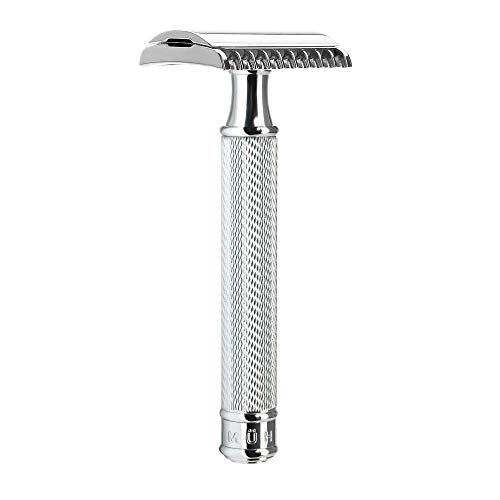
THE HANDLE: We design all of our products to be long-lasting, and this handle is no exception. The modern handle options include classic chrome, rose-gold metal, faux tortoiseshell, and black chrome.

DELIVERS A SMOOTH SHAVE – Parker’s open comb design delivers an extremely smooth shave. Many have told us this this is the best double edge razor for both beginners and experts alike as it delivers a barber shop quality shave at home.

𝐎𝐏𝐄𝐍 𝐂𝐎𝐌𝐁 𝐃𝐄𝐒𝐈𝐆𝐍 𝐖𝐈𝐓𝐇 𝐀 𝐋𝐎𝐍𝐆 𝐇𝐀𝐍𝐃𝐋𝐄: The open comb design provides greater blade exposure, making it ideal for shaving dense or coarse hair with ease. Its long handle enhances grip and control, ensuring a smooth and precise shave, particularly for those with larger hands. The three-piece construction allows easy cleaning and long-lasting durability.
Irritation and Nicks: How Each Razor Protects Your Skin
The safety mechanisms built into each razor design create fundamentally different protection profiles for your skin. Closed combs shield you with a solid bar that limits blade exposure and reduces nicks considerably. This design suits daily shaving routines, minimizing irritation from frequent passes over short stubble.
Open combs expose more blade surface, demanding refined shaving techniques to avoid cuts. However, they allow superior lather circulation, which provides lubrication that can reduce irritation when you minimize passes. Their teeth guide hair close to the blade while preventing clogging—a benefit if you’ve mastered proper technique. The razor head design significantly affects how each option performs in protecting sensitive areas during your shaving routine. While open combs excel at preventing clogging, closed combs offer greater protection against razor burn, making them particularly suitable for those prone to skin irritation.
For sensitive skin or inconsistent shaving techniques, closed combs offer predictable protection. If you’re experienced and shave infrequently, open combs’ reduced clogging may prove advantageous despite higher blade exposure risk. Additionally, closed combs’ gentler approach can help reduce ingrown hairs through their single-blade precision and controlled technique.

THE HANDLE: We design all of our products to be long-lasting, and this handle is no exception. The modern handle options include classic chrome, rose-gold metal, faux tortoiseshell, and black chrome.

THE PERFECT SHAVE: Make skin irritations and ingrown hair a problem of the past. With the eco safety razor, you will achieve the closest shave effortlessly.

CUSTOMIZE YOUR SHAVE - Easily adjust the blade exposure by turning the knob on the bottom of the razor - Customize your shave by selecting your exposure of choice. The lower the setting, the less the blade exposure and the milder the shave. Find the setting that's just right for you
Is a Closed Comb Right for You? Best for Beginners and Sensitive Skin
When should you consider a closed comb safety razor for your shaving routine? You’ll benefit most if you’re beginning wet shaving or have sensitive skin. The solid safety bar shields your skin from excessive blade exposure, minimizing nicks and irritation. Closed combs excel for daily shaving when comfort matters most.
However, understand the trade-offs. The solid bar traps lather and hair, requiring frequent rinsing—an important razor maintenance tip. You’ll likely need multiple passes for close results, especially with coarse hair, meaning you’ll reapply shaving cream choices between strokes. Like hair clippers, safety razors require proper disinfection and maintenance to ensure hygiene between uses. Closed comb razors feature grooves and a bar that work together to provide this protective design during your daily routine.
For beginners, closed combs offer predictable, forgiving performance. For sensitive skin, they’re ideal. This makes them a more economical and eco-friendly alternative to cartridge razors for those prioritizing safety and comfort. But if you prefer efficiency with minimal passes, open combs might suit you better. Assess your priorities accordingly.

CLOSED-COMB DOUBLE EDGE SHAVE: The MÜHLE R89 safety razor features a closed-comb head with gentle geometry and a slightly steeper blade angle. Its toothless guard edge and classic double edge (DE) blade support controlled single-blade shaving for precise contours and a thorough, gentle wet shave.

DIAL-ADJUSTABLE BLADE GAP, MILD TO AGGRESSIVE: A precision dial tunes the blade gap to your skin andbeard — gentle for sensitive days, more aggressive for coarse growth. One razor that grows with your technique.

DELIVERS A SMOOTH SHAVE – Parker’s open comb design delivers an extremely smooth shave. Many have told us this this is the best double edge razor for both beginners and experts alike as it delivers a barber shop quality shave at home.
Should You Use an Open Comb? Best for Experienced Shavers With Thick Hair
An open comb safety razor‘s toothed guard exposes considerably more blade edge than its closed-comb counterpart, enabling you to cut through dense, coarse, or wiry facial hair with fewer passes. This aggressive design demands experienced shaver techniques—you’ll need precise angle maintenance, strategic skin stretching, and controlled light pressure to avoid irritation.
Open comb benefits shine when you’re tackling multi-day stubble or quick-growing beards every 2-4 days. The gaps between teeth allow efficient lather and hair passage, preventing clogging while guiding stubble directly to the blade for a straight-razor-like closeness. Proper skin preparation with pre-shave oil and quality lather is essential for achieving optimal results without irritation. For those with particularly sensitive skin concerns, consider that electric shavers designed for sensitive skin can offer gentler alternatives to traditional safety razors. If you prefer a more versatile grooming tool, integrated shavers with beard trimmers provide combined functionality for both trimming and shaving needs.
However, this razor isn’t forgiving without proper skill. You’ll achieve minimal-effort shaves, but only if you’ve mastered wet shaving fundamentals. Pair it with quality blades for customizable performance tailored to your thick hair type.

THE HANDLE: We design all of our products to be long-lasting, and this handle is no exception. The modern handle options include classic chrome, rose-gold metal, faux tortoiseshell, and black chrome.

Convertible Double-Head Design – Includes both open and closed comb plates, allowing you to customize your shave for mild or aggressive for different beard types and preferences.

DELIVERS A SMOOTH SHAVE – Parker’s open comb design delivers an extremely smooth shave. Many have told us this this is the best double edge razor for both beginners and experts alike as it delivers a barber shop quality shave at home.
Choose Your Razor by Shaving Frequency and Skill Level
Your shaving frequency and experience level should determine which razor design serves you best. If you’re shaving daily, a closed comb razor delivers consistent results with minimal irritation risks across multiple passes. The solid safety bar guarantees uniform skin contact, making it ideal for frequent routines without aggressive performance.
However, if you’ve mastered proper technique and shave less frequently with coarser growth, an open comb handles longer stubble more efficiently. Advanced shavers benefit from its aggressive blade exposure for closer results. Open combs also facilitate easy escape of shaved hair and lather, reducing cleanup time between passes. Those pursuing dramatic styling statements through advanced grooming techniques find open combs particularly suited to their higher skill level and commitment.
Beginners should prioritize closed comb designs regardless of shaving frequency. These gentler razors accommodate learning curves while protecting your skin. For those new to wet shaving, safety razors with butterfly blade-changing mechanisms offer user-friendly convenience that makes the transition smoother. As your skill levels advance, you can shift to open comb if your shaving frequency and hair type warrant it.

CUSTOMIZE YOUR SHAVE - The Open Comb design stretches your skin while shaving for an unbelievably smooth and close shave. Easily adjust the blade exposure by turning the knob on the bottom of the razor - Customize your shave by selecting your exposure of choice. The lower the setting, the less the blade exposure and the milder the shave. Find the setting that's just right for you

CUSTOMIZE YOUR SHAVE - The Open Comb design stretches your skin while shaving for an unbelievably smooth and close shave. Easily adjust the blade exposure by turning the knob on the bottom of the razor - Customize your shave by selecting your exposure of choice. The lower the setting, the less the blade exposure and the milder the shave. Find the setting that's just right for you

TRADITIONAL Replacement Safety Razor Head (open comb) by MÜHLE